Sunday, January 15, 2012

Horatio Nelson -- Champion of Liberty

Nelson -- Champion of Liberty
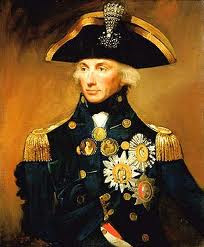
No visitor to London can afford to miss a view of Lord Horatio Nelson looking down from his perch atop Trafalgar square.  Nelson is virtually a secular saint to he British people.  He was the man who sacrificed an eye, an arm and finally his life to save his people from tyranny and dictatorship.

Here is a very brief summary of his life...

Horatio Nelson 1758 - 1805

1) He was the son of the reverend Edmond Nelson, born in Burnham Thorp in Norfolk.

2) He joined the Royal Navy at age 12 under the sponsorship of his uncle, Maurice Suckling.

3) He was an ambitious and capable officer who rose through the ranks serving on a number of ships and during the American Revolution.

4) In 1794 he serves in Corsica in the land battle of Bastia, where he was blinded in one eye.de of Cape St Vincent, he disobeyed a direct order from his superior (Admiral Jervis) and attacked and captured two Spanish ships.

6) At the Battle of Santa Cruz de Tenerife he was wounded and lost an arm.

7) As admiral and the Battle of the Nile, (1798) he destroyed Napoleon's fleet marooning he and his army in Egypt.  13 British ships faced 13 French ships.  Nine French ships were capture and two were destroyed, including Brueys' flagship L'Orient which blew up.

8) As admiral at the Battle of Copenhagen in 1801 he again defied a direct order to retire from his superior. He raised the telescope to his blind eye and said, "I really do not see the signal."  He beat the Danes who were allied to the French at that time.
Horatio Nelson
9) TRAFALGAR October 21st 1805.  This was the culmination of the Trafalgar campaign.  Napoleon lead an army of over 200,000 men camped at Boulogne just across the English channel from Britain.  Napoleon dispatched his Admiral Villeneuve from Toulon to the West Indies with the idea of trying to create a temporary naval supremacy in the English channel allowing the French army to invade Britain.   This led to a high seas cat and mouse game of chase between Nelson and Villeneuve.

Nelson finally catches up with the French admiral Villeneuve of of the coast of Spain near Cadiz.  The Allied fleet (French and Spanish) outnumbers the British by 33 to 27 in terms of ships of the line present.  Unafraid, Nelson arranges his ships into two straight lines forming a "V" which he drives straight at the Allied enemy fleet.  He gives the signal "England Expects every man to do his duty."  11 Allied ships are captured.  Nelson walking the decks of The Victory in full dress uniform is shot through the shoulder and spine by a French sharpshooter from the rigging of the Redoutable.  He is carried to the Orlop deck below.  In his dying words, he asks that the government "take care of poor Lady Hamilton," which it conspicuously fails to do (Nelson's great love, Lady Hamilton, dies in poverty in France in 1815).

10) Buried at St. Paul's cathedral after a tumultuous ceremony in which his beloved sailors tore the flag which draped his coffin to shreds to preserve a memento of their fallen hero.

Why is he of particular interest to conservatives?  First, he was a what today would be called a member of the religious right.  He was a Reverend's son who, with the enemy fleet in sight before Trafalgar wrote this prayer...

“MAY THE GREAT GOD, whom I worship, grant to my country and for the benefit of Europe in general, a great and glorious victory: and may no misconduct, in anyone, tarnish it: and may humanity after victory be the predominant feature in the British Fleet.
For myself Individually, I commit my life to Him who made me and may His blessing light upon my endeavours for serving my Country faithfully. To Him I resign myself and the just cause which is entrusted to me to defend.
AMEN AMEN AMEN”
HMS Victory, Portsmouth (Photo: Jeff Dody)

Second,  he was a leader in Britain's senior military service, the Royal Navy.  A nation whose military is dominated by the navy inclines towards liberty,while a nation whose military is dominated by the army inclines toward dictatorship. A strong navy always goes hand in hand with strong mercantile interests, global trade and capitalism.  This always requires a mixing of ideas and people which tends to reduce provincialism and increase tolerance.  Sailors and merchantmen are necessarily exposed to different races, religions and ways of life.  A powerful land army, on the other hand, is often the breeding ground of dictatorship (Caesar, Napoleon, Hitler, Saddam Husssein etc.).  The Royal Navy practice of offering "prize Money" for captured enemy vessels provided Nelson's crews with powerful capitalist incentives that led to their world-beating success.  Britain, with an assist from Adam Smith, ruled the waves!
Third, it is very hard to overestimate the sheer terror that the British people felt until the naval triumph at Trafalgar.  Had Napoleon been successful in crossing the channel there is little doubt that his Grande Arm would have prevailed over the relatively puny British land forces.  The monarchy would have been toppled, parliament dissolved and Britain would have been forever altered.  Just imagine Britain as a French puppet state governed by another Bonaparte sibling--more sauces, perhaps, but far less individual liberty.  The British fear of invasion before Trafalgar were very much akin to the Americans feelings of insecurity following the 9/11 attack.  Nelson's decisive triumph at Trafalgar ended all that and gave Britain dominance on the high seas that was not challenged until 1914 by the Kaiser's Kriegsmarine.  Nelson was the ultimate Homeland security.
Fourth, his whole life embodied the military virtues of duty, self sacrifice, love of country and raw courage.


Nelson at Trafalgar Square (Photo: James Hooper)
Finally, because Britain ruled the waves due to Nelson's crushing victory at Trafalgar, she was able to police the seas.  It is no coincidence that the elimination of the Abolition of the slave trade bill (championed by Wilberforce and Prime Minister Fox) was passed by Parliament in the 25th of March 1807, not long after Trafalgar.  The abolitionists' good intentions would have been meaningless without the ability of the Royal navy to enforce such legislation.  Napoleon, despite the rhetoric of the French Revolution, was quite willing to imprison the slave rebel Toussaint Louverture and reimpose slavery in Haiti in 1802.  Nelson Mandela was very aptly named after Horatio Nelson.  Nelson's triumph at Trafalgar helped secure liberty for his own people who, in turn, helped to spread freedom throughout the world.


You can now purchase singed copies of America Invades herewww.americainvades.com or on Amazon...www.amzn.com/1940598427


You can also purchase signed copies of Italy Invades: How Italians Conquered the World here...www.italyinvades.com
or regular copies on Amazon...www.amzn.com/1940598729


Friday, January 13, 2012

A New Approach to debating...!


X-ARM WILL WIN IN 2012!


http://network.yardbarker.com/all_sports/article_external/xarm_presents_republican_debeat_down/9298157?linksrc=foxrg_home

Last Call

Great Read!

I am now reading an excellent book--Last Call: the Rise and Fall of Prohibition by Daniel Okrent.  It is the amazing story of how a coalition of racists, suffragettes, progressives and nativists came together to subvert the US Constitution with the passage of the 18th amendment.

FDR imbibing
It is no coincidence that the only American President to win four election terms was also the President who abolished Prohibition.  This Republican happily raises a glass to FDR!

But let's give Churchill the last word.  He called Prohibition, "an affront to the whole history of mankind."

Cheers from London!


http://amzn.com/074327704X

Thursday, January 12, 2012

Iron Lady


I am just back from having seen the matinee of Iron Lady at Leceister Square with some friends.  I think that Meryl Streep did an outstanding job as Margaraet Thatcher.  She is a "lefty" American actress who gave a sympathetic and sometimes uncanny portrayal of a "righty" English politician.  Streep did an awesome job on getting the Thatcher voice right.  She may well be nominated for an Academy award.

The movie has some terrific highlights including the Falklands scenes, the scenes in Parliament and the scene with US Secretary of State Al Haig ("Shall I be mother?" while offering to pour tea--my favourite line of the film).  Against the backdrop of contemporary US politics, it is hard not to long fruitlessly for the opportunity to cast a vote for a Thatcher-like creature in the current Republican primaries.

I remember living in Chelsea in 1970 as a boy and seeing the mounds of uncollected trash bags piled high on the sidewalks due to disruptive trade union activity.  My father, a television executive, would furtively take the trash out at night and sneak 8 blocs away to the Sloane Square tube stop to dispose of our trash.  During the holiday season one clever man carefully gift wrapped his trash and put it in the back seat of his unlocked car, sure in the knowledge that it would be stolen.  Iron Lady presents some of the incredible havoc that the trade unions visited upon the UK during the 1970's, including the horrors of the garbage strike.

The movie deserves much credit for simply taking the Thatcher phenomenon seriously.  She led Britain to victory in the Falklands, broke the backs of the trade unions, restored the British economy, dramatically increased the rate of home ownership, steered Britain clear of the Euro Chimera and was part of the triumvirate (along with Reagan and Pope John Paul) that won the cold war without firing a shot.  I am old enough to remember the joke told in the 1980's about how "Thatcher knew so little about foreign policy that she thought that 'Sinai' was the plural of sinus."  Much like Sarah Palin, ("I can see Russia from my porch") she was fodder for television cartoon shows and West end productions like Billy Elliot.  This movie, at least, takes her with the seriousness that she deserves.

Sadly, the movie dwells far too long on Thatcher's alleged dementia.  Imagine if a Ronald Reagan biopic chose to focus primarily upon his post-Presidency battle with Alzheimer's.  Would Reagan idolaters or haters be satisfied with such a treatment?  This movie seems focus group generated in a most unfortunate manner.  "We need to soften MT's acerbic personality by showing her vulnerabilities and playing up the love story.  This will be sure to attract the 35+ ladies who might buy a ticket."

The highly fictionalised scenes with a deceased Dennis Thatcher, played by the very talented Jim Broadbent, detract from the film's credibility.  The repeated scenes of an angry mob attacking Thatcher's automobile are wholly invented as well.

The movie largely misses the opportunity to play on the tremendous drama of the Brighton conference bombing which nearly killed Thatcher.  Where is her business as usual speech that came one day after the IRA bombing attempt?  Her role in helping to win the cold war is very lightly glossed over.  The deployment of Pershing missiles in the UK was hugely controversial at the time.  She stood shoulder to shoulder with Reagan who is also given unaccountably short shrift in this account.  Her whole relationship with Reagan is depicted in one brief dance scene.

The movie's unforgivable sin is that it somehow manages to make Thatcher seem dull, when she was, in fact, anything but.

If you ever wondered why there are practically no garbage cans on the streets of London, this movie will lay it out for you.  Blame the bloody Irish and their infernal devices!

Polls suggest that Thatcher is today regarded as Britain's most popular prime minister with the sole exception of Winston Churchill.  The rise of a grocers's daughter from Grantham to this eminence in a male dominated world is tremendous dramatic raw material that was ill served by the producers of this film.   It could just have been so much better.

FALKLANDS POSTSCRIPT.  The Falklands war scenes of Iron Lady are an interesting reminder of that conflict.  In 1982 when the battle over Falklands Islands was being fought the UK possessed a credible military force that got the job done.  Some 28,000 men were dispatched an ocean away to deal with the "Argies."  The Royal navy had an aircraft carrier which proved essential air support in the conflict.  Fast forward to 2012, and the UK has no aircraft carrier (the mothballed Ark Royal is for sale on a version of E-bay) and won't for the next ten years.  In 1982 the war was fought over some barren, windswept, scarcely populated islands.  Today they have discovered offshore oil in the territorial waters off the Falklands.  There is now actually something there to fight over.  Is trouble again brewing in the South Atlantic?  Not to worry, the Brits have deal to borrow a carrier from the Frogs in a pinch!

Wednesday, January 11, 2012

The Growth Map


I came across this recently in Jim O"Neil's 2011 book "The Growth Map".  He is the Chairman of Goldman Sachs Asset Management and came up with the BRIC concept to describe the economic growth story of Brazil, Russia, India and China.

"It irritates me when I hear and read endless distorted stories of how only a few benefit and increase their wealth from the fruits of globalisation, to the detriment of the marginalized masses.  Globalization may widen inequality within certain national borders, but on a global basis it has been a huge force for good, narrowing inequality among people on an unprecedented scale.

Tens of millions of people from the BRICs and beyond are being taken out of poverty by the growth of their economies.  While it is easy to focus on the fact that China has created so many billionaires, it should not be forgotten that in the past fifteen or so years, 300 million or more Chinese have been lifted out of poverty.  In India the lives of many tens of millions have been similarly improved, and perhaps 300 million or more will join them in the next decade or two...We at GS (Goldman Sachs) estimate that 2 billion people are going to be brought into the global middle class between now and 2030 as the BRIC and N-11 economies develop.  The same is beginning to happen in some of the most challenging parts of Africa, and while it is very early days, the uprisings in the Middle East suggest that it could happen there too.

Rather than be worried by such developments, we should be encouraged and hopeful.  Vast swathes of mankind are having their chance to enjoy some of the fruits of wealth creation.

This is the big story."  (Source: page 232 of The Growth Map, 2011)

This seems to me to be hugely significant and grossly under-reported.  This message certainly does not seem to have made it to the Occupy Wall Street crowd where it would, I fear, be dismissed as "Banker" propaganda.

The overall BRIC story which has been THE economic story of the past decade is, in truth, a story about the triumph of free markets.  Brazil was brought free market reforms by Cardoso and Lula who brought inflation under control and stabilised the Real.  Russia morphed from a Soviet command and control economy into a booming resource rich free market economy with a flat tax which could be straight from Steve Forbes.  India has grown into a huge services and technology success story.  China has embraced a pragmatic free market model to chart its remarkable growth in spite of the Communist party.

Commander Kelly says, "check it out!"

http://www.amazon.com/Growth-Map/dp/0670921262/ref=sr_1_2?s=books&ie=UTF8&qid=1326312372&sr=1-2

Romney...Inevitable?

The 2012 Republican nominee...?

With his convincing win in New Hampshire last night, it seems increasingly likely that Mitt Romney will be the Republican nominee this fall.  He is leading in the polls in South Carolina.  The fact that a non-serious candidate, Ron Paul, came in second in NH makes it seem even more unlikely that any other Republican will seriously challenge Romney for the nomination.

Newt's scorched earth tactics in going after Romney for his role at Bain seems particularly ill-advised and desperate.  How disappointing after Newt's more elevated above the fray approach in the earlier debates!

Short of an incredibly major gaffe or a serious health issue, Romney has pretty much got the nomination wrapped up.

Monday, January 9, 2012

London Parties

Miss them...?


If you ever find yourself trapped at a dull dinner party and don't wish to receive a second invitation you can always do as I do.  Simply tell you hosts, "I liked Bush, but I loved Cheney!"  Works every time.

Friday, January 6, 2012

The Poaching Frogs' Club


Any Aristotelian empiricist can do this simple test.

1) Put a frog into a pan of cold water and he is happy.

2) Put a frog into a pan of hot water and he will quickly jump out.

3) Put a frog into a pan of cold water and gradually raise the temperature, say one degree per minute, and soon you will have a poached frog.

Why does this, somehow, remind me of...marriage?

Commander Kelly's Top Ten Military Literature Reading List

1) Homer's Iliad, best translation
http://www.amazon.com/Iliad-Homer/dp/0226470490/ref=sr_1_2?s=books&ie=UTF8&qid=1325845550&sr=1-2

2) Homer's Odyssey, best translation
http://www.amazon.com/Odyssey-Fitzgerald-Translation-Homer/dp/0374525749/ref=sr_1_3?s=books&ie=UTF8&qid=1325846032&sr=1-3

3) Shakespeare's Henry V. Cry Havoc and unleash the Dogs of War!
http://www.amazon.com/Henry-V-Dover-Thrift-Editions/dp/0486428877/ref=sr_1_3?s=books&ie=UTF8&qid=1325846341&sr=1-3

4) Tolstoy's War and Peace.  Forgive the tedious Afterword about Napoleon and History.
http://www.amazon.com/Lord-Rings-50th-Anniversary-Vol/dp/0618640150/ref=sr_1_1?s=books&ie=UTF8&qid=1325848017&sr=1-1e
http://www.amazon.com/War-peace-Tolstoy-Modern-Library/dp/0394607015/ref=sr_1_6?s=books&ie=UTF8&qid=1325846526&sr=1-6


5) George Bernard Shaw's Major Barbara.  Superb wit, Andrew Undershaft is unforgettable.
http://www.amazon.com/Major-Barbara-George-Bernard-Shaw/dp/1461039754/ref=sr_1_1?s=books&ie=UTF8&qid=1325846873&sr=1-1

6) C.S. Forester's Beat to Quarters.  The Hornblower series starts with Mr Midshipman Hornblower but this is the first one I ever read and still the best.  That said, they are all very much worthwhile.
http://www.amazon.com/Hornblower-Quarters-C-S-Forester/dp/0316289329/ref=sr_1_11?s=books&ie=UTF8&qid=1325846977&sr=1-11

7) Hemingway's Farewell to Arms--not a tale about a double amputee!.  Also read The Sun also Rises.
http://www.amazon.com/Farewell-Arms-Ernest-Hemingway/dp/0684801469/ref=sr_1_1?s=books&ie=UTF8&qid=1325847494&sr=1-1

8) Patrick O'Brian's Master and Commander.  The whole series is terrific.  I had the great pleasure of meeting O'Brian just before his death in 2000.
http://www.amazon.com/Master-Commander-Movie-Patrick-OBrian/dp/0393325172/ref=sr_1_1?s=books&ie=UTF8&qid=1325847687&sr=1-1

9) Tolkein's Lord of the Rings.  Tolkein served as a Tommy during WWI and this book was written during WWII, for which it can be read as an extended metaphor (Sauron as Hitler, Saruman as Mussolini, the Eagles as the Yanks?).
http://www.amazon.com/Lord-Rings-50th-Anniversary-Vol/dp/0618640150/ref=sr_1_1?s=books&ie=UTF8&qid=1325848017&sr=1-1)

10) George Macdonald Fraser.  Flashman.  The whole series is great for all history buffs.  His autobiographical Quartered Safe out Here: A Harrowing Tale of World War II is also not to be missed.  
I also met this author at a book signing at Hatchards in London before his death in 2008.
http://www.amazon.com/Flashman-Novel-George-MacDonald-Fraser/dp/0452259614/ref=pd_sim_b_11

Colonel John Boyd


Last year I had the chance to read Robert Coram's excellent book, Boyd: the Fighter Pilot who changed the Art of War.

John Boyd grew up in Erie, PA.  He joined the army air corps and became a fighter pilot serving in WWII and the Korean war.  He went on to become a trainer of fighter pilots at Nellis in Nevada for the US Air Force.  He later joined the Pentagon and rose to the rank of Colonel.  He was outspoken in his views on military procurement (highly critical of swing wing aircraft, pentagon waste, etc.) and other matters--a true Maverick.  He later was one of the unofficial chief strategist of the 1990 Gulf War, Desert Storm.  I must confess to being slightly disappointed that Dick Cheney did not give him credit as such in his recent memoir, In My Time: a Personal and Political Memoir.  Boyd was one of America's great military men that almost no-one has ever heard of.

In addition to having had real hands on experience in combat, he was also an intellectual and theoretician of warfare.  His chief contribution to the science is the concept of the OODA Loop.  OODA is an acronym that stands for Observe, Orient, Decide, Act.   This provides an intellectual framework that can apply to ANY competitive endeavour from sports to business or armed conflict.

OBSERVATION: We begin with Observation (very Aristotelian, by the way!).  What is going on out there?  Is there a threat lurking around the corner?  What are our strengths and weaknesses?  What about those of the enemy/competition?  Do we have any allies or partners--real or potential?  We gather intelligence.  We take a reckoning.

ORIENT: Based on our Observations we move towards Orienting ourselves against any potential threats.  Do we need to shift right or left?  Which Axis threat is greater Germany or Japan?  Should we consider a flanking manoeuvre?  We Orient our forces.  Take careful aim.

DECIDE: We arrive at a decision.  The relative size of our organisation will often dictate the speed of our decision making ability.  Are we talking about one fighter pilot in his plane or are we talking about making a policy change at Microsoft?

ACT: Finally, it all comes down to Action.  It is not enough to come up with a plan, it must be executed as well.  After all the debates have ended it's time to pull the trigger.

OODA is always a loop because every act leads to subsequent observations.  We tried X and the result was Y.  Should we do it again, give it up, make a course correction?  New observations lead to re-orientations.  New decisions are formulated and new actions are taken.

Boyd's strategic question of of questions is simply, "How fast are you moving on the OODA loop?"  Are you slow and cumbersome or quick and lithe, like a Tiger?   How quickly can you move versus the competition?  Where are you relative to your competition on the OODA loop?

Corum's BOYD has been the best book on strategy that I have read in years.  Commander Kelly says, "Check it out, Tiger!"

http:/www.amzn.com/0316796883

Thursday, January 5, 2012

The Utility of War


“WAR, huh, what is it good for?  Absolutely Nothing!”  Edwin Starr, War

Edwin Starr’s lyrics, written during the Vietnam War, have been embraced by popular culture.  Jackie Chan and Chris Tucker sang the song in Rush Hour.  Jack Black used the song in Gulliver’s Travels.  This anthem of the ‘60’s has become the theme song for the contemporary anti-war movement.

Archduke Ferdinand just before assassination
War is, of course, a tremendously wasteful aspect of human existence.  Consider the example of the First World War.  The Austrian Archduke Franz Ferdinand and his wife were assassinated in Sarajevo.  This was an act of state sponsored terrorism by the Serbs that precipitated all of Europe into a cataclysmic World War that resulted in 37 million total casualties with 16 million deaths and 21 million wounded.  The flower of European youth was cut down.  The lights went out all over Europe.
WG Grace

Mass Mobilization and industrialisation made the Great War particularly costly.  The First World War was notable for the dawning horror of military air power.  For the first time great cities were bombed from the air.  The great hirsute cricketer,  WG Grace, was killed by a bomb delivered by a German Zeppelin.  Unrestricted U-boat warfare doomed the lives of thousands of civilian merchant mariners in the icy waters of the North Atlantic.

The costs of war are manifold…

1)    The deaths of combatants and civilians

Cemetery above Omaha Beach
2)    The grotesquely wounded bodies

3)    Indirect Damage the psychological trauma left by the ravages of war

4)    Other Collateral damage—how many WWII vets picked up the cigarette habit? (“Smoke ‘em if you got ‘em”).  Certainly very few of those soldiers in the amphibious boast at Normandy were worried about dying of lung cancer.

5)    The pernicious way in which each succeeding war seems to lay the seeds for a follow on conflict (The War of 1812 was essentially a “rematch” of the American war of Independence.  The territorially successful US/Mexican war set the table for the American Civil War by asking the question—“Will these new states be slave or free?”  The perceived vindictiveness of Treaty of Versailles ending WWI gave credibility to Hitler’s National Socialist movement in the 1930’s).

6)    The economic cost of war.  Tomahawk missiles are dispatched on their one way
       trip to Libya at $1m apiece.  The US spends more on its military than any nation on earth.  Mere preparation for the possibility of war diverts scarce resources from peaceful pursuits (Guns or butter).

WWI was costly in terms not just of quantity but also in terms of quality.  Great and heroic individuals lives were horribly abbreviated.  The incomparable H.H. Munro (Toys of Peace), Saki, for example perished in the trenches a victim of a sniper’s bullet.  Other notable victims of the conflict include Mata Hari, Edith Clavell and Manfred Von Richtoffen. WWII would go on to claim the lives of Antoine de St. Exupery, Glenn Miller, Carole Lombard, Yamamoto, Ann Frank, Dietrich Boehnhoffer and many more. Who know what works of genius were lost to humanity as a consequence of the World Wars?

There was a great cultural cost as well as humanitarian cost to be paid in the First World War.  The gorgeous cathedral at Rheims where so many of France’s kings had received their coronation lay in ruins by Armistice Day 1918.

And what of the end result ad long term consequences of the war?  The Spanish Flu immediately succeeded the War and led to the deaths of a staggering 50 and 100 million people worldwide.  The First World War hastened the spread of the virus (deployments and demobilizations) and increased the lethality of the disease.  A prime casualty of the war was the Russian empire.  The scourge of communist totalitarianism was to envelope and disfigure Russia for over 70 years.  The flawed peace following the First World War lasted 21 years and sowed the deeds of the even more terrible Second World War.   Was the sacrifice of all those young lives merely in vain?  In looking back onto the Great War one cannot help but echo the sentiment---“War, huh, what is it good for?  Absolutely Nothing!”

The USA has recently been engaged in three armed conflicts—Afghanistan, Iraq and Libya.  These continue to be tremendously expensive in terms of human life, human suffering and of course treasure.  The US has launched over 100 Tomahawk missiles at Libya at a cost of over $1m apiece—and they are not not recyclable!

Today’s “push button” wars lack all conception of honor and glory.  The pageantry of war disappeared in the mud and trenches of WWI.  Now the spectre of nuclear Armageddon haunts the minds of any who give serious thought to the prospect of a global war in the 21st century.

Is there then no reason for us to burn any incense at the temple of Mars?

Are today’s remaining warmongers merely archaic dinosaurs consumed by perversity?

If you believe, as I do, that human life is sacred then how can war’s wastefulness ever be justified?  What then is the case for the use of armed conflict today?  What could possibly justify unleashing the dogs of war today?

1)    THE JUST WAR
Rationale justifying the use of war dates back at least to Cicero in ancient Rome.  The Roman statesman Cato the elder used to end every speech in the senate on any given topic with the phrase "Carthago delenda est — Carthage must be destroyed".  Just War theory (Bellum Iustum) begins with the right of nations to defend themselves from outside attackers--the right of self-defence.  It lies behind the USA's declaration of War after Pearl Harbor on December 7th, 1941.  The South Koreans had a right, acknowledged by the United Nations, to defend themselves from their Northern invaders in 1950. Kuwait had a right to defend itself against invasion by Saddam’s Iraq in 1990. 


2)    WAR AND TECHNOLOGY
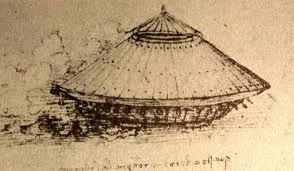
Da Vinci's Tank
Armed conflict has been a stimulus to technological innovation almost since the dawn of warfare.  Those clever Greeks came up with new uses for wooden horses at Troy.  Metallurgy and blacksmithing developed in order to provide soldiers/knights with weapons and armor.  FM radio was developed by the Nazis for tank to tank communication during WWII (not a topic often broached by today’s NPR!).  Jet travel that is a commonplace today owes a macabre debt to Hitler’s Luftwaffe who developed the first jet fighters and bombers (co-invented by a Brit, Sir Frank Whittle for the RAF and Hans Von Ohain for the Luftwaffe in the 1930’s).  Modern communications technology including satellite and mobile phones were developed first for use by the military .  The Internet was invented as a means of making an Armageddon-proof communications system.  The collaboration between the military and industrial complex at the heart of the Western economies is deep and long-standing.

Brilliant scientific innovators that have contributed to military science include Leonardo daVinci (the tank, the helicopter and siegecraft), Robert Fulton (the submarine) and Albert Einstein (the Atomic bomb).

3)    WAR AND MEDICINE
As wars have become progressively more lethal over time so too have man’s abilities to save and restore human life grown.  Hippocrates wrote that, “War is the only proper school for surgeons.”  Romans were skilled in the use of tourniquets to stop bleeding and amputation to prevent gangrene.  Morphine was used as a pain killer in the American civil war.  Antiseptic was developed during the Boer war.  The First World War saw the introduction of tetanus and developments in plastic surgery.  Penicillin was developed for use of the WWII battlefield.  Trauma theory was developed during the Korean and Vietnam War and is in use in civilian hospitals to this day.  The plastic IV bags which are now in use in hospitals throughout the world were originally developed for use by medics in Vietnam.  The use of prosthetic devices has grown dramatically as casualties return for encounters with IED’s in the Middle East.  The medical advancements have been immediately re-purposed for use in peacetime with non-combatants.

4)    WAR AND FOOD
Napoleon said that “An army marches on its stomach.”  A means of preserving food in glass jar’s was developed by Nicholas Appet in 1809 for the Napoleonic armies.  What do the culinary arts owe to military science?  Surely one cannot get too excited over forced rationing and Meals Ready to Eat (MRE’s)?  Consider the contributions of Napoleon’s Chicken Marengo and Beef Wellington.  Pumpernickel bread (“Cest bon pour Nichol!”—were Napoleon’s famous words on tasting.  Nichol was his horse’s name at the time.) was created for Napoleon The First World War lead to innovations in canning and preserving foods for use near the battlefield.  There are tins of bully beef made for the British Tommies of the Great War that are still edible.  The canned foods unloaded on the beaches of Normandy are still there rusting away on the French coast. Margerine was invented as a substitute for butter in order to help feed Napoleon III’s troops.


When Peter Ustinov was once asked by a French journalist what he thought about Napoleon he replied, “which do you mean—the brandy or the pastry?”

5)    WAR AND THE USA
Let’s be clear about this.  The United States of America was forged in the smithy of armed conflict with its' motherland, Great Britain.  The extent of the brutality of the American Revolution is somewhat lost to us in the haze of historical memory.  The total casualty figure for the American Revolution which ran for seven years from 1776 to 1783 Were 50,000.  The percentage of the population killed was about 1.798% of the total US population at the time (2,780,400 in 1780).  The equivalent percentage against today’s population would result in a loss of 5,551,244 deaths or nearly 10x America’s most costly war—the American Civil war..
Washington crossing the Delaware

It was not the “essay” or “op-ed” heard round the world.  No, my friends, it was the “shot heard round the world”.  It is no mere coincidence that gun rights as embodied in the second amendment were so critically important to the framers of the constitution.

If you believe, as I do, that the USA, in spite of its flaws is a beacon of light in the darkness of our world then you must celebrate the patriots who fought in the American War of Independence.

6)    WAR AND SOLDIERS
Long periods of peace atrophy the fighting abilities of the military.  Military conflict, on the other hand, hones the fighting abilities of warriors.

7)    WAR AND FREEDOM
Tolerance may be an admirable virtue, but it becomes a vice if it exends to the tolerance for the enslavement of one’s fellow man.

Spartacus’s rebellion in the Third Servile war (73 -71BC) must rank near the top of the list of just wars.  This was an incredible phenomenon in the ancient world.  The Thracian Spartacus must have been a tactical military genius.  Two entire Roman legions were wiped out by a slave army that boasted over 120,000 members. The sole world superpower with the greatest military in the world at the time was challenged by a rag tag army of slaves.  For three years they managed to hold the Roman army at bay and disrupted the Roman Empire.  Rome itself was threatened.  Death by crucifixion was meted out to the slave rebels at the war’s disastrous conclusion. 

Historian’s are quick to credit Wilberforce with leading the charge on the abolition of the slave trade and justifiably so.  They are not as quick to point out the outlawing of the slave trade in 1807 could not have been enforced without the triumph of Nelson’s navy at Trafalgar in October 1805.  The dominance of the Royal Navy was the sine qua non of the abolition of the slave trade.  Noble intentions and fine legislation is meaningless without the means of enforcing it.

The massive effusion of blood that was the American civil war—the bloodiest by far in US history was needed to eliminate slavery in the US.  Lincoln declared the emancipation proclamation as military expedient, a means of winning and shortening the tragic war.

8) WAR AND LIBERATION
War has ended the career of many a dictator.  Napoleon met his Waterloo.  Mussolini was butchered by his own people.  Hitler took his own life.  Saddam Hussein was caught hiding in a hole and later executed.  Most recently Qadaffi was killed by a fellow Libyan who was wearing a NY Yankees baseball cap!  None of these dictators who lived by the sword would have given up power with anything short of the use of force.

The appalling horrors of the Holocaust and the Japanese internment camps would not have ended of their own accord.  The use of  Military force was the sine qua non for the liberation of these death camps.  Milosovich in Serbia would not be brought to heel without an air war.

Today many in the West and the Middle East are celebrating the peaceful transfer of power in the recent Egyptian revolution.  A dictator, Mubarak, was deposed without mass violence.  Very well.  But is it not inarguable that not the removal of Saddam Hussein in Iraq by coalition forces in 2003 and Iraq’s halting steps on the path to democracy help to light the fires of the movement sweeping North Africa today?  Likewise for the removal of the Taliban from Afghanistan.

7) WORLD WAR II—THE JUST WAR PAR EXCELLENCE
The greatest conflict in human history claimed the lives of over 50,000,000 people.  This war also helped set the table for a general peace in Europe that has lasted since 1945.  The evils of fascism and Japanese militarism were extinguished from the world.  Fascist Germany and Samurai Japan were transformed into peace loving nations of successful automobile manufacturers. The Holocaust camps were ultimately liberated and their grisly work bright to an end.  The POW death camps throughout Asia were liberated.

Vast Social forces were unleashed a consequence.  Racism, by virtue of its association with Nazism, acquired a stigma that persists to this today.  Allied victory in World War II was the driving behind the civil rights movement of the 1960’s.  The American military was the first section of American society to be integrated after World War II.

Allied victory also enabled the launch of the feminist movement.  How could Rosie the Riveter whose producing power helped win the war be denied her rights back home at the war’s conclusion?  Women replaced men on the factory floor.


 8)    WAR AND THE AMERICAN PRESIDENCY
No one despises war more than the warrior.  It is a curious fact of American history that those Presidents who had the greatest direct experience of the realities of warfare (Washington, Grant, Teddy Roosevelt and Eisenhower) all presided over extended periods of peace.  On the other hand, those who lacked military experience frequently found themselves embroiled in America’s costliest wars (Lincoln was a lawyer who opposed the very popular Mexican war, Wilson a college President, FDR a governor, LBJ a career politician, G.W. Bush a baseball entrepreneur and reservist who avoided the Vietnam war, and, the current author of our recent "Kinetic military action" in Libya, Obama, was a community organizer).


9)    WAR AND GAMING
As I write these words I hear the murder and mayhem of the best selling X-box game “Black Ops” raging in the room next to me where my son is playing!  War has inspired war gaming for many years.  Blenheim has an incredible collection of Churchill’s tin soldiers.  War games such as Risk, Stratego and many others have provided generations of boys a means of sublimating their warlike urges for many years.  The ultimate and original war-game is, of course, chess.

10) WAR AND LITERATURE—Cry ‘Havoc’ and let slip the dogs of war!

Consider the following list. 
1)    Homer’s Iliad and Odyssey
2)    Vergil’s Anead
3)    Shakespeare’s Henry V  (Also Richard II, Henry IV, Julius Caesar, Antony and Cleopatra, and many more)
4)    Tolstoy’s War and Peace
5)    George Bernard Shaw’s Major Barbara
6)    Hemingway’s Farewell to Arms (not the story of a double amputee!) and The Sun Also Rises
7)    CS Forester’s Hornblower series
8)    Patrick O’Brian’s Aubrey and Maturin series (“Master and Commander”)
9)    George MacDonald Fraser’s Flashman series
10) Tolkein’s Lord of the Rings.  Tolkein was deeply influenced by his experience in the trenches in WWI and wrote his epic while WWII was raging.


Consider this from Julius Caesar…

ANTONY:
Blood and destruction shall be so in use
And dreadful objects so familiar
That mothers shall but smile when they behold
Their infants quarter'd with the hands of war;
All pity choked with custom of fell deeds:
And Caesar's spirit, ranging for revenge,
With Ate by his side come hot from hell,
Shall in these confines with a monarch's voice
Cry 'Havoc,' and let slip the dogs of war;
That this foul deed shall smell above the earth
With carrion men, groaning for burial.

11)               WAR AND ALTERED STATES
“Would I were in an alehouse in London!  I would give
All my fame for a pot of ale and safety” Henry V 3.2.13

What makes the Whirling Dervish Whirl?

The connection between warrior and the use of alcohol and other drugs has long been recognized.  The harsh discipline of the Napoleonic wars was ameliorated somewhat by the generous use of alcohol in the armies and navies of the time.  The cantonniere with her brandy flask was never far from the front lines.  A daily ration of Rum was consumed in the Royal Navy up until 1970!  The 19th century Opium war was fought by the British Empire to impose the use of drugs (Indian made opium) onto the Chinese.  The German drug of choice during World War II was methamphetamines.  35 million tablets of methamphetamine were shipped to the German army and Luftwaffe between just April 1940 and July 1940.

Drugs and alcohol were, and indeed are, a means of enduring the unendurable during wartime.

12)               WAR AND PEACE
“If you want peace, prepare for war” (Si Vis pacem, para bellum) wrote Flavius Vegetius around 375 AD.

My corollary to that would be “If you want a lasting peace, win, or alternatively lose (“The Mouse that Roared”), a devastating and decisive strategic victory”.  The long Pax Britannica of the 19th century lasted from June 18th 1815 (Waterloo) until August of 1914 and witnessed a general peace through Europe.  There were, of course, many colonial dust-ups and “little wars” at this time.  It was the twin decisive Allied triumphs on sea and land at first, Trafalgar, and then at Waterloo that made this possible.  Britannia ruled the waves, ended the slave trade and traded throughout its expanding empire.  Waterloo sent Napoleon into his second and final exile on St Helena.  The spectre of the French Revolution and its evil progeny, dictatorship had been put back into the bottle—at least for the time being.

The Second World War is an even more dramatic example of how devastating and decisive victory can lead to a lasting peace.  There have been many scholarly debates about the efficacy of the Allied Air bombing in WWII.  The Fire bombing of Dresden and Tokyo and, of course the dropping of two atomic bombs on Hiroshima and Nagasaki (note that the Japanese leader of the air attacks on Pearl Harbor claimed that the atomic bombs dropped on Japan actually saved Japanese as well as countless Allied lives by rendering an invasion unnecessary.) eviscerated the Axis powers and punished the civilian populations.  The enduring psychic memory of those horrors has, however, surely contributed to the lasting peace in Europe and the Pacific since 1945.

Enola Gay
Mitsuo Fuchida, who led the first wave of Japanese planes in the surprise attack on Pearl Harbor, met Paul Tibbets, the pilot of the Enola Gay, who dropped the bomb on Hiroshima.  He said, “You did the right thing.  You know the Japanese attitude of that time, how fanatic they were.  They’d die for the Emperor.  Every man woman and child would resist the invasion with sticks and stones if necessary.”

Nightmares about allied bombing were the psychic fertilizer, if you will, that allowed Japan to hammer Samurai swords into Toyotas, Kamikazes into Kawasaki motorcycles. Meanwhile, de-nazification in Germany helped encourage the Germans to beat Panzers into VW beetles.


CONCLUSION
Mars, the God of War
War is an incredibly wasteful and soul-destroying human activity.  Most wars are not “just wars” at all.  Hitler’s invasion of Poland is particularly indefensible.  Nevertheless, it is seems that war has been an integral part of the human experience, has contributed positive aspects to humanity and is occasionally justifiable.

What is war good for?  Quite a lot really!  It improved medical care for all, is a catalyst for technological change, it launched the USA, it is morally justifiable in certain circumstances and it can, when used properly, be a force for freedom in a complex world.  As Monty Python’s ancient Palestinians exclaimed, “but aside from that what have the Romans done for us…?"
Boudica--the Sarah Palin of Roman Britain...?

Not far from the houses of Parliament near Westminster pier you will find a large bronze statue of Boudica.  Here is what Wikipedia has to say about her....


"Tacitus and Dio agree that Boudica was of royal descent. Id says that she was "possessed of greater intelligence than often belongs to women", that she was tall, had hair described as reddish-brown or tawny hanging below her waist, a harsh voice and a piercing glare, and habitually wore a large golden necklace (perhaps a torc), a many-coloured tunic, and a thick cloak fastened by a brooch.[11]

Boudica, Westminster Bridge (Photo: James Hooper)
Her husband, Prasutagus, was the king of Iceni, people who inhabited roughly what is now Norfolk. They initially were not part of the territory under direct Roman control, having voluntarily allied themselves to Rome following Claudius' conquest of AD 43. They were proud of their independence and had revolted in AD 47 when the then-governorPublius Ostorius Scapula threatened to disarm them.[12] Prasutagus had lived a long life of conspicuous wealth and, hoping to preserve his line, made the Roman emperor co-heir to his kingdom, along with his wife and two daughters. It was normal Roman practice to allow allied kingdoms their independence only for the lifetime of their client king, who would agree to leave his kingdom to Rome in his will — the provinces of Bithynia[13] and Galatia,[14] for example, were incorporated into the Empire in just this way. Roman law also allowed inheritance only through the male line, so when Prasutagus died his attempts to preserve his line were ignored and his kingdom was annexed as if it had been conquered; lands and property were confiscated and nobles treated like slaves. According to Tacitus, Boudica was flogged and her daughters were raped.

Boudica's uprising

In AD 60 or 61, while the current governor, Gaius Suetonius Paulinus, was leading a campaign against the island of Mona (modern Anglesey) in the north of Wales, which was a refuge for British rebels and a stronghold of the druids, the Iceni conspired with their neighbours the Trinovantes, amongst others, to revolt. Boudica was chosen as their leader. According to Tacitus, they drew inspiration from the example of Arminius, the prince of the Cherusci who had driven the Romans out of Germany in AD 9, and their own ancestors who had driven Julius Caesar from Britain.[15] Dio says that at the outset Boudica employed a form of divination, releasing a hare from the folds of her dress and interpreting the direction in which it ran, and invoked Andraste, a British goddess of victory.

Boudica exhorted her troops from her chariot, her daughters beside her. Tacitus gives her a short speech in which she presents herself not as an aristocrat avenging her lost wealth, but as an ordinary person, avenging her lost freedom, her battered body, and the abused chastity of her daughters. She said their cause was just, and the deities were on their side; the one legion that had dared to face them had been destroyed. She, a woman, was resolved to win or die; if the men wanted to live in slavery, that was their choice."  Source: Wikipedia.org.

Boudica was a strong willed woman who had been born in the provincial outback of the Roman Empire.  She was a woman who was done wrong by the central governmental authorities of her day.  She was a warrior Queen who preferred death over slavery.  Her own daughters were raped by the Romans and she exacted a terrible revenge wiping out a whole Roman legion.  

Who does she remind you of in today's contemporary political environment?  To me the answer is clear...

Sarah Palin was the former Governor of Alaska and Republican VP candidate of 2008.  She was a political leader in the men's club of Alaska state politics.  She had a warrior son who served in Iraq.  She was a strong supporter of the surge which proved so effective in Iraq.  She and her family were "gang-raped" by the liberal media during the 2008 campaign. 


Due to the illiteracy of the ancient Britons, almost everything that we know about Boudica comes to us from the prism of the Roman commentators who were her sworn enemies.  Most of what Americans "know" about Sarah Palin comes directly from Tina Fey and the liberal (lamestream) media. 


Sarah Palin was, appropriately enough, a "Vandal" who attended the University of Idaho, far from the elite academies of the Ivy league.  Her Latin is no better than Boudica's. She is a strong advocate of freedom and limited government and has continually resisted the encroaching authority of the federal government.  What was the Roman government if not the prototype for all the corrupt over-reaching central governments of today?

Sarah Palin
Palin and Boudica both engaged in extreme religious practices.  They both had big hair.  They both wore expensive jewellery and clothing. Was Boudica ever criticised for excessive expenditures on her wardrobe?  Tacitus is silent on the matter.  Boudica was clearly a maverick who would also have eaten Joe Biden for breakfast in a debate situation!  Could Boudica have field dressed a moose?--You betcha!


Let's hope that Sarah Palin's ultimate fate is not that Boudica who poisoned herself after her inevitable defeat at the hands of the Romans!