Thursday, June 3, 2021

Invading the Dominican Republic

Commander K "Invades"
the Dominican Republic


What is it that Christopher Columbus, President Johnson (LBJ), the US Marine Corps and actress Kim Novak all had in common?  They all have a strong connection to the Dominican Republic.

Columbus, LBJ and the US Marines all invaded The Dominican Republic.  And as for Kim Novak's surprising connection to the Caribbean island -- read on...

www.italyinvades.com

In Italy Invades: How Italians Conquered the World we pointed out how Columbus and the Italians left their mark on the Dominican Republic...

"The Dominican Republic gained its independence from Haiti in 1844, but Italians made their mark on the territory much earlier than that.


Palace of Diego Columbus
Santo Domingo, DR


One need not look far to find signs of Italian “invasions” in the Dominican Republic. A visitor to La Isabella will find the Casa Almirante, or Admiral’s House. This was the first American home of the famous Genoese explorer Christopher Columbus. The palace of Diego Columbus, the oldest son of Columbus, is in the capital of the Dominican Republic, Santo Domingo. Most impressively, the Columbus lighthouse, built in the shape of a cross and completed in 1992, casts incandescent beams from its 102-foot-high perch in Santo Domingo.

Christopher x 2!
Columbus & Kelly
Santo Domingo, Dominican Republic

Christopher Columbus has become a highly controversial figure in world history. His detractors have denounced him as racist, greedy for gold, a religious fanatic, and too comfortable with slavery. His defenders have pointed to his undoubted courage, his extraordinary seamanship, and his stubborn determination. They have also noted the impossibility of imposing twenty-first-century values onto the  fifteenth century and the unfairness of blaming Columbus for all the evils of subsequent European colonialism.


Christopher Columbus & Queen Isabella
Sacramento, CA

What is indisputable about Columbus is that he changed the world forever. To biologists, he is known as the father of the Columbian Exchange, which may arguably rank as the most consequential Italian invasion in history. As a result of the Columbian Exchange, Europeans received tomatoes, potatoes, cocoa, tobacco, and boatloads of silver from the New World. Spaghetti Bolognese did not exist before Columbus. There was no Swiss chocolate before the introduction of cocoa to Europe. The Spanish, in fact, kept the existence of chocolate a secret for a century after Columbus.


Columbus Plaque / Santo Domingo

Those living in what became known as the Americas received horses, pigs, the lowly earthworm, and Christian missionaries. Lacking immunities, they also received new diseases, such as the smallpox that eventually ravaged the indigenous population of two continents. It has been estimated that, thirty years after the first arrival of Columbus, over 90 percent of the native population of the island of Hispaniola was killed by enslavement and disease.

Not all exchanges are fair.

Some scientists have gone so far as to claim that Columbus, in a sense, reversed continental drift and restored Pangaea to the world. It seems inarguable to say that, for better or worse, the Genoese sea captain transformed our world, making it a smaller, more connected planet.

Rafael Trujillo
1891 - 1961

Rafael Trujillo, who ruled the Dominican Republic for thirty years, from 1930 until his assassination in 1961, was an admirer of Mussolini and received his first foreign decoration from Il Duce. The British foreign minister to the Dominican Republic went so far as to suggest that Trujillo “viewed himself as a prospective Dominican Mussolini.”

In spite of this, the two dictators clashed over tobacco interests in the 1930s, and Mussolini even threatened to dispatch elements of the Italian Navy to the Dominican Republic in 1935 over the Barletta incident.

After the attack on Pearl Harbor in 1941, Trujillo’s Dominican Republic joined the Allied side. Italian submarines prowled menacingly in the Caribbean waters surrounding the Dominican Republic until the Italian capitulation of 1943.

Dulcita Lieggi
Miss Dominican Republic 2012


The Italian diaspora has had a significant impact on the Dominican Republic. For example, Francisco Gregorio Billini, who was of Italian heritage, served briefly as the twenty-third president of the Dominican Republic in the 1880s. Much more recently, Miss Dominican Republic 2012 was the lovely Dulcita Lieggi, also of Italian stock."


In America Invades (www.americainvades.com) we discussed American invasions and their influence on this sun-washed Caribbean island...

"The Dominican Republic lies on the eastern side of the Caribbean island of Hispaniola, with Haiti on the western portion. It has long had strong and close ties with the United States, and today more than a million people of Dominican origin live in the United States. The Dominican Republic is famous for (among many other things) beaches, a temperate climate, and amazing baseball players—today there are more Major League Baseball players from the Dominican Republic than from any other nation except the United States.

The Dominican Republic has also at times had a tumultuous political history. We have taken an interest in the Dominican Republic pretty much from the beginning of our history, and we have sent in the Marines a few times. Well, quite a lot of times, actually.


Monument to the Heroes of the Restoration
Santiago De Los Caballeros, DR

The Dominican Republic was first colonized by the Spanish and then the French. And some of our first military engagements in the area were against them. During the Undeclared War against the French, for instance, in 1800, marines from the USS Constitution under Captain Daniel Carmick captured the French ship Sandwich before spiking guns at Puerto Plata.

African slaves were imported to work the sugar-cane plantations. Toussaint L’Ouverture’s Revolution in the first decade of the nineteenth century meant that Haiti ruled the Dominican Republic until it gained its independence in 1844.

During the US Civil War, the Dominican Republic reverted to Spanish rule. Our distraction with fighting the Civil War made it difficult to enforce the Monroe Doctrine.

Teddy Roosevelt’s corollary to the Monroe Doctrine held that “the US had the responsibility to protect foreign lives and pay foreign debts” while keeping European powers from encroaching on the Western hemisphere. President Woodrow Wilson would cite Roosevelt’s corollary to justify his intervention in the Dominican Republic.

USMC Plaque
Katy Trail, MO

In April 1903, marines from the USS Atlanta landed to guard US diplomats in Santo Domingo City during conflict there.

Things got even busier in 1904 as the USS Detroit was dispatched to try to bring peace between the different factions in the country and protect US interests. In January, the USS Detroit landed marines at Puerto Plata. A few days later, the ship landed marines at Sosua. After a few more days, the USS Detroit and this time the USS Hartford were landing more US marines and sailors in the country. In February, it was the turn of USS Newark and Columbia to land marines and sailors, this time at Santo Domingo. The Clyde Line steamer New York had been  red upon by revolutionaries, and the revolutionaries also had opened  re on our landing party. With the assistance of naval gun re, our men drove the revolutionaries out of the city.

Things were a little more peaceful in 1905–1906. We kept a floating battalion in Dominican waters on board the USS Yankee, but in the end, they were withdrawn. Something similar happened with the USS Prairie in 1912.

In 1914, US ships intervened with gunfire to prevent the bombardment of Puerto Plata.

And in 1916, our forces went in again. President Wilson intervened on behalf of Jimenez, who was the  fifth Dominican president since 1911. Jimenez was engaged in a civil war with the anti-American defense minister Arias.

Admiral Caperton of the USN landed a party of six hundred bluejackets and marines at Santo Domingo on May 12, 1916, and on May 13, he delivered an ultimatum to Arias to get himself and his forces out of the city.

US occupation of the country followed with assorted operations. For instance, the USN gunboat Sacramento landed 130 marines at Puerto Plata on June 1, 1916. That day, H. J. Hirshinger became the  first US marine to be killed in the Dominican Republic. Colonel “Uncle Joe” Pendleton led an assault that captured Santiago. He declared, “We are not in an enemy’s country though many of the inhabitants may be inimical to us.”

USMC Museum
Triangle, VA

The US Marines would occupy the country from 1916 to 1924. They brought a kind of peace to the country and helped bring baseball to the Dominican Republic.

During World War II, the Dominican Republic joined the Allied side, and accordingly, we sent lend-lease military aid, including aircraft to the Dominican Republic. To some extent, military links continued after World War II. For instance, in 1947, the USN helped the Trujillo government intercept craft carrying rebels who were supported by Cuba. And throughout the 1950s, the United States sent military aid to the Dominican Republic, along with a variety of training missions.

Gradually, however, the United States began to distance itself from the repressive Trujillo regime. Military assistance was cut off in 1960, and in 1961, Trujillo was assassinated. And following the re-emergence of two of Trujillo’s brothers in the Dominican Republic, the USN put on a show of force to demonstrate US disapproval.

LBJ Invaded the Dominican Republic

A few years later, we sent in the troops again. After another civil war broke out, LBJ intervened in the Dominican Republic in 1965. The US Marines and two brigades of the 82nd Airborne were deployed alongside the forces of other OAS nations. At least nine US soldiers were killed, mainly by snipers in Santo Domingo."  (Source: www.americainvades.com)


But what about Kim Novak?  What is her connection to the Dominican Republic?  In Hitchcock's 1958 Vertigo her cool blonde beauty reduced Jimmy Stewart to a Pygmalion puddle of nerves.  In 2016 Sight & Sound named Vertigo the greatest motion picture of all time.

Kim Novak: Could have "Invaded" the DR?!


Kim Novak briefly dated Ramfis Trujillo, the son of the Dominican dictator.  Ramfis Trujillo (1929 - 1969) was a playboy who later died in a high speed accident while driving a sports car in Spain.  He led a flamboyant life and also seems to have personally executed some of his father's assassins.  But Novak could, theoretically, have become the first lady of the Dominican Republic...!  Kim Novak is now 88 years old and lives quietly in California.

Santo Domingo


Travel Notes: Even during the Global COVID-19 Pandemic the Dominican Republic has remained open to tourists from the USA and many other countries.  Many go to Punta Cana on the eastern coast of the DR for sun and sand.

La Aurora Cigar Factory
Santiago De Los Caballeros

The DR has been an agricultural nation for many years growing sugar, fruit and, of course, tobacco.  Rum is the national spirit and the mojitos are delicious!  There are many cigar factories on the island.  I recently had the opportunity to visit the Aurora Cigar Factory in Santiago De Los Caballeros.  Here is their website...https://www.laaurora.com.do/?lang=en.

Check this out for information on the Factory Tour at La Aurora...https://www.tripadvisor.com/Attraction_Review-g635962-d4102284-Reviews-La_Aurora_Cigar_Factory-Santiago_de_los_Caballeros_Santiago_Province_Dominican_Re.html.

A fine hotel from which to explore the fascinating ancient historical section of Santo Domingo is Casas Del XVI...https://www.casasdelxvi.net.
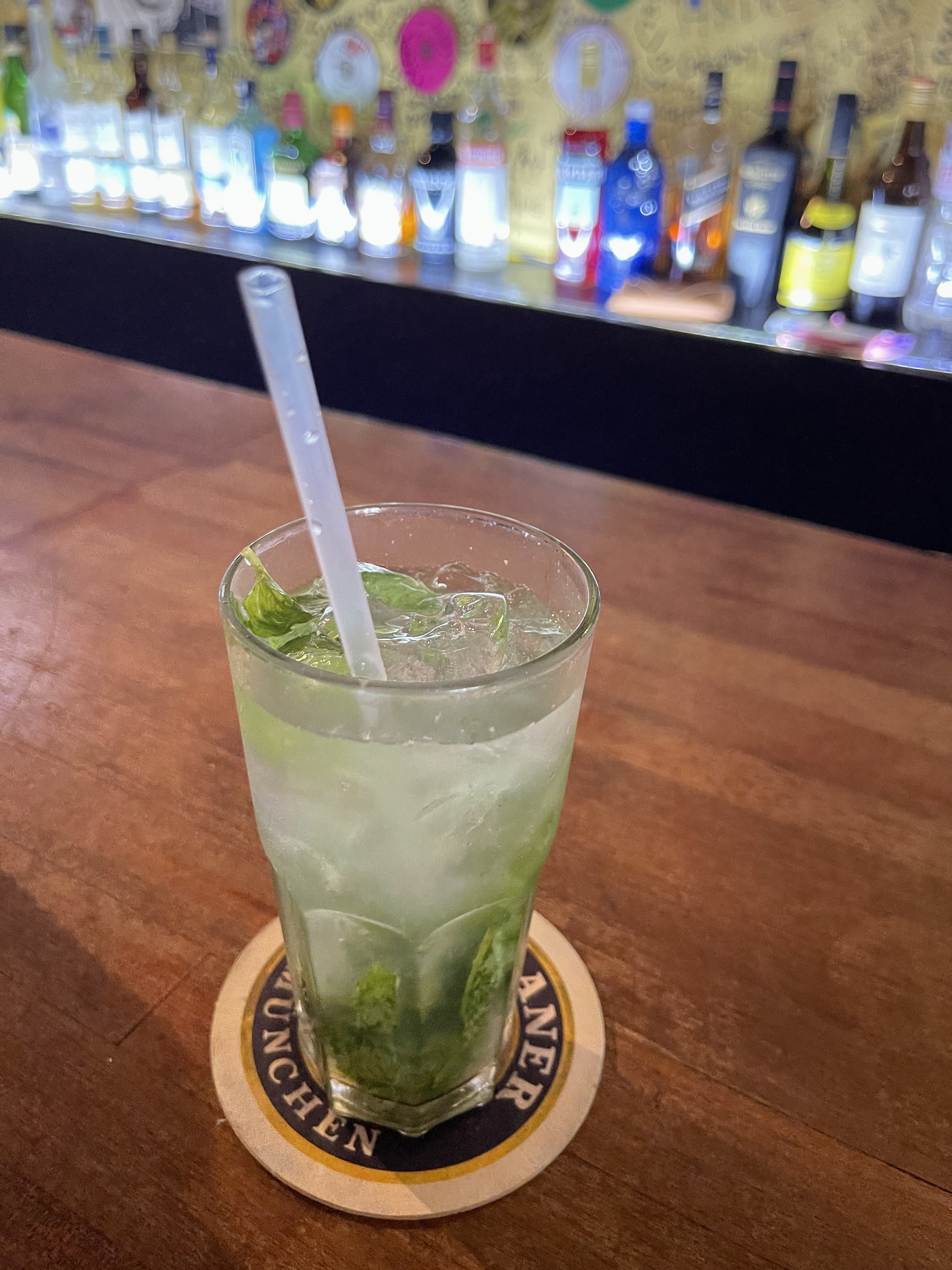

Commander Kelly says, "Visit the Dominican Republic, watch Vertigo and drink a mojito!"  


You can find signed copies of our books at these web sites...

!


Friday, April 23, 2021

Dogs on the Right / Cats on the Left


President Trump defied conventional wisdom in many ways.  He famously refused to host a dog at the White House despite the long history of Presidential dogs from FDR's Scottish Terrier (Fala) to Obama's Portuguese Water Dog (Bo).  Dogs are very popular among Americans and this decision could conceivably have cost Trump thousands of votes in the close 2020 election and, perhaps, even cost him his re-election.

Perhaps Trump failed to recognize that man's best friends are natural born Conservatives?  Dogs are clearly on the right, while cats are natural Lefties.

Dogs have no issue with nationalism.  Dachshunds and German shepherds are proudly German.  Chihauhaus are proud Mexicans.  Shih Tzus are proud of their Chinese heritage.  And so on.

Don't Defund Me!

Many dogs are working stiffs.  Dogs are important partners in the Global War on Terror, sniffing out bombs and patrolling foreign bases.  There are many "blue" dogs working in police canine units.  But even extreme leftists dare not ask for us to defund the police dogs!

Cats are indolent, uncooperative and unteachable.  Perfect little furry Commissars.

Dogs believe in private property.  They are territorial.  "My Bone!"  "My Yard!"


Cats are unapologetic Communists.  They are quite content to appropriate food from their comrades' bowls.  All property is theft according to feline / Marxist principles; so all cats are thieves.  Some of them swell to Garfield-size on pilfered kibble, reminding us of Orwell's Animal Farm pigs who are "more equal than others". 

Furry Commissars!

Cats are elitists.  They look down their feline noses at humanity, dogs and other creatures. They purr and they purr, all the while seeming to deliver dull environmental lectures on the "sustainability of their kitty litter boxes"!

Dogs are fanatically loyal.  Cats are notoriously unfaithful -- always "catting" about!

A few dog breeds may even be considered "Right Wing Extremists".  Dobermanns clearly have fascist tendencies.  Poodles are, of course, monarchists.  But the vast majority of dogs, from pure bred to mutt are comfortably Republican.

Dogs are proud.  Cats are disdainful.

Dogs protect hearth and home.  Cats are often burglars!

Dogs amass a horde of bones.  Cats seek a redistribution of kibble.

Dogs, as noted earlier, serve in the military.  Cats are primarily pacifists -- unless you are a mouse or bird!

Cats play the race card, insisting that Black Cats' Lives Matter.  But dogs understand instinctively that pooches of all colors and shapes have value.

Please note that Lions are an exception to the rule.   Clearly they subscribe to monarchist principles.  And are not to be trifled with.

There are always going to be a few exceptions.  AOC does have a rather cute French Bulldog named Deco...?

Dogs are fine with building a wall.  It keeps out foxes and other interlopers.  Cats leap on top of a wall flicking their tails and parading their general disdain for human contrivances.

Winston Churchill, Britain's great Conservative leader, will always be identified as a bulldog; no matter that he really kept poodles. John Lennon was, of course, a cat person.  "Imagine all the cat toys!"


Reagan had his beloved Rex (A King Charles Spaniel).  Cats "feel the Bern"!

Dogs on the Right / Cats on the Left.


You can find signed copies of our books at these web sites...

!


Monday, March 15, 2021

The Patriots


Patriotism seems currently out of fashion.  For many, pride itself seems to be associated with right wing extremism and violence (Proud Boys, etc.).  Why should we care about the lives of long dead white males?  To many of the "Woke," the Founding Fathers were an over-rated pack of slave-holding racists, right?  How are these stuffed shirts of the 18th Century relevant to our technology-obsessed 21st Century culture?

Winston Groom 1943 - 2020: RIP


The late Winston Groom, author of Forrest Gump (novel 1986, film 1994), turned his attention from Fiction to History in later life.  Groom's final book, The Patriots (www.amzn.com/1426221495) published in 2020, asks us to focus on the lives of three Founding Fathers who helped to make America Great from its beginning.  Groom was a US Army officer during the Vietnam War and a Southern voice (born in Alabama) who was not afraid of cutting against the grain of contemporary thought.

The Patriots presents us with biographies of three key figures in the Founding of America...Alexander Hamilton, Thomas Jefferson and John Adams.  None of these men were saints and Groom's work is no mere hagiography.  Hamilton threw his promising life away in a pointless duel with Aaron Burr.  Jefferson was a slave owner who seems to have fathered six children with his slave Sally Hemings.  Adams could be brusque and unpleasant.  Adams was a one term President who did not attend the inauguration of his successor Jefferson -- remind of anyone?  But these were men who shaped the United States of America in the critical early days of the Republic.  Moreover, these founding fathers affirmed principles that are today recognized as the bedrock of Conservatism...the Rule of Law, Gun Rights, Business Values and Financial Probity.  Having witnessed the tyranny of George III, all three of these men were advocates of limited government with Jefferson suggesting that government ought to be "rigorously frugal and simple".

Adams made his historical mark long before becoming the second US president.  The Boston Massacre occurred in March 1770 when British soldiers fired on and killed several members of a Boston mob that were hurling icy snowballs at them.  Adams was a rising lawyer who took on the extremely unpopular task of defending eight British soldiers.  He argued successfully that they were acting in self-defense.  Six were acquitted and two were convicted of manslaughter.  The rule of law applies to ALL -- no matter how unpopular the alleged transgressor may be.  Adams would have understood the civic necessity of a proper legal defense for the cop who killed George Floyd.

Thomas Jefferson tombstone:
Author of the Declaration of American Independence / of the Statute of Virginia for religious freedom / & Father of the University of Virginia

Jefferson was the greatest writer among the Founding fathers penning the immortal words of the Declaration of Independence.  Jefferson was a thorough Revolutionary who insisted that "the tree of liberty must be refreshed from time to time with the blood of patriots and tyrants."  What exactly would Jefferson have made of those who stormed the Capital on January 6, 2021?

We know for certain that Jefferson was an avid hunter and a gun collector who owned eleven pistols and a shotgun declaring, "I am a great friend to the manly and healthy exercises of the gun."  President Jefferson demonstrated a strong acumen for business purchasing the 828,000 square miles of the Louisiana Territory from Emperor Napoleon for the sum of $15 million or three cents an acre, effectively doubling the size of the United States.  Two centuries before Trump, Jefferson knew all about the Art of the Deal.  Insatiably curious, Jefferson dispatched Lewis and Clark to explore the West all the way to the Pacific Ocean.

Bitter partisan feelings did NOT begin with the 2020 Presidential elections.  Feelings ran high and editorial could be scorching in the early days of our Republic.  Thomas Jeffersons' words at his first inauguration speak eloquently to those of us in the 21st century on social media who may be inclined to block out or excoriate those with whom we disagree.  Jefferson said, "We are all republicans, we are all federalists...Every difference of opinion is not a difference of principle...Let us restore to social intercourse that harmony and affection without which liberty, and even life itself is a dreary thing." 

Alexander Hamilton never became president.  An illegitimate immigrant from Nevis, young Hamilton studied law at King's College in New York (later Columbia University). He served as a loyal aide-de-camp to General Washington during the American Revolution.  He amply demonstrated his ardor for his country on the field of battle leading the Continentals who stormed a British redoubt with fixed bayonets at the battle of Yorktown in 1781.  As the nation's first Treasury Secretary he established sound credit for the United States and, though accused by political opponents of many transgressions, was scrupulously free of corruption and self-dealing.  Hamilton did more than any man to make the United States as Groom writes, "one of the safest nations in which to invest".  His untimely death at the hands of Aaron Burr was a tragic loss for our country. Musical theater has brought his life back into deserved prominence in the 21st century.

The Patriots concludes with the summation that Adams, Jefferson and Hamilton were men "driven by their own passions and particular genius" who "chanced their fortunes on creating a more just and promising world." Groom's literary recalling of their lives is a deeply Conservative act that pays proper respect to our founding fathers and gives us a measure of inspiration for the future.  Winston Groom, who died of a heart attack in September 2020, was an American Patriot who will be sorely missed.


Travel Notes, etc:

If you are near Philadelphia be sure to check out the excellent Museum of the American Revolution which features George Washington's tent (https://americanconservativeinlondon.blogspot.com/2017/09/museum-of-american-revolution.html)

My own forebear, William Lee Davidson, served alongside Alexander Hamilton during the Yorktown campaign...https://www.blogger.com/blog/post/edit/4122629330054677829/6481761839499153267

I reviewed Winston Groom's The Allies earlier...https://www.blogger.com/blog/post/edit/4122629330054677829/6089705246017757121


You can find signed copies of our books at these web sites...

!


Wednesday, February 3, 2021

Foyle's War


Those of us who enjoy History and are stuck at home during this wretched pandemic would do well to check out the British miniseries Foyle's War (www.amzn.com/B011T0C7DW).  This detective series ran for nine seasons from 2002 until 2015 on ITV.  The series was created by the husband and wife team of Anthony Horowitz (Writer) and Jill Green (Executive Producer).  It features outstanding performances from Michael Kitchen (DCS Foyle), Honeysuckle Weeks (Samantha Stewart) and Anthony Howell (Sgt. Paul Milner).  Another highlight are the series' excellent cameo appearances from Charles Dance (GOT) to John Mahoney's (Fraser's Dad) final television role.

The mystery elements are cleverly plotted in the finest British tradition.  The 90 minute length of each episode allows for added complexity and density.  These are essentially 28 mini-movies on crime in Southeastern England.   Most are set with the ferocious backdrop of World War II.  Millions are being killed around the globe but someone still needs to worry about Colonel Mustard dead in his library in Hastings.  Enter DCS Foyle.  The final two seasons feature plots drawn from the Cold War.

But it is the unfailing respect for the past that I find so attractive about this series.  The visual attention to accurate detail is evident in the brilliantly arranged locations, costuming, grooming, cars, planes and sets.  This is a stylish and rewarding WW2 series.


Anthony Horowitz is a prolific author who wrote most of the screenplays for Foyle's War.  His plots are all drawn from real historic events that took place from 1940 to 1947.  Like Patrick O'Brian, he relied upon sound research rather than imagination.  The series begins in 1940 with the imminent prospect of a cross channel German invasion codenamed "Seelöwe" ("Sealion").  Fear and even paranoia have gripped seaside communities such as Hastings.  The Home Guard is not sitcom fodder (Dad's Army) but rather the first line of defense against Hitler's planned blitzkrieg against Britain.  Foyle's son, Andrew (played by Julian Ovenden) is a dashing RAF Spitfire pilot. -- one of "the Few" to whom so much is owed.


Other plots involve actual historic incidents such as the debacle at Slapton Sands in Devon where on April 27, 1944, American soldiers from the 4th Division were rehearsing D-Day landing plans.  They were interrupted by torpedoes launched by German E-boats.  Hundreds were killed and the incident was hushed up the tragedy due to intelligence concerns regarding the upcoming Normandy plans.

The grim reality and tawdriness of wartime Britain is unflinchingly depicted in the series.  Ration coupons and the trade in black market goods are a constant presence right into the Cold War era.  World War II was clearly a catalyst for the birth of Feminism and Civil Rights.  These themes are explored in episodes featuring British versions of "Rosie the Riveter" and racial tensions in a segregated US Army base in England.

An episode loosely based on the SS massacre of American prisoners at Malmedy is featured in a later episode.  This incident, which took place during the Battle of the Bulge in December 1944, is moved for dramatic purposes into the earlier Normandy campaign.

Horowitz gets high marks for cliché avoidance.  Christopher Foyle does NOT have an affair with his lovely driver played by the charming Honeysuckle Weeks.  Though, of course, Eisenhower did have a wartime  affair with Kay Summersby his beautiful Anglo-Irish chauffeur.  Everyone with a German accent is NOT guilty.  And so on.

Commander K at IWM, London


Foyle's War
is an extended History lesson about WW2 and Cold War that draws on meticulous research.  Terry Charman, a curator for the Imperial War Museum, served as an advisor throughout the series.   But this is no dry dessicated History lesson!  Each episode is a neatly plotted mystery which Foyle solves with coolness and sangfroid.  Foyle's War brings History to life.

From a British perspective, Americans were late to join both World Wars.  Personally, I have been late to appreciate Foyle's War which began in 2002.  Commander Kelly gives Foyle's War 5 stars and recommends it as the perfect pandemic binge option.


You can find signed copies of our books at these web sites...

!


Monday, January 18, 2021

Xi Fallin'


Xi Jinping


Xi Fallin'


Xi’s a good man,
Loves his Mao
Loves Confucius 
And China too
Xi’s a good man
Crazy ‘bout the navy
Loves Apples 
And Karl Marx too

Chinese Aircraft Carrier Liaoning


It's a long day
Livin’ in Wuhan
There’s a disease 
Runnin’ right through
And I’m a bad virus
Infecting the world
I’m a bad virus
For killin’ so many


Now I’m Xi
Xi fallin'
Yeah I'm Xi
Xi Fallin' 
Though China ain’t free


Now all the vaccines
Walkin’ through the valley
Move west down
The Great Wall
And all the bad viruses
Are standing in the shadows
And all the Covid widows
Are home with broken hearts


Now I’m Xi
Xi fallin'
But China ain’t free
Yeah I'm Xi
Xi fallin’
Xi fallin’
China ain’t free
Now I’m Xi fallin'
Now I'm 
Yeah I'm Xi 
Xi fallin' 
Xi fallin'
Xi fallin'
And I'm Xi
Xi fallin'
Commie China ain’t free
Xi fallin'
Xi fallin 
Now I'm 
Xi fallin'

I wanna glide down 
Over Beijing and DC
I wanna spread Covid 
Across the sky
I'm gonna Xi fall
Out into nothin'
Gonna lie to this
World for awhile


Now I'm Xi
Xi fallin'
Yeah I'm Xi
Xi fallin'
Xi fallin'
Yeah I'm Xi
Xi fallin'
Xi fallin'
Yeah I'm Xi
Xi fallin'
Commie China
Ain't Free!


Wednesday, September 23, 2020

Queen Boudicca: Fighting Celt

Americans may be destroying statues left and right and erasing their history but Queen Boudicca continues to ride her chariot with her daughters by her side along Westminster near the Houses of Parliament in London.  Long may it be so! 

Boudicca Statue, Westminster Bridge, London


Boudicca


Queen, rebel, warrior,

you resisted Rome, your name

resists oblivion.


Celtic history is full of strong women who knew their own minds and acted accordingly. The wife of a Roman emperor who criticized the sexual morals of Caledonian women got a crushing reply from one of them. The Caledonian woman told the Roman wife they were much better than Roman women, because they openly consorted with the best of men, while Roman women allowed themselves to be defiled in private by the worst of men.

But of all the strong women in Celtic history, one of the strongest must be Boudicca, a woman who came quite close to derailing the Roman occupation of Britain entirely.

She was, according to Roman sources, a striking woman with a strong voice and long auburn hair hanging below her waist.

Boudicca did not go looking for a fight with the Romans. Her people, the Iceni, occupied in Britain a territory roughly similar to the modern county of Norfolk. They had initially been allies of Rome as the Romans extended their power across southern Britain. Her husband Prasutagus was king of the Iceni; and when he died, the situation the Iceni found themselves in got quickly and catastrophically worse.

Prasutagus had no son and had named the Roman emperor his joint heir, along with his daughters, in an attempt to ensure continuing Roman protection for the Iceni. Instead, the Romans, perhaps perceiving a tribe with only a woman left to lead it as vulnerable, swooped in like vultures. Goods and estates were confiscated; loans were suddenly called in.  Boudicca herself was whipped, and, worst of all, her daughters were raped. If the Romans expected that they would escape punishment for all this, then they had picked on the wrong woman. Boudicca's revenge would be spectacular and blood soaked.

The Romans had chosen an unfortunate time to provoke Boudicca so mercilessly. It was AD 60 or 61, and the Roman governor, Gaius Suetonius Paulinus, was on the other side of the island leading a brutal campaign in what is now north Wales and Anglesey, when the Iceni rose in ferocious rebellion. They soon found allies among the Trinovantes to the south, and the combined force headed for the Roman veterans’ colony at Camulodunum, now Colchester. The veterans stood little chance. They received only a couple hundred ill-equipped reinforcements, and there were rebels among the Britons in the town. Some of the defenders managed to hold out for two days in the Temple of Claudius, but in the end the colony was looted, burned, and destroyed.

Worse was to come for the Romans. The Ninth Legion, which had been rushing to the rescue of Camulodunum, was attacked by the rebels and lost large numbers of its infantry contingent. The Roman cavalry fled to safety in a fort.

Suetonius raced across Britain to try to counter the rebellion, only to find himself in the Roman settlement of Londinium (London) with not enough troops to have a hope of dealing with the fierce uprising. He was forced to flee Londinium, abandoning it to the rebels who again seized and looted and killed and burned.  Next on the rebels’ target list was Verulamium/St. Albans. The Roman historian Tacitus reckoned almost 70,000 Romans and allies had died so far.

By now, however, the rebellion had achieved its greatest successes. Perhaps because of internal rivalries, other tribes, apart from the Trinovantes, do not seem to have rallied to the rebellion. As well as having Roman occupants, Verulamium was also the capital of the Catuvellauni, who were neighbors and probably rivals of the Iceni. Verulamium’s destruction may have been aimed as much at the Catuvellauni as at Rome

Coming in 2021...!

And after his false start in London, Suetonius finally came up with a plan. He assembled a force consisting of the 14th Legion, elements of the 20th Legion, and additional auxiliaries and he advanced on the rebels. Knowing he would be hugely outnumbered, he found a location where the landscape gave some cover to his flanks and his rear and awaited the enemy. The exact battle site is unknown, although various possibilities have been suggested. It was probably somewhere in the Midlands.

Boudicca, riding in a chariot with her daughters, urged on her forces, telling them that as a woman, she would conquer or die; and that men could live as slaves if they couldn't match her determination. The battle that followed saw bravery and tactical naivete defeated by professional discipline and military experience. Retreating rebels were caught up in their own baggage train and slaughtered. Boudicca is said to have drunk poison rather than be taken prisoner.

The rebellion had been crushed, but it had been far from an easy victory for Rome. And in the aftermath, with a still sullen and hostile population to deal with, the Romans were forced to offer some conciliatory measures, including dispatching to Britain administrators who could take a more intelligent and somewhat more gentle approach to stabilizing Roman control there.

Boudicca’s legacy endures in Britain today, where a statue of her riding in a chariot alongside her two victimized daughters graces Westminster Bridge across from the Houses of Parliament.