In 1948 Peggy Guggenheim, an American heiress, bought the Palazzo Venier dei Leoni in Venice to house her growing art collection. She first opened her collection to the public in 1949. The Peggy Guggenheim Collection in Venice (http://www.guggenheim-venice.it/) features a splendid collection of modern art.
Commander K. on Peggy's throne, Venice, IT
Peggy was the daughter of Benjamin Guggenheim who had died while crossing the Atlantic on the Titanic in 1912. On hearing the news of the collision with the iceberg, Guggenheim changed into his evening wear and was last seen drinking cognac and smoking a cigar with his valet. His French mistress, Léontine Aubart, survived the Titanic disaster and lived until 1964.
Silver Bed Head, Alexander Calder, 1946
She founded the Guggenheim Jeune gallery in London in 1938. Peggy lived for 30 years as an expatriate in Venice, from 1949 until her death in 1979. She was an exceptionally shrewd art collector who was willing to take colossal risks. Hitler's invasion of Poland in September 1939 was like a starting pistol to Peggy Guggenheim who began an almost frenzied shopping spree for art while in Paris at that time. She managed to flee from Paris to Grenoble only days before the Nazis rolled into the capital in 1940. Fearful for her life as a Jewish woman in Vichy France, Peggy managed to escape to the USA in the summer of 1941.
Half-Length Portrait of a Man, Picasso, 1939
PGC, Venice
She returned to a war-ravaged Europe in 1947 and soon bought her Venetian Palazzo. For many years she lived in the Palazzo Venier dei Leoni, sharing its space with visiting tourists. This unfinished 18th century Palazzo is positioned on the Grand Canal.
The eternal Masculine lifts us ever upward! The Angel of the City, Marino Marini, 1948
Peggy loved her Lhasa Apsa dogs. All fourteen are buried near her final resting place in her beautiful sculpture garden just beside the museum.
Peggy's Lhasa Apsa Memorial
The Sculpture Garden has many treasures...
Chariot, Fritz Koenig, 1957
She had a fine eye and was a discriminating collector.
Voice of Space, Magritte, 1931
Peggy was an American eccentric who lived a bohemian lifestyle. Peggy was said to have had a voracious sexual appetite. She was married and divorced three husbands, a writer and two artists (including Max Ernst). She had an affair with Samuel Beckett. She is alleged to have had over 1,000 different partners.
Maiastra, Brancusi, 1912?
PGC, Venice
Benjamin Guggenheim went down with the Titanic; Peggy Guggenheim went...well, she went nearly everywhere!
Pomona. Marino Marini, 1945
Peggy Guggenheim lived life on her own terms. She experienced many tragedies including the probable suicide of her artist daughter Pegeen. Nevertheless, near the end of her life she summed it up thus, "I look back on my life with great joy. I think it was a very successful life. I always did what I wanted and never cared what anyone thought. Women's lib? I was a liberated woman long before there was a name for it."
Windows Open Simultaneously, Robert Delaunay, 1912
PGC, Venice
Commander Kelly says, "Today her collection brings joy to millions. If in Venice, go check it out!"
This week Putin's Russian bear found her Crimean bear cub. This mommy will not let her baby out of her sight for a very long time!
San Cassiano, IT
In the heart of the Italian Dolomites one can find the Museum Ladin -- a Bear Museum (www.museumladin.it! It lies in the picturesque town of San Cassiano which is a paradise equally for winter sports and summer hiking.
In 1987 Willy Costamoling, an alpinist and local businessman, stumbled upon the Conturines cave while he was looking for fossils and minerals. He had neglected to bring his flashlight. On a second visit, equipped with illumination, he discovered the Hall of skulls. He brought some pieces of skull back to a Viennese Professor of Paleontology who returned the following year to excavate.
They had found a graveyard of giant Mountain cave bears who lived around 25 to 60 thousand years ago. These bears were much larger than the Brown bears or even polar bears that we know today. They have determined from the shape of their teeth that these were pure herbivores -- like today's Panda bears.
These Italian bears would, therefore, never have ordered pepperoni pizza. "Solo con fungi per favore!"
Cave Bears Chilling
Temperature extremes were much greater in the time of the Cave bears. During the summer these bears would seek refuge from the heat in high mountain cave (the Conturines cave entrance is at 2,750 meters above sea level) while during the winters these bears would hibernate. During hibernation they could survive for months without food or water.
These bears could live up to 35 years -- almost twice the 20 year lifespan of today's brown bears.
No evidence of humans was found in this cave. Not even a pizza delivery box.
Weighing in at 1200 kg versus 250 kg for today's European brown bear, these cave bears would have been much bigger than the ones featured in the bear-baiting street entertainments that Elizabeth I apparently preferred over Shakespeare's plays in the back alleys of London.
Ursus ladinicus skeleton, San Cassiano
These bears became extinct about 24,000 years ago, probably due to climate change. Some will be disappointed that Man-made emissions do not seem to have played a role here! A great glacial ice age probably proved too cold for them to survive. There is no vegetation growing today at this altitude near the site of Conturines cave.
The Museum Ladin opened in 2011. If you can't bear another run on the slopes go check it out!
Rumors that these magnificent creatures may have crossed an ancient land bridge and migrated to Berkeley, California are completely unfounded!
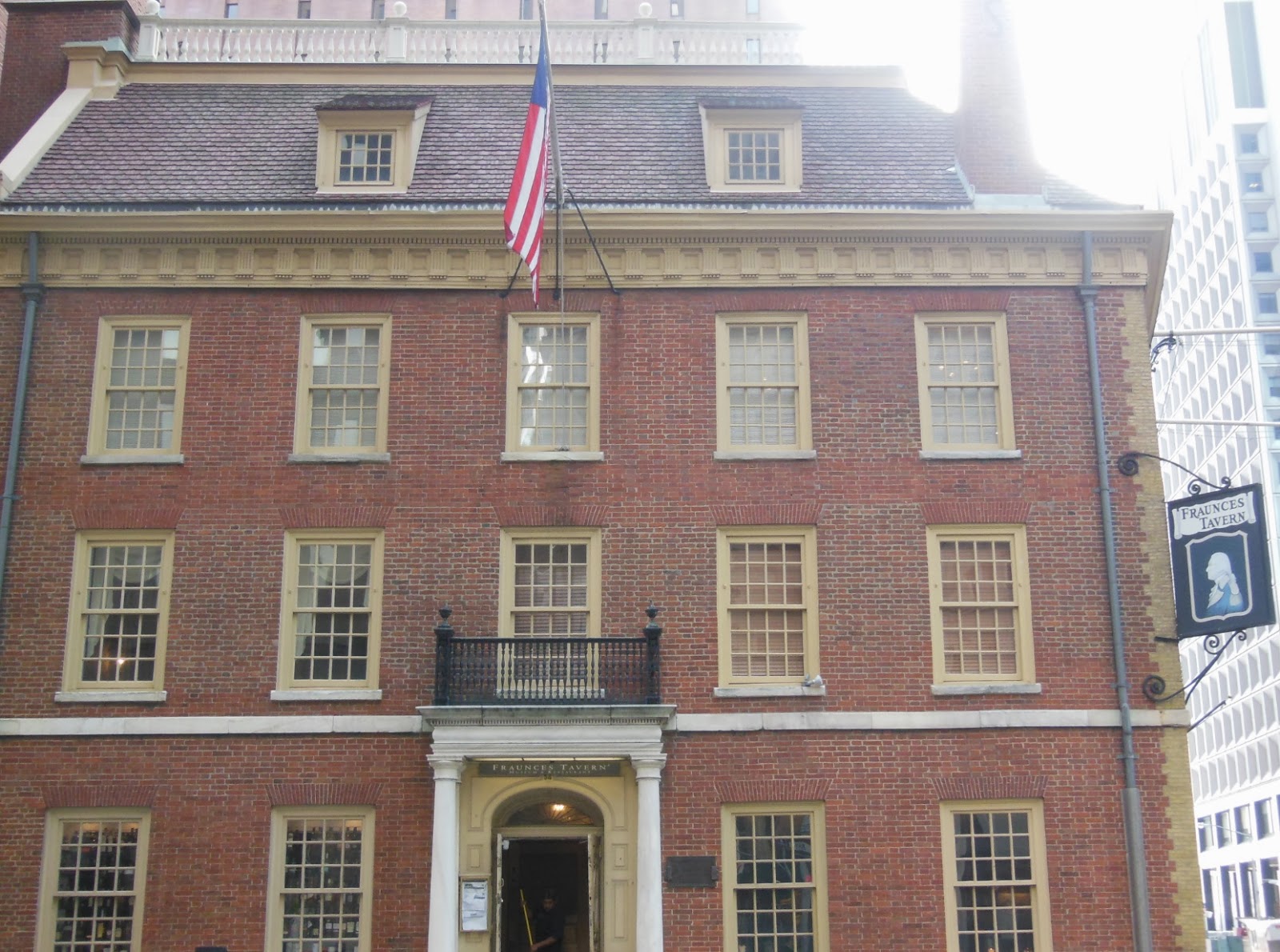
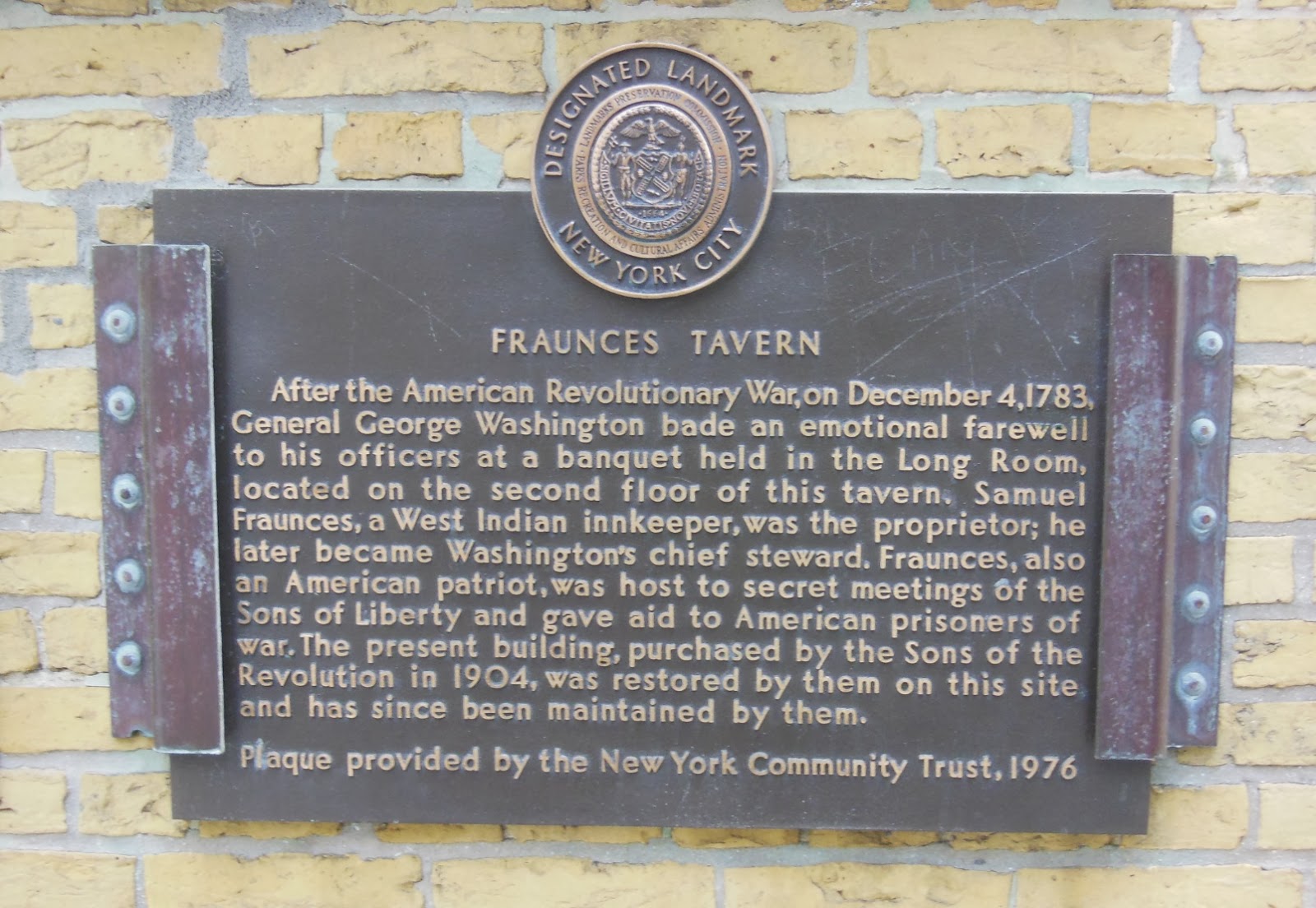
A visitor to New York can step back in time and touch our Colonial and Revolutionary past with a tour of Fraunces Tavern on 54 Pearl Street in lower Manhattan http://frauncestavernmuseum.org/. In this haunt of old New York you will find a selection of draft beers, oysters, and American history. This is a beautifully-restored colonial tavern that was founded by Samuel Fraunces in 1767. It was in the Long room of Fraunces tavern in 1783 that General George Washington bade an emotional farewell to his officers after winning victory in the American Revolution. He had hoped to retire peacefully to his farm at Mount Vernon. It was not to be.
George Washington Life Mask
Morgan Library, NY
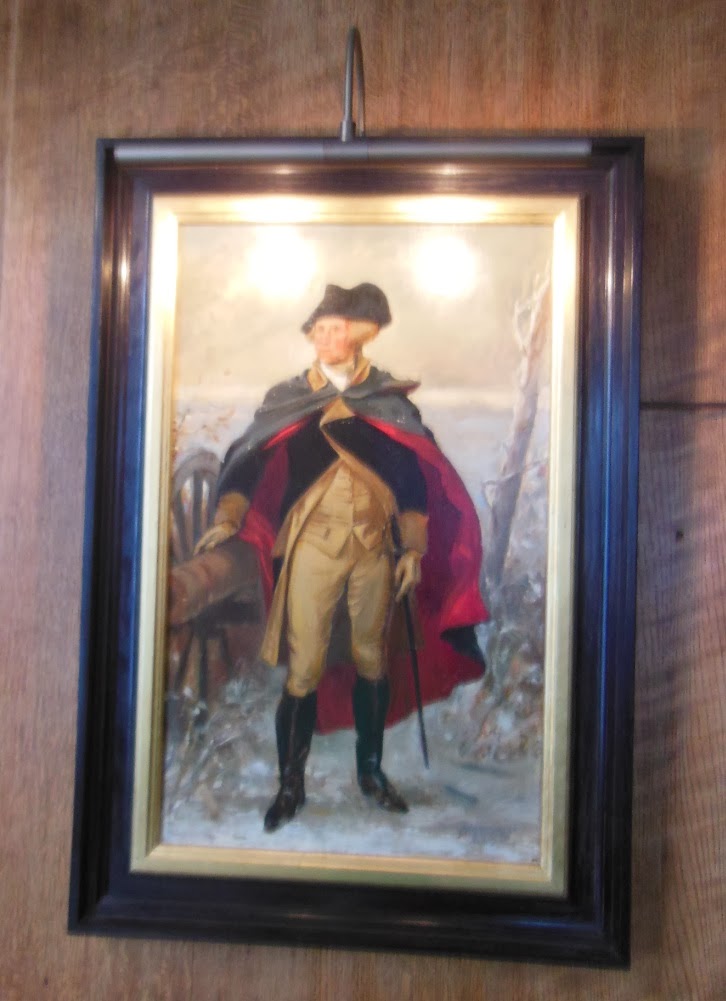
George Washington was the "indispensable man" of the American Revolution (http://americanconservativeinlondon.blogspot.co.uk/2012/02/george-washington-in-london.html). He led the nation in a long struggle against the greatest military power of that age -- the British Empire. The American Revolution has proven to be by far the most successful Revolution in human history. It is the Revolution whose reverberations that continually encourage the cause of human liberty are felt to this day.
GW: "The Indispensable Man"
Fraunces Tavern
At the heart of this Revolution was a leader of exceptional integrity. He shared the sufferings of the men under his command at Valley Forge and throughout the Revolution. On March 15, 1783 Washington addressed his officers in Fraunces Tavern thus: "I have never left your side one moment...I have been the constant companion and witness of your Distress, and not among the last to feel and acknowledge your merits...I have ever considered my own Military reputation as inseparably connected with that of the Army." (Source: The Art of Command, Integrity and Leadership, Caroline Cox, 2008 www.amzn.com/0813126606).
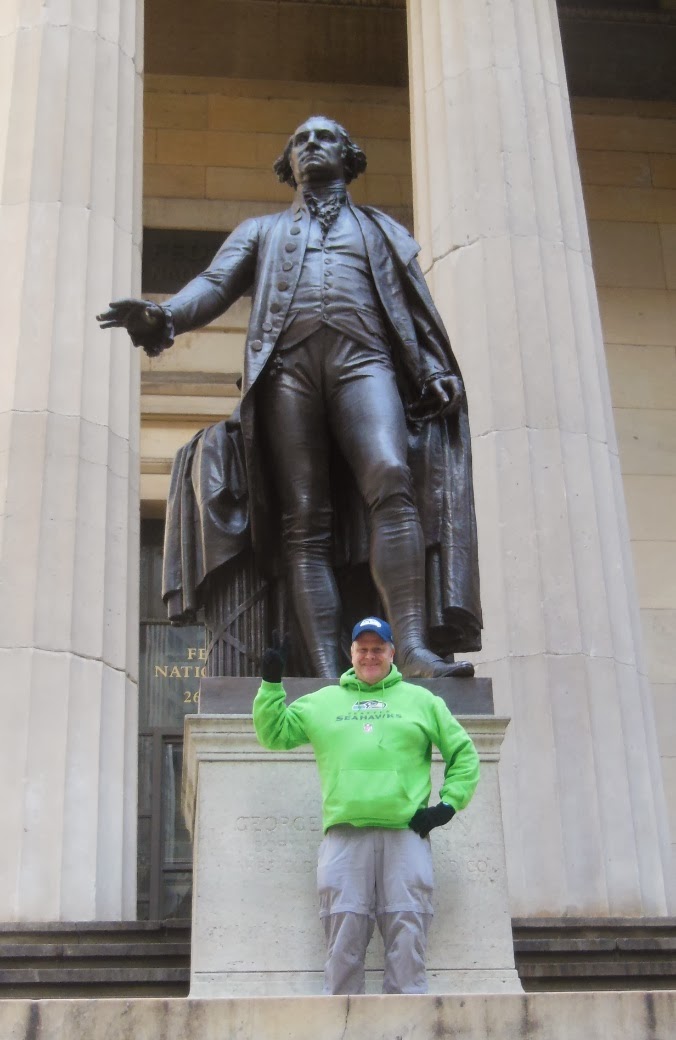
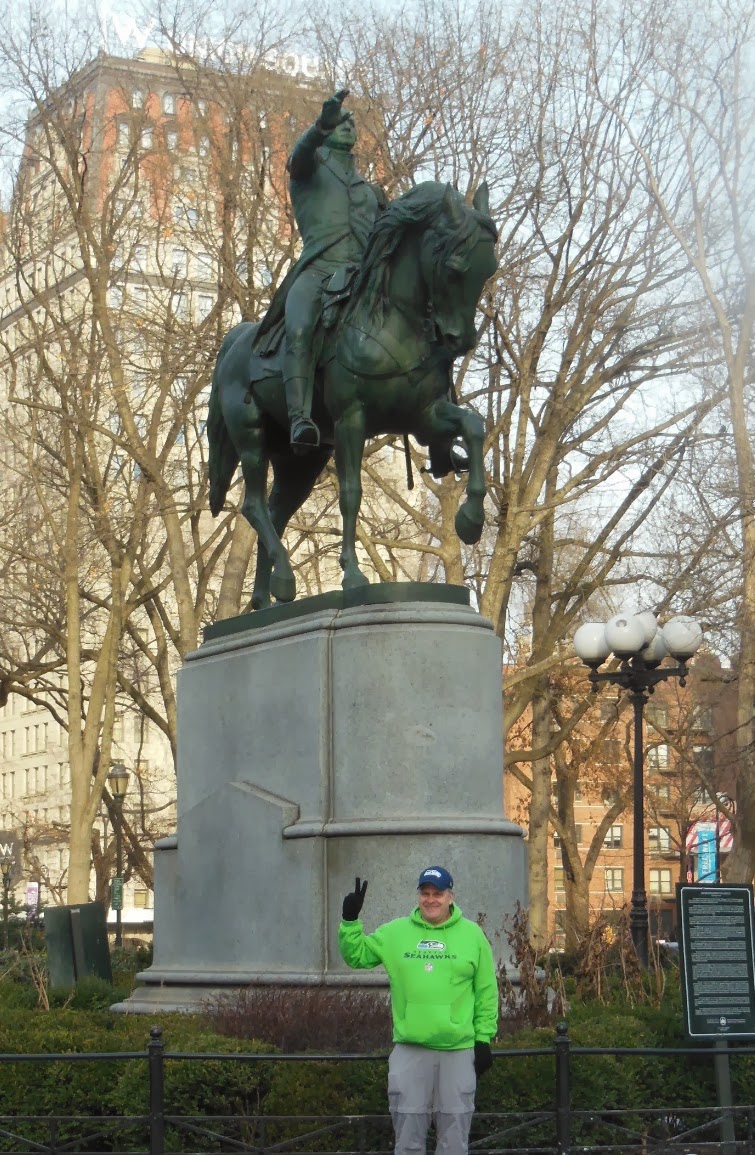
Commander K. and George Washington
Wall and Broad, NY
Some of Washington's officers were tempted by the prospect of using their military superiority to the over the rings of the Colonial government. They wanted him to become an American Caesar. Washington rebuffed those who sought to "overturn the liberties of our Country". He demanded that they do nothing "which, viewed in the calm light of reason, will lessen the dignity and sully the glory you have hitherto maintained."
54 Pearl Street, NY
At the conclusion of the war the Continental Congress was essentially broke. His officers feared that neither they nor their men would be paid. Washington sought to reassure his officers with a densely written text explaining the nation's financial difficulties. He pulled his spectacles out of his pocket to read more easily and remarked, "Gentlemen, you must pardon me, I have grown gray in your service and now find myself going blind."
Commander K. + GW
Union Square, NYC
In 1783 New York was the nation's capitol. George Washington formally resigned his commission on 23 December, 1783. He addressed the president of Congress, Thomas Mifflin as follows: "Having now finished the whorl assigned me, I retire from the great theatre of Action; an bidding an Affectionate farewell to this August body under whose orders I have so long acted, I here offer my commission , and take my leave of all the employments of public life." Mifflin responded, "You have conducted the great military contest with wisdom and fortitude, through invariably regarding the rights of the civil government through all disasters and changes." (Source: The Art of Command, Integrity and Leadership, Caroline Cox, 2008 www.amzn.com/0813126606).
An American Treasure
Thomas Jefferson would pronounce that George Washington's integrity was "most pure, his justice the most inflexible I have ever known, no motives of interest or consanguinity, of friendship or hatred, being able to bias his decision...His character, was, in its mass, perfect" (Source: The Art of Command, Integrity and Leadership, Caroline Cox, 2008 www.amzn.com/0813126606).
It was Washington's sterling reputation for integrity and his incorruptibility that made him the rarest of all creatures -- a successful nation-builder.
If you don't find that important or relevant just consider the contrasting state of affairs in Afghanistan today. Hamid Karzai's recently assassinated brother (Ahmed Wali Karzai) made a fortune off of illegal drug trafficking. Billions of dollars of American and Western aid to Afghanistan has found its way to bank accounts in Dubai and Switzerland.
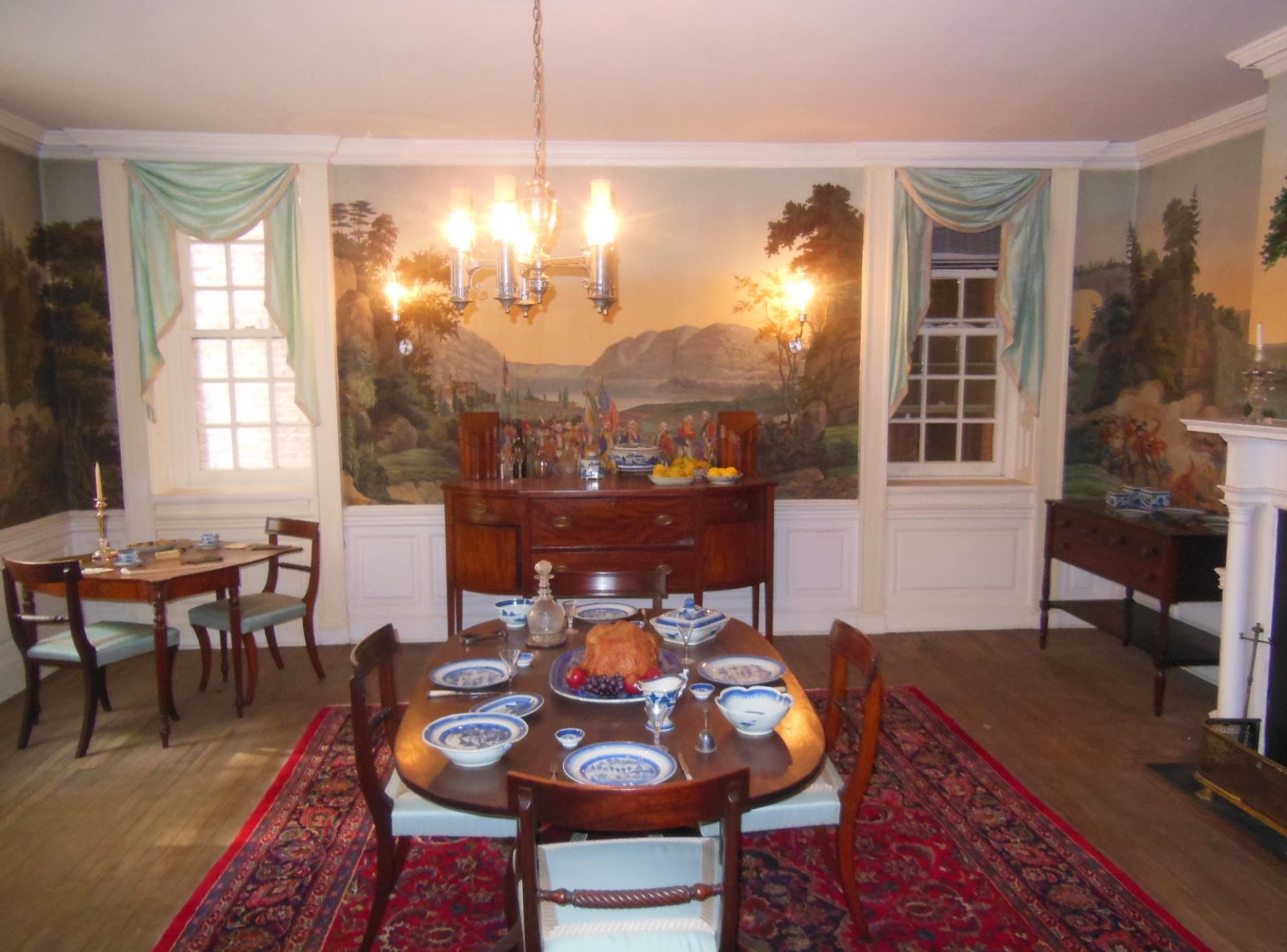
Dining Room, Fraunces Tavern
Fraunces Tavern has an attractive bar and restaurant. You will also find a small museum upstairs. There are recreations of colonial era living spaces.
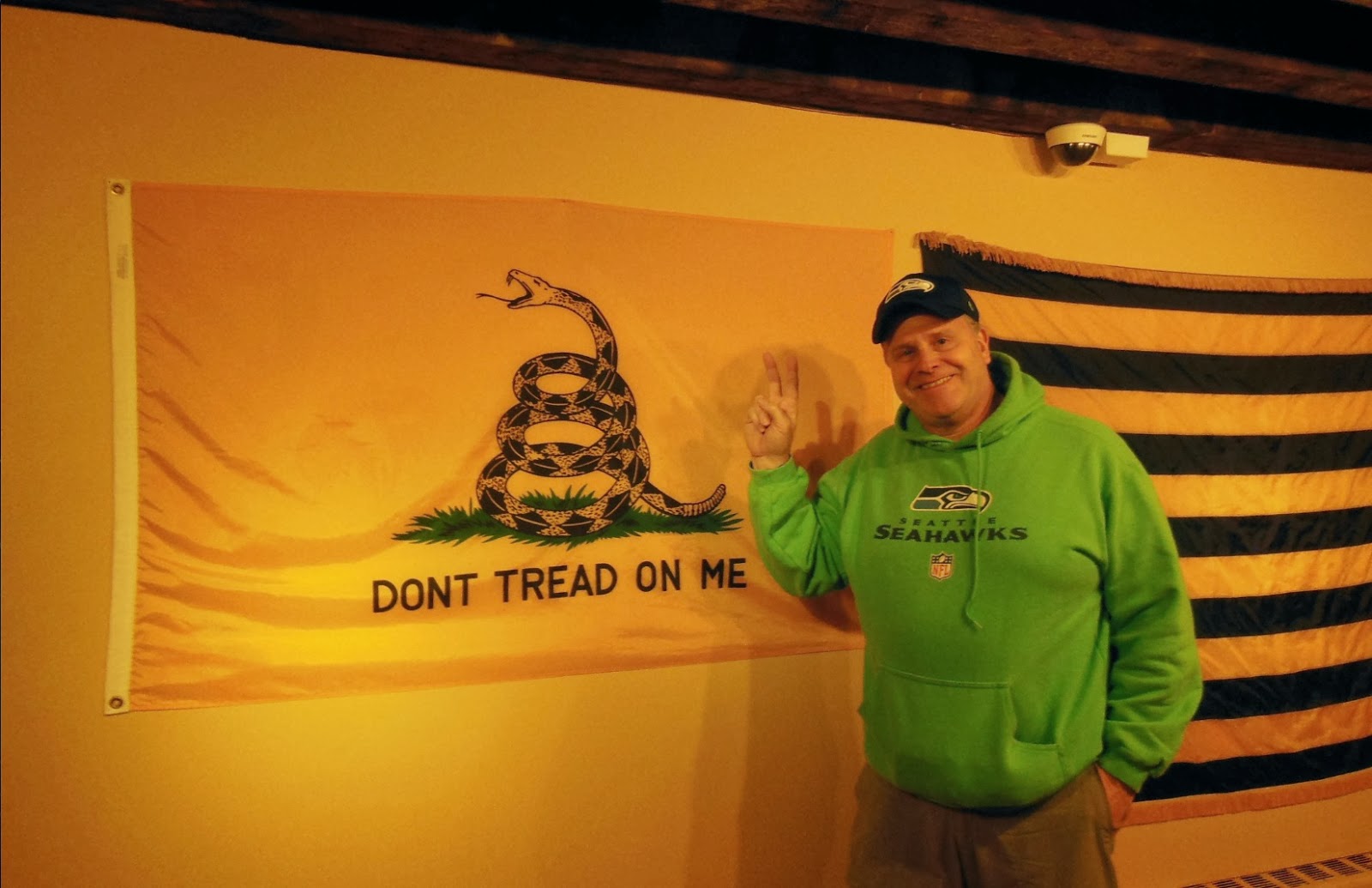
Don't Tread on the Commander!
You will also find a gallery featuring the evolution of the American flag.
Flag Gallery, Fraunces Tavern
Commander Kelly says, "If you live in or are visiting NYC be sure to get in touch with your founding fathers at Fraunces tavern. Beer, oysters and history are always a great combination!"
Special thanks to Marco Kelly my photographic assistant!
America Invades: How We've Invaded or been Militarily Involved with Almost every Country on Earth
101 Fighting Celts: From Boudicca to MacArthur is coming Soon!
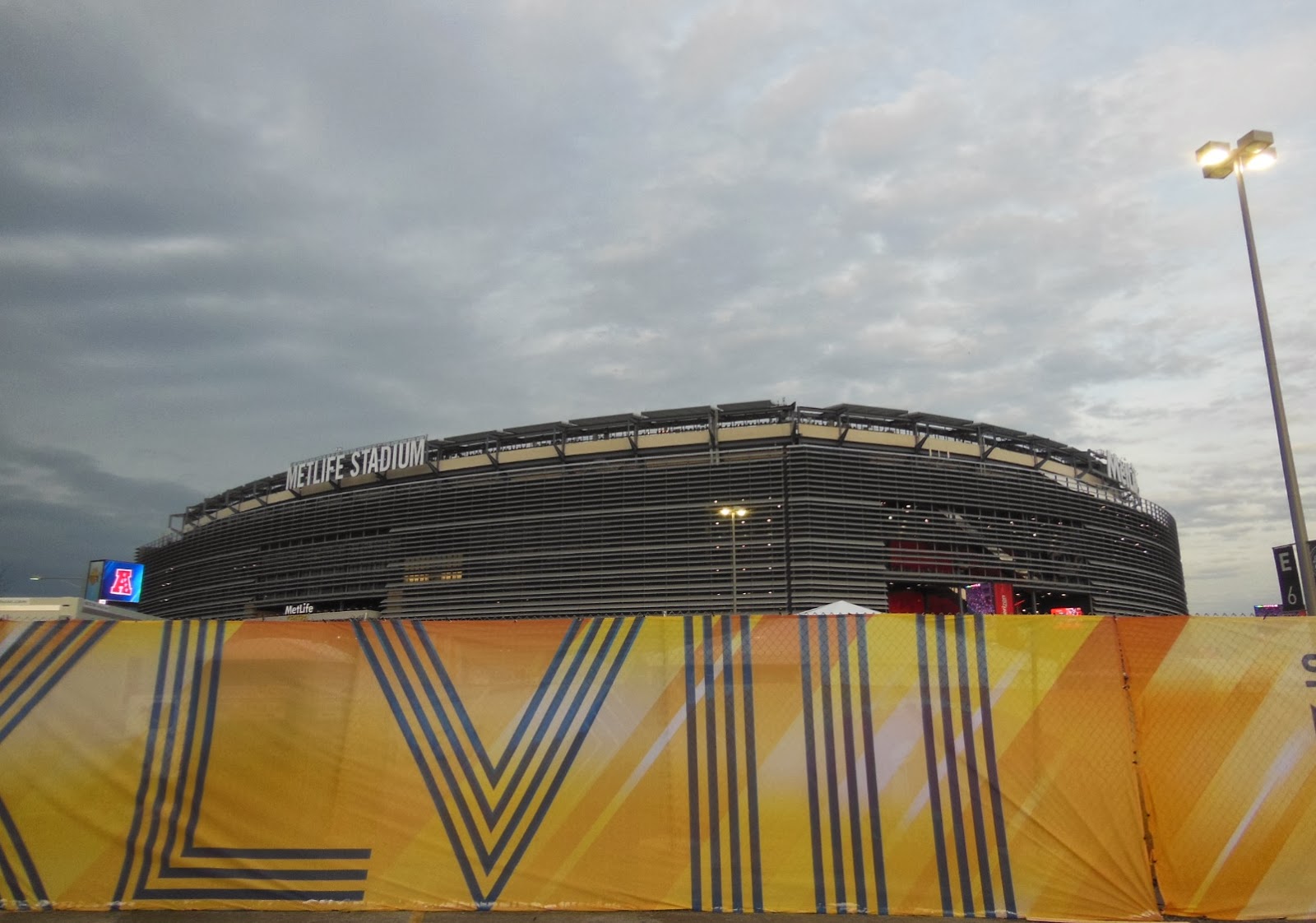
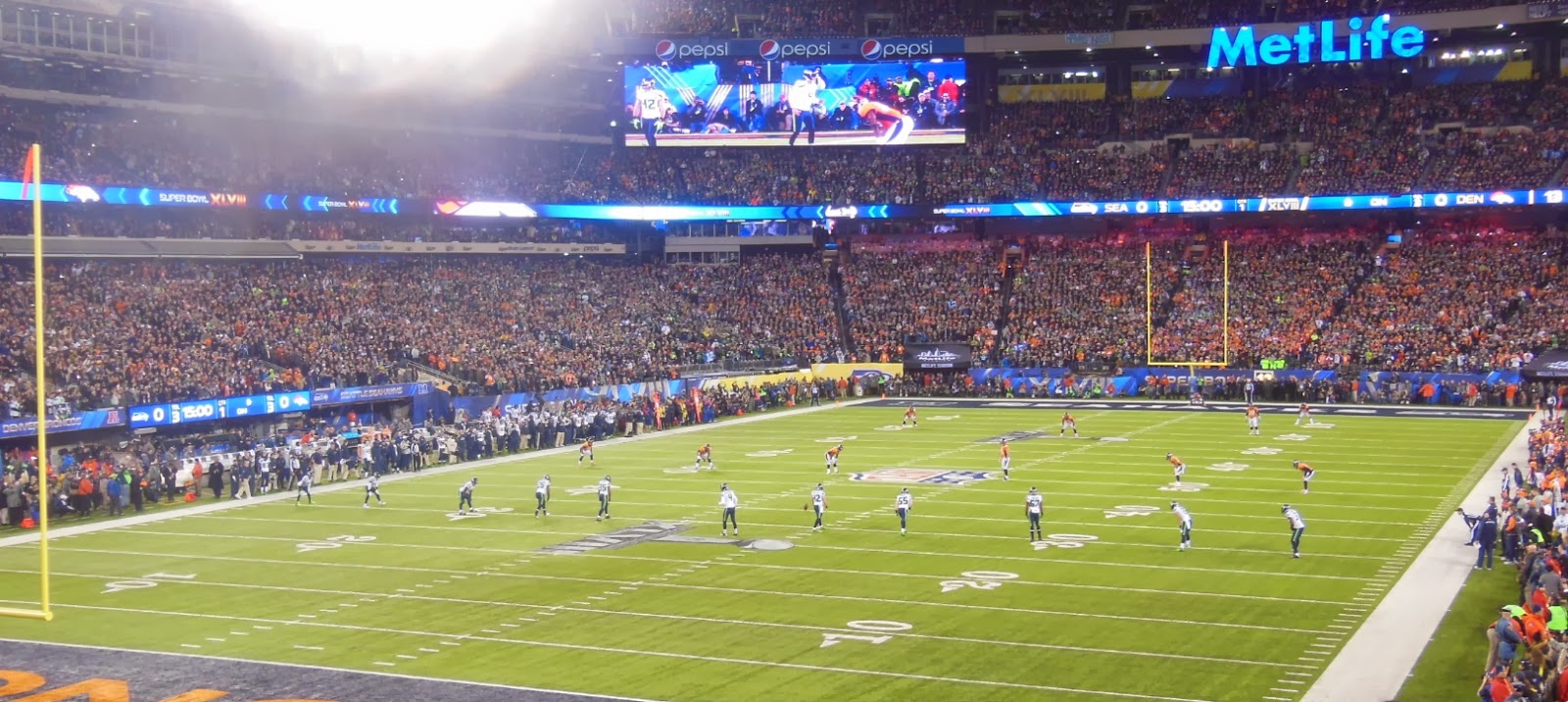
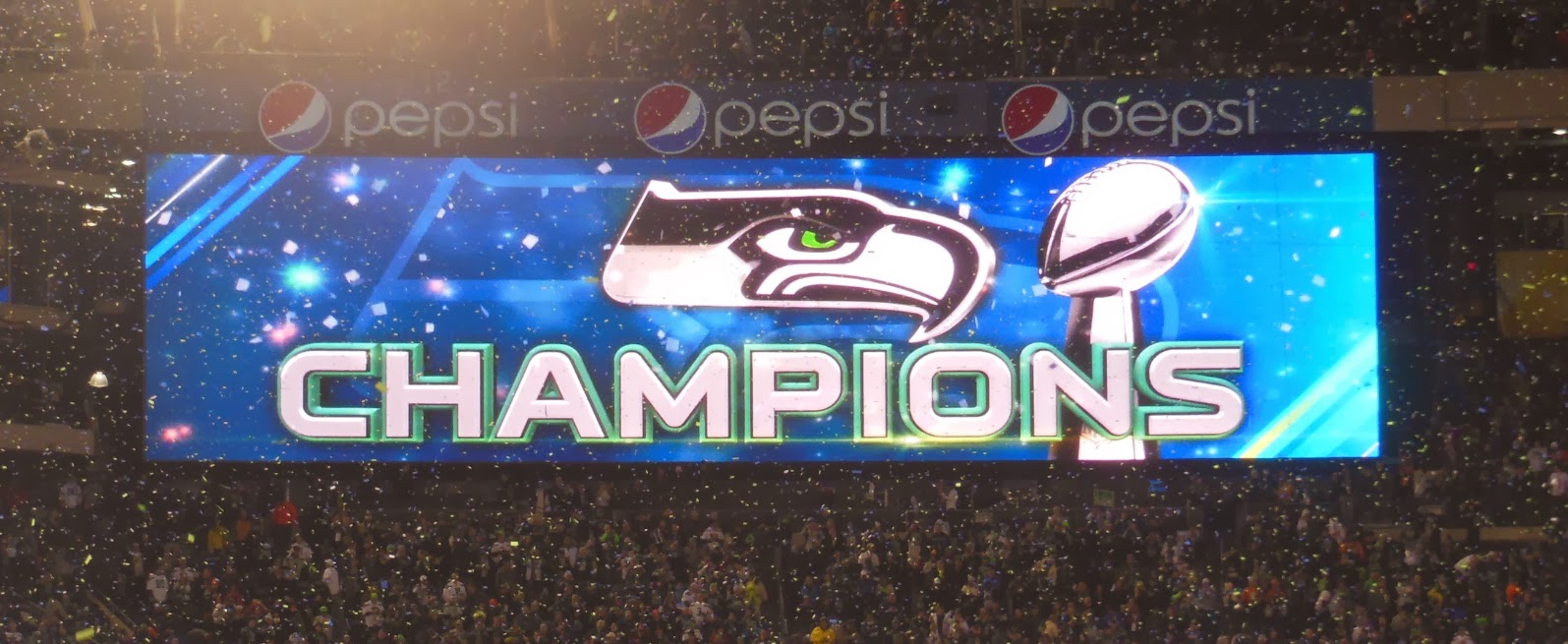
I had the great good fortune to take my son Marco with me to New York / New Jersey last week to attend Super Bowl XLVIII. We had a fantastic time watching the Seahawks win the first Super Bowl Championship in their franchise history.
Super Bowl XLVIII Kicks-off!
It was with great anticipation that we took our seats to watch the "Best offence in football" led by the brilliant Peyton Manning take on the "Best Defence in football," supported all season long by the "12th Man". I fully expected the Broncos to score at least three touchdowns.
The final score was 43 to 8 in the Seahawk's favor. Last Sunday in New Jersey the message was clear: BRUNO WAS FROM MARS, BUT PEYTON WAS FROM VENUS!
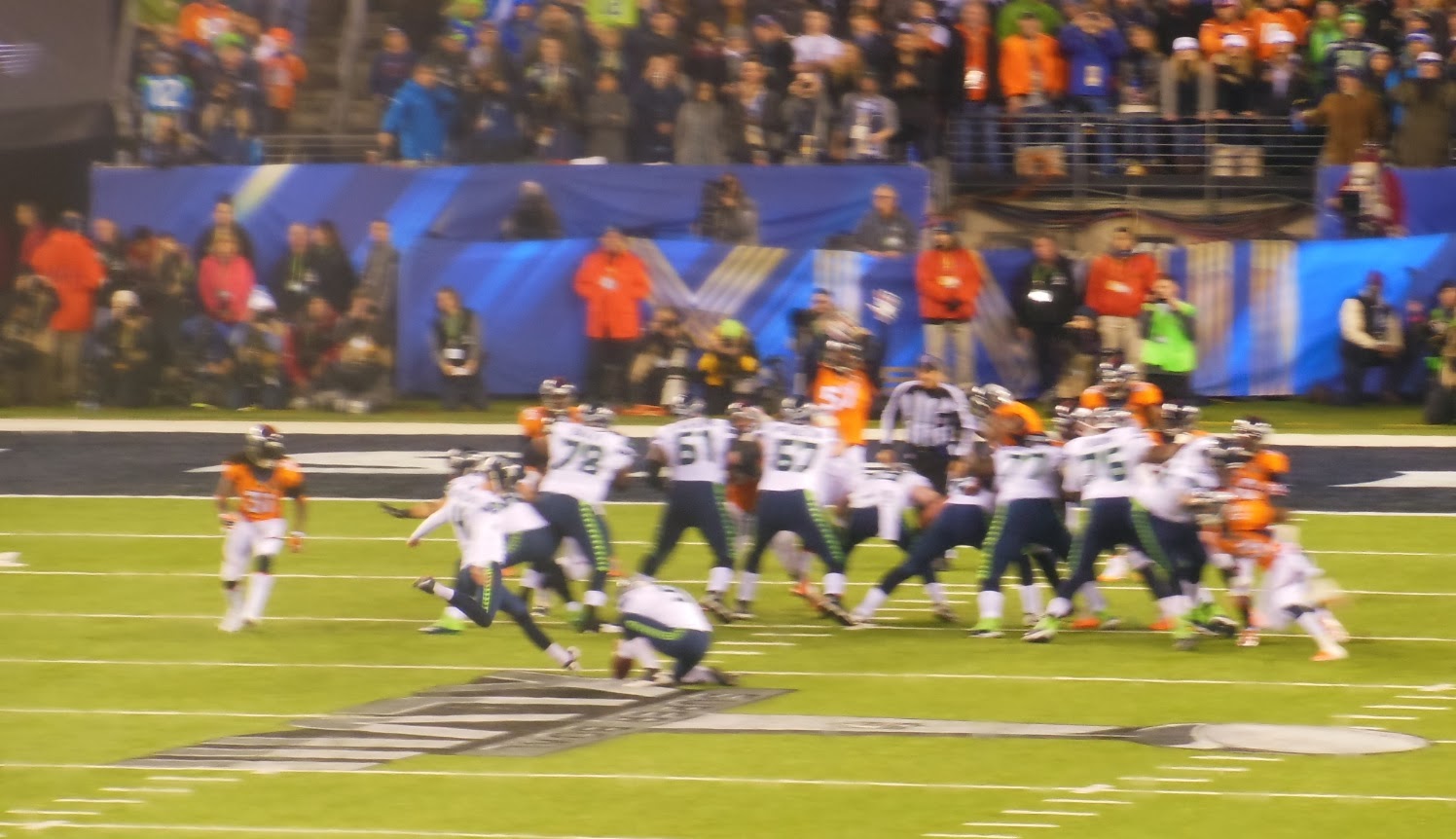
Did somebody see a football?
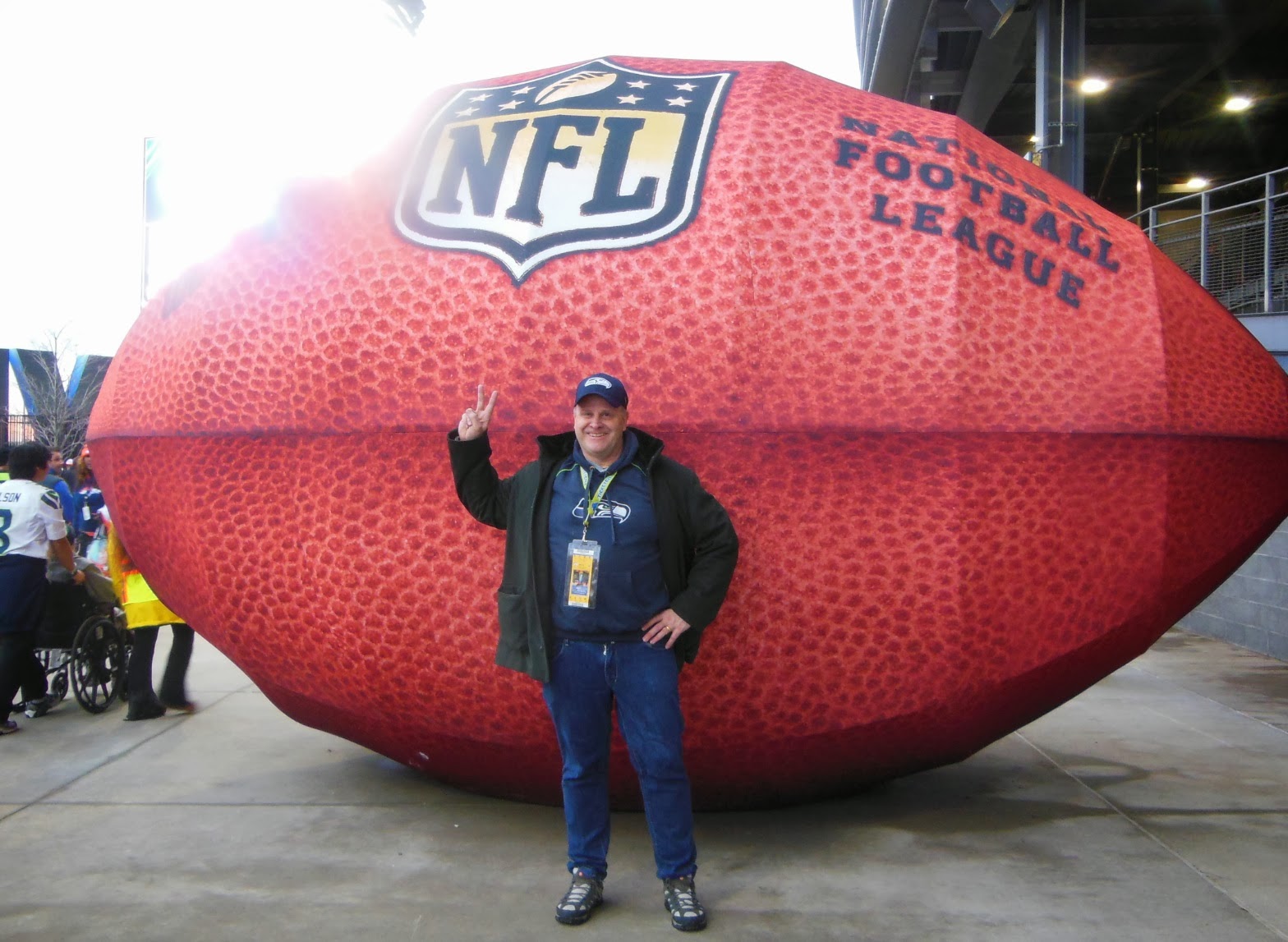
Commander K. goes to Super Bowl XLVIII
We Seattle fans have been waiting patiently since 1976 for the team to win its first Super Bowl. That long wait paid off in 2014. The Seattle Supersonics, led by coach Lenny Wilkins, were the first to bring a professional World Championship to Seattle in 1979.
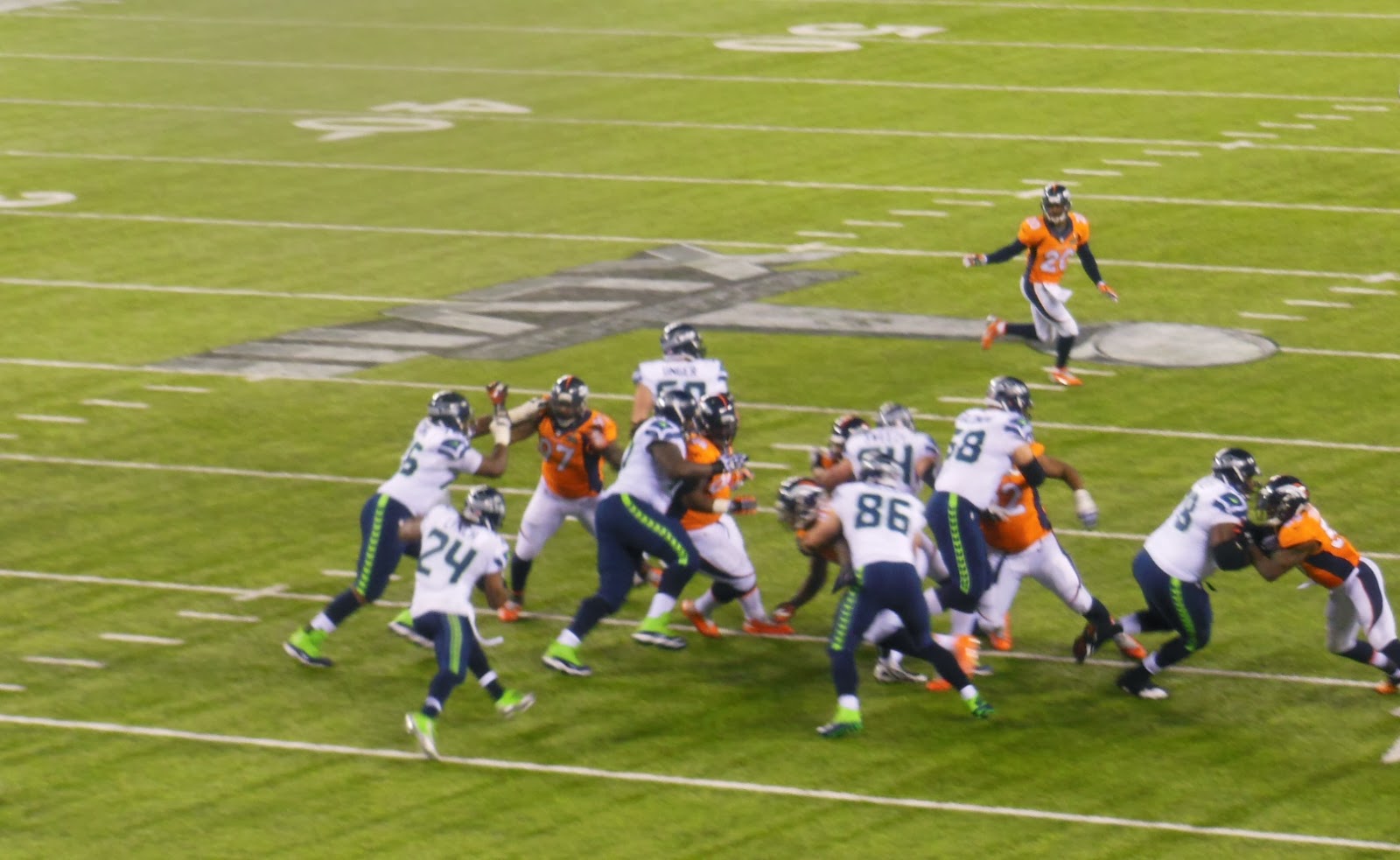
Seahawks driving
There is so much about this Seahawk team to love. Russell Wilson the sophomore quarterback who was deemed "too short" to play at a professional level has proven his ability to lead this team with poise and grace (see Letterman interview below). The scary thing (for other NFL teams) is that Russell Wilson is still growing as a player and will be even better next season. Russell asked of his teammates "Why not us?"
The "Beast" takes it up the middle!
Marshawn Lynch is my personal favorite Seahawk player. The laconic Lynch believes in "deeds not words". The Beast leaves tacklers in the dust and munches on skittles.
Percy Harvin redeemed an injury-clouded season with some spectacular runs last Sunday. Mercy, mercy, Mr. Percy! Seahawk fans are excited about the prospect of a healthy Harvin for the whole 2014 season.
Richard Sherman, with his outburst following the incredible conclusion of the NFC Championship game, received lots of attention. We tend to forget that he had just been shoved in the face by Crabtree. The fans have no idea how much these two players may have taunted each other in the previous three hours of heated competition. He was amped up in full "warpaint" mode at the time, but there are other sides to Richard Sherman. His Compton to Stanford to Seattle story is truly inspiring. Sherman's March to the Super Bowl reminds us that "those who think ill of themselves usually have good reason to."
How can anyone not be touched by the inspiring personal story of 23 year-ol Derrick Coleman? (See video below).
To my SF friends I say "Respect!" The two best teams in the NFL today happen to play in the NFC West. The best game of the postseason was the NFC Championship game featuring the Seahawks and the 49ers. Every time these two teams play it is a "Clash of the Titans".
It was, of course, loud throughout the game. We sat next to two well-behaved young men who had been college roommates. One was kitted out in Seahawk blue while the other was dressed in Bronco / convict orange. There is hope for bipartisanship!
Congrats too to all my colleagues at Q-13 Fox in Seattle who did an outstanding job in covering this championship team from the preseason to the amazing parade celebration in Seattle on Wednesday, February 5th. Job well done!
2013 marked the centenary of the birth of Robert Capa -- the greatest war photographer of all time. Endre Friedman was born in Budapest on October 22, 1913. His father was a Jewish tailor. In 1931 he moved to Berlin to study journalism. After Hitler's accession to power in 1933 he fled the "garden of the beasts" and eventually wound up in Paris. In 1936 he changed his name to "Robert Capa" and arrived in Spain to cover the civil war. In Paris he met the great love of his life, Gerda Taro; she would later be killed in the Spanish civil war while working as a war photographer.
"Moment of Death"
During the Spanish civil war he took the famous "moment of death" photograph that launched his career. This photograph remains controversial to this day with contemporary war correspondents and photographers. The perfection of this violent image invites the insidious question: "Could it have been staged?"
In the book Frontline: Reporting form the World's Deadliest Places David Loyn writes, "Ever since doubts were raised over Robert Capa's 'moment of death' photograph, which appears to show a soldier as he is hit by a bullet in the Spanish civil war, war photography has been under scrutiny. The evidence for Capa's picture being exactly what it looks like is strong, but doubts remain. It is easier to sit in a bar and retell rumour and suspicion than it is to go out and put your life on the line to take real pictures. Nobody can say what pictures show except the person who took them; interpretation comes down to trust." (Source: Frontline: Reporting form the World's Deadliest Places, David Loyn, 2011, www.amzn.com/1849531412)
In 1937 Capa made his first visit to the United States. By 1943 he was an accredited war correspondent in the US Army. He would document the campaign in Tunisia, Sicily, Italy and the D-day Landings. The opening 20 minutes of Spielberg's Saving Private Ryan are an homage to Robert Capa's work as well as a tribute to the heroes who fought on June 6, 1944.
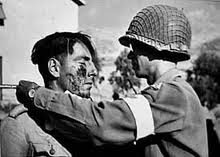
German POW and US Army medic, Sicily 1943
The immediacy and impact of World War II photography, including Capa's, was far greater than the photography of the First World war, just as the films of the 1940s are more memorable than the films of the silent era.
Omaha Beach, June 6, 1944
Capa's war photography made him a famous celebrity. He had a two year relationship with Ingrid Bergman beginning in 1945.
Siclian peasant and US Officer, Sicily 1943
"The Germans went that-away!"
Capa was ever a gambler, a risk taker. He loved to play cards and attend horse races. His motto was, "If your pictures aren't good enough, you aren't close enough."
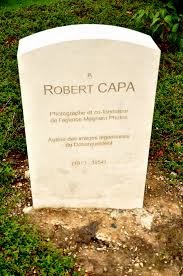
Capa's grave, Amawalk, NY
In 1954 Capa went to cover the grim siege of Dien Bien Phu in Vietnam. He stepped on a landmine and was killed at the age of 40. He is now buried at the Quaker cemetery at Amawalk in the USA.
American GIs at Maria SS Assunta Cathedral, Troina, August 6, 1943
Consider the political trajectory of Capas's life. He was born into the dying days of the Austro-Hungarian empire. In his youth he moved in largely socialist circles and was briefly imprisoned by the Hungarian secret police. He went to University in Weimar Germany. He fled to Paris to escape persecution in Hitler's Germany. His first photographic success was in reporting for the Spanish civil war -- the most ideological war of the 20th century. His unforgettable photos helped turn ordinary GIs into heroes for the US Army. He adopted the USA as his home. Finally, he was killed by a communist landmine becoming the fist American casualty of the Vietnam war.
Source: Robert Capa: in Italia, 2013, Fratelli Alinari, Beatrix Lengyel, Eva Fisli.
Travel Notes: From now until February 23, 2014 you can see an exhibition of Capa's Italian war photography at the Museo Nazionale Alinari Della Fotographia (Alinari National Museum of Photography). The museum is in Florence, Italy.www.alinarifondazione.it. Piazza Santa Maria Novella 14a/r, 50123 Florence, Italy.
The greatest visual artist of the 20th century was not Picasso or Matisse; the greatest visual artist of the 20th century was a London greengrocer's son by the name of Alfred Hitchcock. This view is based not merely on the massive quantity of impressions that he was able to generate in a lifetime devoted to film but, more importantly, based on the quality and vision of those images.
Some men are able to see their way around Time's corners better than others. In 1888 Nietszche foresaw the catastrophic wars of the 20th century writing, "All the mighty worlds of the ancient order of society are blown into space—for they are all based on lies: there will be wars the like of which have never been seen on earth before." (Source: Ecce Homo, Friedrich Nietzsche www.amzn.com/0199552568). Winston Churchill, another man of vision, foresaw the coming devastation declaring before World War I, "A European war can only end in the ruin of the vanquished and the scarcely less fatal commercial dislocation and exhaustion of the conquerors...The wars of peoples will be more terrible than those of kings." (See earlier post "Young Titan"... http://americanconservativeinlondon.blogspot.com/2013/12/young-titan.html). America'sGeneralPatton predicted the Japanese attack upon Pearl Harbor in a report prepared in 1937 (see earlier post "Patton Quotes"...http://americanconservativeinlondon.blogspot.com/2012/08/patton-quotes.html).
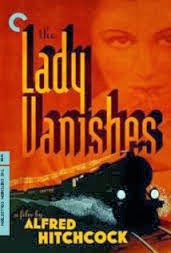
Hitchcock also had this visionary gift and it is on full display in his English masterpiece, The Lady Vanishes (www.amzn.com/B000VARC28). Hitchcock had a talent for turning the dross of literary pulp fiction sources into cinematic gold.
The Lady Vanishes is a Romantic espionage thriller that was made in 1938 just as Peace itself was about to vanish from the face of Europe. This was the year of Chamberlain's infamous appeasement in Munich which doomed Czechoslovakia to seven years of ruthless Nazi domination. Most of the action of the film takes place in the fictional mountainous country of Bandrika. An avalanche has stranded the mostly English characters in a picturesque mountain resort. Most of the natives seem friendly, but Mandrika has a propaganda minister and people have a nasty habit of disappearing.
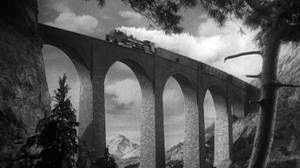
"It's only a model."
Soon the characters, forming a microcosm of English society, are gathered on a train hurtling through the winter chill. The young and beautiful heroine, Iris Henderson (Margaret Lockwood) and Gilbert, her musicologist love interest, encounter a sinister Dr. Egon Hartz (Paul Lukas) who tends to spout Freudian psycho-babble.
"Miss Froy" (Dame May Whitty) is the elderly, but surprisingly spry governess, who "vanishes" from the train. There is far more to Miss Froy than her mundane appearance suggests. She is, in fact, a British spy who carries in her head a musical tune which contains a vital secret code. The code contains information about a secret pact between two nations. This code must reach those in Whitehall but Miss Froy mysteriously vanishes from the train. The Hitchcockian "MacGuffin" in this film, therefore, anticipates the Nazi-Soviet pact that shocked in the world when it was announced in 1939.
Hitchcock's vision was not only accurate, it was decidedly Conservative as well. Hitchcock was an observant Roman Catholic who had a deep conviction about original sin. The primary victim in Psycho (www.amzn.com/B003IWZ1D8), played by Janet Leigh, is also a thief.
Hitchcock reveals a thoroughly Conservative skepticism about the nature of politics and politicians. Miss Froy coyly declares "You shouldn't judge any country by its politics. We English are quite honest by nature." The source of life's main joys are based on personal relationships and NOT ideology or political conviction.
There is this exchange between the villainous Dr Egon Hartz and Gilbert: "l am Dr Egon Hartz of Prague.You may have heard of me. -Not the brain specialist? -The same. You went to England to operate on one of our cabinet ministers...? -Yes. -Did you find anything? -A slight cerebral contusion. -That's better than nothing." In his personal life, Alfred Hitchcock was as conventionally heterosexual as Phil Robertson of Duck Dynasty. The symbolism of a train entering a tunnel in the concluding scene of North by Northwest (www.amzn.com/B0017HMF6W) is unmistakable. Hitchcock's romantic thrillers were, in fact, the aphrodisiacs of their time. How many baby boomers around the world were conceived after their parents had viewed one of Hitchcock's films?
Yet Hitchcock's attachment to traditional values did not make him a homophobe in any way. He would later cast Anthony Perkins in the title role of Psycho. In The Lady Vanishes two Englishmen, (Charters and Caldicott), both terrified of women, are, arguably, the happiest couple in the film. The sympathetic portrayal of a "gay" cricket-obsessed couple becomes the comic highlight of this film. When the chips are down, these men prove to be patriotic Englishmen who do not hesitate to use force to defend themselves. The Charters and Caldicott characters clearly foreshadow the role that the homosexual Alan Turing would soon play in decryption technology and the development of computing at Bletchley Park. The British government's beastly treatment of Turing after the war offers further confirmation of Hitchcock's Conservative view that government is filled with "empty-headed" cabinet ministers.
The climactic conclusion of The Lady Vanishes reveals Hitchcock as a patriotic Englishmen who was justifiably anxious about his country in 1938. On later emigrating to Hollywood, he would become a patriotic American (consider North by Northwest and Topaz).
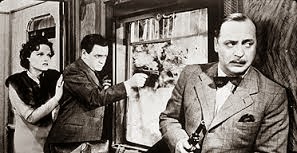
The path of appeasement which Chamberlain charted at Munich in the same year that this film was released is decisively rejected by Hitchcock. The faithless Mr. Todhunter (Cecil Parker) represents those in Britain who were drawn to appeasement. After the train is halted a gun battle breaks out between the English passengers and the Bandrikan police led by Dr Hartz. Todhunter declares, "l won't be a party to this sort of thing. l don't believe in fighting." Significantly, the word "Tod" means "death" in German and Todhunter races to his own destruction.
Margaret Lockwood, Naunton Wayne and Basil Radford
Ironically, the gayest character in Hitchcock's oeuvre, (Caldicott played by Naunton Wayne) rebukes Todhunter, "Pacifist? Won't work. Christians tried it and got thrown to the lions." Charters and Caldicott bear some striking similarities to the contemporary gay Conservative artists Gilbert and George (http://americanconservativeinlondon.blogspot.com/2012/03/new-faces-of-conservatism-gilbert-and.html).
Todhunter, an adulterer, bolts from the train and is shot by the Mandrikan police while waving the white flag of surrender.
It is clear from The Lady Vanishes that Hitchcock foresaw an "avalanche" of bad political news headed Britain's way in 1938. English democracy would be forced to confront the menace of fascism which sought its destruction. Some of those in Britain's diverse and free society would be tempted by the false lure of pacifism.
Finally, Alfred Hitchcock was a visionary artist with a Conservative temperament who foresaw...
1) The coming war or "vanishing" peace.
2) The vital role that would be played by women in the intelligence services. Maya (Jessica Chastain) in Zero Dark Thirty (www.amzn.com/B00B1E6FF8) is a direct descendent of Hitchcock's Miss Froy.
3) The contribution of gay English patriots to the cause of freedom (Alan Turing).
4) The folly of appeasement, pacifism and isolationism.
5) The Nazi-Soviet pact of 1939 (Molotov - Ribbentrop agreement).