Sunday, April 22, 2012

Bletchley Park and the Judgement of History

Bletchley Park Mansion (Photo: Jim Hooper)

I recently went with a group of friends to revisit Bletchley Park (www.bletchleypark.org.uk).  It has been claimed that the work of the code breakers may have shortened the war by as much as two years, saving countless lives.

Winston Churchill paid one visit to Bletchley Park to thank the staff their for their invaluable contribution to the war effort.  He referred to the largely female staff as being "the geese who laid the golden eggs, but did not cackle".  A majority of those who worked at Bletchley Park were women.  Having signed the Official Secrets Act, those that did the vital work of code-breaking could not tell their friends or family about the vital work they had performed during the war.

Churchill visited Bletchley once during the War (Photo: Jim Hooper)
The amazing work done by the code breakers of Bletchley Park was a well kept secret for many years after the war.  The secret did not start spill out until the mid-1970's with the release of The Ultra Secret.  If a historian had attempted to write a comprehensive history of World War II in 1965 (20 years after the war's conclusion), for example, he would have been missing a huge part of what actually took place.  Such a history would have been incomplete and inaccurate as the Allies were reading the Axis radio traffic and were consistently better informed as a result.

Polish memorial at Bletchley Park
World War II began in Europe, from the Allied perspective, with an attempt to preserve the independence of Poland which had been guaranteed by Britain and France.  Poland, invaded by Hitler from the west and Stalin from the east, lost a staggering 5.6 to 5.8 million people during the course of the war -- a higher percentage (16.6 to 16.7%) of her total population than any other country, even the Soviet Union (http://en.wikipedia.org/wiki/World_War_II_casualties#Human_losses_by_country).  Poland would not regain her independence until 1989 -- 44  years after the war's conclusion.  The Poles are well represented at Bletchley for their tremendous contributions in code-breaking during the war.

In order to render a balanced and reasonably accurate historical appraisal of any event a period of time must be allowed to pass -- probably at least twenty years must pass after a President leaves office.  Intelligence in modern warfare is critically important to the outcome of all major conflicts and is necessarily unavailable to journalists and the public. Moreover, the fires of partisanship must cool.  We are only just now, for example, able to render a reasonably balanced historical view of the Reagan Presidency.

It is, therefore, impossible to render a fair historical judgement of either George W. Bush or Barack Obama right now.  All of our judgements of these two Presidents must be provisional in nature.  This does not, of course, preclude us form forming judgments; it merely means that these judgements must be limited and incomplete.  The condition of Iraq in 2028 (presently unknowable) will, for example, have an enormous impact on history's judgement of George W. Bush.  The quality and cost of healthcare in the USA in 2032 (equally unknowable) will help future historians to evaluate the legacy of Barack Obama.
Commander K and WSC, Bletchley Park, UK
History takes time to do properly.  It takes time for memoirs to be published, for secrets to be divulged, for partisan passions to cool.  It takes time to gain historical perspective.

Astonishingly, there are still World War II secrets that the British government has NEVER divulged.  The contents of the 1941 German peace proposal transmitted by the flight of Rudolph Hess is one example (http://americanconservativeinlondon.blogspot.co.uk/2013/12/hess-hitler-churchill.html).

Bletchley house offers more than just the code breakers.  You can also trace the invention of the first computer, the tragic story of Alan Turing, Ian Fleming's World War II espionage exploits and much more.  Commander Kelly says, "if you come to London and have any curiosity about the history of World War II, be sure to check out Bletchley Park!"  Here is the site...www.bletchleypark.org.uk

The other unmistakable conclusion to be drawn from Bletchley is that democracies, with all their manifold flaws, are far superior at the war of the mind than dictatorships.  All of the Axis powers were too arrogant to admit that their communications were thoroughly compromised during the war.  The traditions of free speech and free thought proved to be a tremendous strategic advantage for the Allied powers.

History is all around us!

Mr and Mrs. Lawn


American Espionage...!


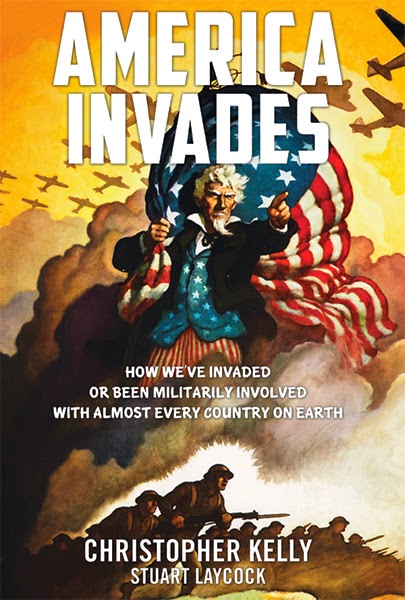
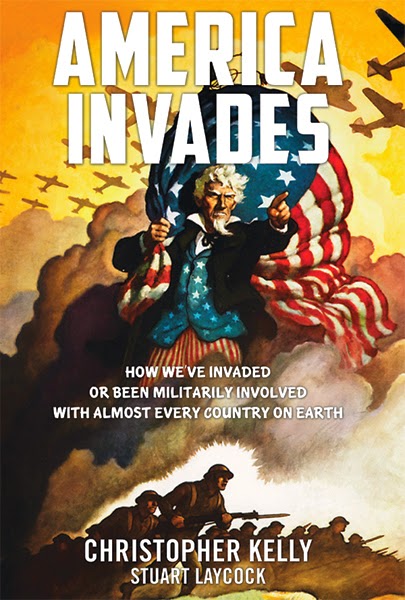
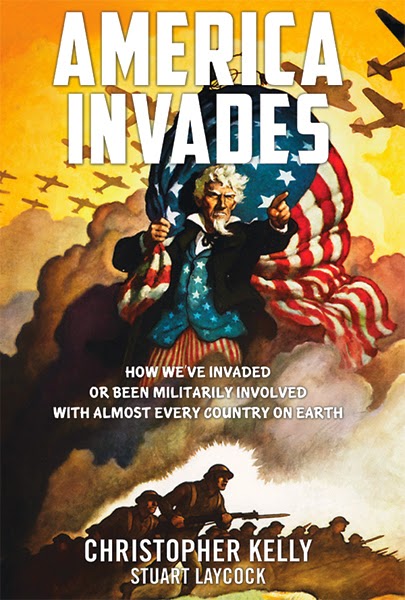
You can now purchase Commander Kelly's first book, America Invades here...www.americainvades.com or on Amazon...www.amzn.com/1940598427

Saturday, April 21, 2012

Il Duce's Florence

Forza Fiorentina!


Last week, "Commandante Kelly," while on spring break in Florence, had occasion to attend a soccer match featuring Fiorentina versus Palermo.  The game was a bit of a dud -- a 0 to 0 tie.  Fiorentina, of the distinctive purple jerseys, is having a truly horrendous season this year.

I did, however, learn an interesting fact about Florence's soccer stadium.  Please check out this image from Google Earth.  Do you notice anything unusual...?

Stadio Artemi Franchi
Florence, Italy


The stadium is clearly in the shape of a huge letter "D" -- a salute to Il Duce that persists in the 21st century!   Stadio Artemi Franchi was built in 1931.  History is all around us!

Let's not forget what H.L. Mencken had to say about Mussolini...

"One hears murmurs against Mussolini on the ground that he is a desperado: the real objection to him is that he is a politician. Indeed, he is probably the most perfect specimen of the genus politician on view in the world today. His career has been impeccably classical. Beginning life as a ranting Socialist of the worst type, he abjured Socialism the moment he saw better opportunities for himself on the other side, and ever since then he has devoted himself gaudily to clapping Socialists in jail, filling them with castor oil, sending blacklegs to burn down their houses, and otherwise roughing them. Modern politics has produced no more adept practitioner."

Special thanks to Matteo Pierattini for pointing this out to me!


Christopher Kelly is the co-author of Italy Invades: How Italians Conquered the World.  You can purchase a signed copy here...www.italyinvades.com or buy a copy on Amazon...www.amzn.com/1940598729


You can get the Full Italy Invades package here...
http://store.italyinvades.com/products/italy-invades-gift-package


Friday, April 20, 2012

Nietzsche Quotes

Friedrich Nietzsche 1844 - 1900

Before there was H.L. Mencken, (See earlier post, The Sage of Baltimore 2/29/12) , there was Friedrich Nietzsche who exalted the individual and despised the constricting power of the state.  Here is a sampling of his thought...

1)  You have your way. I have my way. As for the right way, the correct way, and the only way, it does not exist.

2)  I cannot believe in a God who wants to be praised all the time.

3)  Amor Fati – “Love Your Fate”, which is in fact your life.

4)  One should die proudly when it is no longer possible to live proudly.

5)  A casual stroll through the lunatic asylum shows that faith does not prove anything.

6)  Battle not with monsters, lest ye become a monster, and if you gaze into the abyss, the abyss gazes also into you.

7)  In truth, there was only one Christian, and he died on the cross.

8)  Insanity in individuals is something rare - but in groups, parties, nations and epochs, it is the rule.

9)  No price is too high to pay for the privilege of owning yourself.

10)  You need chaos in your soul to give birth to a dancing star.

11)  But thus do I counsel you, my friends: distrust all in whom the impulse to punish is powerful!

12)  Poets are shameless with their experiences: they exploit them.

13)  What is done out of love always takes place beyond good and evil.

14)  Digressions, objections, delight in mockery, carefree mistrust are signs of health; everything unconditional belongs in pathology.

15)  That which does not kill me makes me stronger.
Wanderer Above the Mist, Caspar David Friedrich

16)  Man is something to be surpassed.

17)  A man’s maturity: that is to have rediscovered the seriousness he possessed as a child at play.

18)  The thought of suicide is a great consolation: by means of it one gets successfully through many a bad night.

19)  Convictions are more dangerous enemies of truth than lies (See earlier post, Breivik and Oldman, 4/20/12).

20)  The secret of the greatest fruitfulness and the greatest enjoyment of existence is: to live dangerously!

21)  Plato was a bore.  (See earlier Commander Kelly post, Liberals and Conservatives / Plato and Aristotle, 12/16/11)

22)  All truly great thoughts are conceived by walking.

23)  And we should consider every day lost on which we have not danced at least once. And we should call every truth false which was not accompanied by at least one laugh.

24)  Art is the proper task of life.

25)  He that humbleth himself wishes to be exalted.

26)  He who has a why to live can bear almost any how.

27)  I would believe only in a God that knows how to Dance.

28)  In heaven, all the interesting people are missing.

29)  In large states public education will always be mediocre, for the same reason that in large kitchens the cooking is usually bad.

30)  The essence of all beautiful art, all great art, is gratitude.

31)  There are no facts, only interpretations.

Thus Spake Zarathustra by Richard Strauss


You can now purchase Commander Kelly's 
first book, America Invades here...www.americainvades.com or on Amazon...www.amzn.com/1940598427


The Shores of Tripoli, Jefferson in London and the Birth of the US Navy

Jefferson by the late Hitchens, 2005


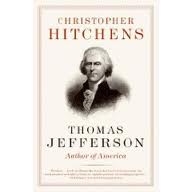
Christopher Hitchens wrote a short book entitled, Thomas Jefferson: Author of America, published in 2005.  (http:/www.amzn.com/0060837063)  Please allow me to quote at some length...

"Between the years 1530 and 1780, it has been calculated by the historian, Robert Davis, as many as a million and a quarter Europeans were kidnapped and enslaved by Muslim autocracies on the the northwest coast of Africa.  this trade, which combined piracy, ransom, and enforced servitude, was not the equal of the infamous Middle Passage in which so many bartered black Africans lost their lives, nor was it as organised and commercialised as the "triangular" trade ins laves that flourished between Europe, Africa, and the Americas.  But it did in some ways result from that trade, too, in that European interlopers had disrupted an earlier North African Arab involvement in a north-south transport of African slaves.  Many well-authenticated chronicles of the period tell of "Barbary" raids on coastal towns as far away as England and Ireland, as well as numberless abductions from, and of, vessels in the Mediterranean and other seaways.  It appears, for example, that practically every inhabitant of the Irish village of Baltimore was carried off in 1631.  Samuel Pepys and Daniel Defoe both allude to the trade in their writings, Robinson Crusoe himself spending hard time as a captured slave.  James Thomson's famous 1740 popular song "Rule Britannia," with its refrain about Britons "never, never, never" being slaves, was composed with the Barbary terror in mind.


It was the general policy of European powers to make their separate peaces with the rulers of Algiers, Morocco, Tripoli, and Tunis...

The new United States could hardly approach this with equanimity.  It did not have a navy with which to protect its commercial ships, or with which to threaten retaliation.  Its trade had declined, in fact, as result of having lost such protection from the British Empire...

During the time that he and John Adams were, respectively, the ministers to Paris and London, Thomas Jefferson conceived a great loathing for this state of affairs.  In 1784 the American ship Betsey, with a crew of ten, had been then captured by a Moroccan corsair while sailing with a cargo of salt from Cadiz, in southern Spain, to Philadelphia...

Seeking clarification, Adams invited Jefferson to London for a private meeting with the Ambassador of Tripoli.  On this occasion, Ambassador Abdrahaman mentioned some startlingly high tariffs for ransom of hostages, for cheap terms of "perpetual peace," not forgetting to add his own personal commission on the negotiation.  Since the United States had not offended the Muslim powers in any way -- it had not taken part in the Crusades, for example, or the Spanish monarchy's reconquest of Andalusia -- Adams and Jefferson asked to know by what right this levy was being exacted.  As Jefferson later wrote, to Jay and to Congress, on March 28, 1786:

'The Ambassador answered us that it was founded on the Laws of the Prophet, that it was written in their Koran, that all nations who should not have answered their authority were sinners, that it was their right and duty to make war upon them wherever they could be found, and to make slaves of all they could take as prisoners.'

It is hard to imagine a better summary of all that Jefferson disliked, both about monarchy and religion, but he did not dilate on this point, preferring to recommend to the administration that it refuse all payment of tribute, and prepare at once to outfit an American naval squadron to visit the Mediterranean (Commander Kelly's italics).  In the longer run, he wrote, what was needed was an international concert of powers (A Coalition of the willing?, asks Commander Kelly), composed of all those nations whose shipping was being subjected to predatory raids.  'Justice and Honor favour this course," he wrote, not omitting to add that it would also save money in the end.

John Adams was not at all of the same opinion.  He agreed that "Avarice and Fear are the only agents at Algiers." and that "it would be a good occasion to begin a navy," but he was certain that Congress would never appropriate the money of a punitive expedition, and meanwhile the United States had no navy to speak of.  'From these premises I conclude it would be wisest for us to negotiate and pay the necessary sums without loss of time.'  As for the piratical Islamic powers, 'We ought not to to fight them at all unless we determine to fight them forever."  In my view, Jefferson's opinion of Adams began to decline from that point."  Thomas Jefferson: Author of America, Christopher Hitchens, 2005. http:/www.amzn.com/0060837063

And so it was that the second and third Presidents of the United States learned about the vital need for creating a Navy and Marine corps while representing their nation in London (See earlier post, Jefferson in London, 2/5/12).  Thomas Jefferson purchased a copy of a Koran from a London bookseller during his brief stay not merely out of theological curiosity, but also in order to "learn more about the enemy."  It looks like Jefferson might even have approved of Russian Justice (see earlier post, Russian Justice on the High Seas 4/6/12)!

On February 23, 1815, shortly after the treaty of Ghent was signed ending the War of 1812, President Madison, Jefferson's disciple, asked Congress to declare war on Algeria and soon thereafter dispatched two powerful squadrons to the Mediterranean.  The squadron led by Commodore Stephen Decatur arrived in Tripoli on August 5, 1815 and effected the release of ten Christian slaves. Source: 1812: The Navy's War George C. Daughan, 2011 http:/www.amzn.com/0465020461

For another interesting take on Pirates old and new check out this by Seattle author, William Dietrich...http://www.huffingtonpost.com/william-dietrich/pirate-parallels_b_523751.html.


Commander Kelly says, "Plus ça change, plus c'est la meme chose!"


You can now purchase Commander Kelly's first book, America Invades here...www.americainvades.com or on Amazon...www.amzn.com/1940598427


Breivik and Oldman

Right Wing Sociopath


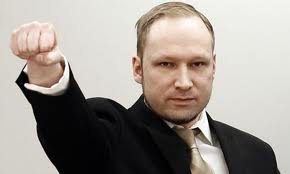
Behring Breivik is a 33 year-old Norwegian who has admitted to killing 77 people in Norway last year (http://www.nytimes.com/2012/04/17/world/europe/trial-of-anders-behring-breivik-opens-in-norway.html?pagewanted=1&_r=1).  Trenton Oldfield (See earlier post, Oxford Cambridge Boat Race 4/15/12) is a 35 year-old Australian who disrupted the 2012 Oxford Cambridge boat race (http://www.dailymail.co.uk/news/article-2127121/Trenton-Oldfield-His-reasons-Boat-Race-antics-best-rambling.html).  Breivik is a "right wing" nut who opposes immigrants, muslims and "multi-culturalism".  Oldfield was a "left-wing" nut who opposes elitism, public fences and the British class system.

Left Wing Sociopath
I do not, by any means, intend to equate these two individuals.  Clearly Breivik bears a far greater guilt for his heinous crimes than Oldfield who did not set out to physically harm anyone other than himself; just as Timothy McVeigh's crimes were far worse than those of Cornelius Horan who disrupted the Vanderlei DeLima's (Brazilian marathoner) bid for Olympic gold in Athens in 2004.

Breivik and Oldfield do, however, have some interesting points in common...

1) Both were making a bid for their "15 minutes of fame" in a fame-obsessed society.
2) Both seem to have had a longing for martyrdom.
3) Both were bloggers.
4) Both are mentally unbalanced.
5) Both are well-educated, privileged caucasians.
6) Most importantly, both men put a greater value on their ideology than on the lives of others or even their own.

It is this final point that illuminates how profoundly "Un-Conservative" both men are.  The first principle of Conservatism holds that all human life is sacred (see earlier posts, It's a Wonderful Conservative Life 12/30/11 and Why Conservative. Life is Sacred 12/12/11).  While Conservatives certainly do lean to the "right", it would be a mistake, therefore, to conflate "Conservatism" with being simply "right wing."

I personally love ideas and ideological sparring more than most.  I am happy to engage with those whom I disagree.  I highly value the opinion of those who vehemently disagree with me and welcome ALL comments to this blog regardless of tone, point of view, etc.  Quite frankly, I find that I usually learn more from those who disagree with me than from those who are in accord with my views.  I enjoy reading the works of radical Libertarians like Thomas DiLorenzo and socialists like Christopher Hitchens with whom I clearly do not always agree.  I believe that it is essential and healthy to challenge one's own convictions with the fire of opposing viewpoints.

Both Breivik and Oldman are men of passionate convictions and their example forces us to recall what Nietszche wrote, "Convictions are more dangerous enemies of truth than lies."

Breivik and Oldman call to mind the opening lines of W.B. Yeats immortal poem, The Second Coming...


The Second Coming

                                            "Turning and turning in the widening gyre
                                             The falcon cannot hear the falconer;
                                             Things fall apart; the centre cannot hold;
                                             Mere anarchy is loosed upon the world,
                                             The blood-dimmed tide is loosed, and everywhere
                                             The ceremony of innocence is drowned;
                                             The best lack all conviction, while the worst
                                             Are full of passionate intensity."

                                                                                                Composed 1919

Voltaire (see earlier post Voltaire -- Conservative of the Enlightenment, 3/3/12) exemplifies for me the essentially tolerant nature of Conservatism; he wrote that, "I may disagree with what you have to say, but I shall defend to the death your right to say it."

Wednesday, April 18, 2012

Lincolnian Spirt of Conquest...?

President McKinley


In the alternate historical world invented by Thomas J. DiLorenzo (TJD) in The Real Lincoln (http:/www.amzn.com/0761526463) slavery turns into liberty, secession is freedom, justice becomes tyranny and Lincoln is equated with V. I. Lenin.  TJD smears Lincoln by associating him with many historical events which occurred after his assassination.  Thus Lincoln is responsible for all of the abuses of Reconstruction, the decimation of the Plains Indians and, most amusingly, the Spanish-American war.

Here is what TJD has to say about the later...

Major McKinley (Lincoln's Bitch?)
"The Lincolnian spirit of conquest, subjugation and imperialism was evident when the army, under the direction of William McKinley (a major in Lincoln's army during the War between the states) took over the Philippines in the late nineteenth century, resulting in the slaughter of some three thousand Filipinos.  This occupation was a consequence of the Spanish-American War, instigated by the United States government, after which Spain ceded to the United States ownership of Puerto Rico, Guam, and the Philippine Islands, thus allowing the government to consolidate its empire in the Western hemisphere and establish a stepping-stone to the Chinese markets (such as they were) at last."

Close readers of this blog may recall my earlier post "Remember the Maine, but Forget the War Lovers" from February 20, 2012).  Therein, I mentioned the fact that three out of four US naval inquiries into the cause of the explosion on board the USS Maine, including the most recently conducted study by the National Geographic, determined that external causation (a bomb) was responsible for the sinking of the battlecruiser Maine in Havanna harbor.  It is, therefore, doubtful that the United States government did "instigate" the Spanish-American War.  The notion that Lincoln, who died on April 15th, 1865, was responsible for McKinley's decision to go to war in 1898 because he served as a major in the US Civil War is absurd.

Reviews of The Real Lincoln...

http://www.claremont.org/publications/crb/id.736/article_detail.asp

http://www.independent.org/publications/tir/article.asp?a=79

New Civil War Death Toll

Antietam Aftermath


New research has come out raising the casualty estimates for the US Civil war from about 625,000 to around 750,000.  It seems that there were even more victims of America's bloodiest war than once assumed.    Here is the full story...http://www.nytimes.com/2012/04/03/science/civil-war-toll-up-by-20-percent-in-new-estimate.html?pagewanted=all

The bottom line is that this was a bloody and brutal conflict.  Even today over 150 years later we are still struggling to come to grips with the full dimensions of the tragedy that was the US Civil War. 

Two Views of the Hartford Convention

Would New England leap back into the arms of George III?

Thomas J. DiLorenzo (TJD) is a "lost cause" apologist who accuses Lincoln of being an unprincipled centralizing tyrant in his book, The Real Lincoln http:/www.amzn.com/0761526463.  He brings up the Hartford Convention which took place during the War of 1812* to justify the principle of secession from the Union that would later be used by the Confederacy. (See earlier post War of 1812, April 1 2012) Here is what TJD has to say...

"The War of 1812 also outraged the New Englanders and added more fuel to the secessionist fire.  they feared that another war with England would annihilate their commerce and also feared being taxed into poverty.  Massachusetts refused to send troops to the war, effectively seceding from the Union temporarily.  On August 24, 1813, the British captured Washington D.C. and New England was in rebellion.  the governor of Massachusetts announced that the federal government had failed to live up to the terms of the Constitution.  The state legislature agreed and issued a decree that the Constitution 'must be supplanted."

Ron Paul's favorite historian
In December 1814 the New England Federalists held a secession convention in Hartford, Connecticut, which was attended by politicians who were not quite so radical as the rank-and-file Federalists.  these men feared that voting for secession would ruin any possibility they would have for a career in federal politics in the event that they didn't muster sufficient votes to actually secede, and so most of them voted against secession.  The convention did call for an elimination of the three-fifths clause, a two thirds vote from both houses to admit any new states, a sixty day limit on trade embargoes, and a two thirds vote requirement in Congress before any embargoes could be enacted.  Pickering complained bitterly that the convention had been captured by 'political careerists,' but to no avail.  Pickering and Governor Strong of Massachusetts nevertheless predicted that the Union would not last.  When the war ended, so did the Federalist Party's efforts to have New England secede from the Union.

Throughout this whole ordeal no one ever made a principled argument against a state's right of secession.  It was assumed by everyone that, as Pickering said, secession was the principle of the American Revolution, and there would nothing so un-American as opposing the right of secession."

Here, is what historian George C. Daughan (GCD) has to say about the Hartford Convention...

"New England Federalists were particularly upset that Madison planned to continue the war indefinitely.  Grievances they had all felt during the war came to head in the fall of 1814, when the British occupied northern Maine, tightened their blockade along the coast, burned Washington, and raided coastal towns with impunity.  The Federalists were furious that while Madison had concentrated on invading Canada, he had left the coasts exposed and vulnerable.  Instead of squandering money on invading Canada, they thought Madison should have spent it defending the coast and strengthening the navy.  And Madison's embargoes, they contended, had annihilated the source of New England's prosperity, her commerce.  The Federalists felt they were paying for a war they despised and that was bringing unnecessary ruin on them without any support from Washington.  Extreme Federalists like Timothy Pickering wanted to secede and make a separate peace.  Governor Strong of Massachusetts had gone so far as to send a representative to Nova Scotia to explore the possibility with Sir John Sherbrooke.

GCD is Harvard prof., USAF vet.


Pickering and Strong were in the minority, however.  Most new England Federalists did not want to go so far as seceding from the Union, but they were unhappy enough to call, as they had in the past for a convention of the New England states to articulate their grievances...Some thought they might call for secession, others that they would simply talk and issue a meaningless statement.  Speculation was rife.  Madison and Secretary of War Monroe took the threat from the secessionists seriously, and they kept a close eye on developments...

To counteract the extreme Federalists, Massachusetts Republicans (Madison's party), led by former Secretary of War, William Eustis, met in Boston on October 19 to condemn British aggression and the Hartford Convention.  Eustis called for unity.  He pointed out that any move to separate states from the Union would 'inevitably' result in a civil war.  He made it plain that there would be no separation of
New England, or any part of it, from the United States that would not result in a bloody fight, in which the federal government would intervene on the side of the Republicans.  The calls for New England independence, thus, were calls for civil war (Commander Kelly's bold)...

The Hartford Convention convened on December 15.  Tweny six delegates attended...On January 6 the convention issued a report for the public.  It announced that the delegates were commissioned to devise means for the defenseagaisnt dangers and to obtain relief from 'oppressions proceeding from acts of their own government, without violating constitutional principles or disappointing the hopes of a suffering and injured people.'

Theodore Dwight (secretary of the Convention from Connecticut) wrote many years later that 'the expectation of those who apprehended the report would contain sentiments of a seditious, if not a treasonable character were entirely disappointed...equally free was it from advancing doctrines which had tendency to destroy the union of the states.  On the contrary, it breathed and ardent attachment to the integrity of the republic.  Its temper was mild, its tone moderate, and its sentiments were liberal and patriotic.'

Looking at the report, it was hard to disagree with Dwight.  Defense matters had occupied most of the convention's time.  The report stressed that state militias could only be called into national service to execute laws, suppress insurrection or repel foreign invasion, not to invade another country.  In fact, the report contended that the whole notion of offensive war was unconstitutional."  George C. Daughan, 1812: the Navy's War, 2011. http:/www.amzn.com/0465020461

Commander Kelly weighs in.  Whose account of the Hartford Convention do you find more balanced and persuasive, TJD's or GCD's?

In the fall of 1814, America appeared to be losing the War of 1812.  Madison's Republican party was essentially Francophile and Anglophobic.  Madison had committed the US to an unpopular war that his congressional allies did not actually want to pay for.  The American invasions of Canada were led by incompetents.  Napoleon, America's de facto ally, had been vanquished after his disastrous invasion of Russia and sent into exile on Elba.  The Royal navy had command of the seas and Wellington's veteran armies from the Peninsular campaign were being dispatched to North America to teach those Yankee upstarts a lesson.

The war was tremendously unpopular in Federalist-dominated New England.  Governor Caleb Strong of  Massachusetts flirted with treason in attempting to negotiate a separate peace with the British.  Can you imagine the Governor of Vermont, for example, attempting to negotiate a separate peace with the Taliban today?

Secretary of War, William Eustis, who TJD fails to mention entirely,  got it right.  Notwithstanding TJD, he quite clearly did make a principled argument against a state's right to secede from the Union.  The calls for New England independence by extremists such as Pickering and Strong were calls for civil war.  Unfortunately, the sons of the South did not heed his prophetic call nearly fifty years later.

The treaty of Ghent ended the War of 1812 and the victory at the battle of new Orleans helped to end it on a more positive note for the American side.  The recommendations of the Hartford convention were summarily dismissed by president Madison and congress.  The Hartford Convention marked the demise of Federalist party credibility in the United States.


*  The War of 1812 is particularly tricky for TJD to deal with honestly as it shatters his template of the Libertarian alternate universe beloved of Ron Paul and other neo-Confederates.  TJD claims to be a Libertarian who admires Jeffersonian democracy and despises Hamilton and his centralizing and "imperialistic" tendencies.  Yet it was Madison, Jefferson's protege, who started the War of 1812.  It was Madison who planned and attempted to invade Canada in an imperialistic bid for American expansion that had Thomas Jefferson's full blessing.  Madison did receive a formal declaration of war from Congress, but that did not prevent the war from becoming very unpopular in New England.

You can now purchase Commander Kelly's 
first book, America Invades here...www.americainvades.com or on Amazon...www.amzn.com/1940598427


English perspectives on the US Civil War

Lord Acton

Lord Acton (1834 - 1902) famously declared that "Power tends to corrupt, and absolute power corrupts absolutely."  If you consider this quote in the context of human slavery its rings true.  If one man is allowed to own another, then all society will be corrupted.  Even a great apostle of Liberty like the slave-owner and author of the Declaration of Independence, Thomas Jefferson, was corrupted when confronted with the tempting pulchritude of a Sally Hemmings.

Lord Acton was, in fact, a rabid supporter of the Confederacy; nor was he unusual given England's strong economic ties (those "dark Satanic mills") to the Southern cotton interests.  After the war ended, he wrote to Robert E. Lee as follows, ""I mourn for the stake which was lost at Richmond more deeply than I rejoice over that which was saved at Waterloo," adding that he "deemed that you were fighting battles for our liberty, our progress, and our civilisation."

Lord Acton was a man of his own time, a 19th century racist. During the US Civil War he wrote in the March 1862 Rambler, "The Celts are not among the progressive, initiative races, but among those which supply the materials rather than the impulse of history, and are either stationary or retrogressive. The Persians, the Greeks, the Romans, and the Teutons are the only makers of history, the only authors of advancement. Other races possessing a highly developed language, a speculative religion, enjoying luxury and art, attain to a certain pitch of cultivation which they are unable to either communicate or to increase. They are a negative element in the world."

J. S. Mill
Let us move on to a rather more enlightened English Libertarian -- John Stuart Mill (1806 -1873).  He was the author of On Liberty first published in 1859.  In this book he wrote, "Over himself, over his own body and mind the individual is sovereign." What did he make of the US Civil war?

J.S. Mill wrote that the American Civil War "is destined to be a turning point, for good and evil, of the course of human affairs."  Confederate success, said Mills, "would be a victory for the powers of evil which would give courage to the enemies of progress and damp the spirits of its friends all over the civilised world."

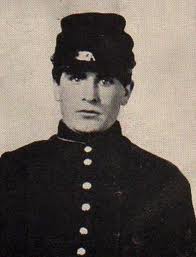
James McPherson relates in an essay entitled Lincoln's Legacy for our Time that "an English-born soldier, a forty-year-old corporal in an Ohio regiment, wrote to his wife in 1864 explaining why he had decided to re-enlist for a second three-year hitch.  'If I do get hurt I want you to remember that it will be not only for my Country and my Children but for Liberty all over the world that I risked my life, for if Liberty should be crushed here, what hope would there be for the cause of Human Progress anywhere else?'  An Irish-born carpenter (Who Lord Acton would call an "unprogressive Celt," says Commander Kelly!), a private in the Twenty-eight Massachusetts Infantry of the famous Irish Brigade, rebuked both his wife in Boston and his father-in-law back in Ireland for questioning his judgement in risking his life for the Union. 'This is the first test of a modern free government in the act of sustaining itself against internal enemys,' he wrote almost in an echo of Lincoln.  'If it fails then the hopes of millions fall and the designs and wishes of all tyrants will succeed the old cry will be sent forth from the aristocrats of Europe that such is the common lot of all republics.'  It is worth noting that both this Irish-born private and the English-born Ohio corporal were killed in action in 1864."  Source: James McPherson, Lincoln Lessons, 2009.  http:/www.amzn.com/0809328917

For a thoughtful appraisal of Lincoln's Legacy check out this article by Philip B. Kunhardt III from The Smithsonian...http://www.smithsonianmag.com/history-archaeology/Lincolns-Contested-Legacy.html?c=y&page=1

Gettysburg Address


Sunday, April 15, 2012

Oxford Cambridge Boat Race

Elites and their opposite


This past week the legendary boat race between Oxford and Cambridge was disrupted by Trenton Oldfield who swam out into the Thames amongst the boats in order to draw attention to his anti-elitist ideology.  His actions are sending a shiver down the spines of the London Olympic security teams.  Anyone with a grievance and a ticket can apparently disrupt the games to secure their 15 minutes of fame.

For the full story read...http://www.nytimes.com/2012/04/09/world/europe/protester-disrupts-oxford-cambridge-boat-race.html?pagewanted=2&_r=1&partner=rss&emc=rss

Commander Kelly particularly enjoyed William Zeng's (a 22 year old American crew member) answer to Oldfield.  “No matter what you say your cause may be, your actions speak too loudly for me to hear you.”

“You were protesting the right of 17 young men and one woman to compete fairly and honorably, to demonstrate their hard work and desire in a proud tradition,” Mr. Zeng wrote. “You, who would make a mockery of their dedication and their courage, are a mockery of a man.”

Friday, April 6, 2012

Obama...better from afar?

In 2008 President Obama campaigned on the promise that he would restore a favourable perception of the United States with people around the world.  So what do the Danes think of our Blazing Saddles President (see earlier post Blazing Saddles President 12/16/11) ..?


But maybe he just does better with America's oldest ally...Great Britain?

No, sorry, in December 2011, after the British embassy in Iran was attacked, Obama expressed concern about the "English embassy" even though there has not been one in over 400 years or so.  http://www.dailymail.co.uk/news/article-2068137/President-Obama-blunders-condemns-attack-English-Embassy-Tehran.html

H.L. Mencken said, "Every decent man is ashamed of the government he lives under."  Every decent Russian is ashamed of the Putin government.  Every decent Italian was ashamed of the Berlusconi government they lived under.  Every decent Frenchman is ashamed of the Sarkozy government though anxious about their likely socialist replacement too.  Every decent Iranian is ashamed of Ahmadinejad's government.  Now every decent American is ashamed of the Obama administration.

Maybe it is time to restore America's place in the world with a new president in 2012 of whom we will be less ashamed?

Russian Justice on the High Seas

"RUSSIAN NAVY CAPTURES SOMALI PIRATES

 How about that - The Russians captured the Pirates, tied them up, put
 them on the boats, then set them all on fire - puff no more Pirates!

 NO POLITICAL CORRECTNESS BS HERE! This video shows Russian Navy commandos
 on a Somalia pirate ship shortly after the pirates had captured a
 Russian oil tanker. The Euro Union navy that patrols these waters would
 not interfere because they feared there could be casualties.

 All explanations are in Russian with a single exception of when a wounded
 pirate says something in English and the Russian soldier says
 "This is not a fishing boat".
 All conversations between the commandos are in Russian.
 If you don't understand Russian, the pictures speak for themselves.

 The soldiers freed their compatriots and the tanker.
 The Russian Navy Commandos moved the pirates back to their own (pirate) ship,
 searched the pirate ship for weapons and explosives and then they left the ship and
 exploded it with all remaining pirates hand-cuffed to it.

 The commandos sank the pirate ship along with the pirates and without any court proceedings, lawyers etc.
 That is, they used the anti-piracy laws of the 18th and 19th centuries where the captain of the rescuing ship has
 the right to decide what to do with the pirates. Usually, they were hanged.

 Russian ships should not be popular targets for future Somali pirates."

WARNING: THIS IS NOT FOR THE SQUEAMISH!


Courtesy: Sanford Owens

Tuesday, April 3, 2012

Fenton -- A Conservative Dog in London!

Fenton -- A Conservative dog in London! (not Pepe)


Have you missed Fenton the conservative dog running wild through Richmond park?  Fenton is clearly a fellow London Conservative for the following reasons...

1) Clearly he opposes excessive state regulation.
2) He is an outstanding exemplar of British Liberty.
3) He does not follow the "herd mentality" of liberals in the socialist utopia that is modern Britain.
4) His owner has clear religious and spiritual convictions that are distinctly out of place in modern secular Britain.

Go Fenton!


If you are in Richmond Park on a nice day don't forget to check out Steins -- a terrific German Beer Garden on the Thames.  Commander Kelly says, "Get a big group and order the meter of meat"!

You can now purchase Commander Kelly's 
first book, America Invades here...www.americainvades.com or on Amazon...www.amzn.com/1940598427


Sunday, April 1, 2012

War of 1812

Great History!

200 years ago the United States of America, led by President James Madison, declared war on Great Britain.  James Madison was a Republican and a protege of Thomas Jefferson.  He was a principal author of the US Constitution and co-author with Hamilton of the Federalist papers. He, like Jefferson, believed in a strictly limited governmental role and his party was friendly with France and hostile to Great Britain. Republican political strength was concentrated in farmers in the south and west.  He was motivated to declare war on account of the British policy of impressment.  Britain's empire depended upon the global domination of the world's waters by the Royal Navy and their navy needed trained seamen.  It was to policy of the Royal Navy to impress or kidnap seamen of all nationalities.  As a result, many American sailors were forcibly impressed into the Royal Navy.  22 Americans, for example, served on board Nelson's flagship the HMS Victory at the battle of Trafalgar in 1805.

Madison's pre-war assumptions were...
1) that Napoleon would triumph in his invasion of Russia
2) that Canada would be easy for the US to invade and occupy,
3) that the US Navy would be irrelevant on account of the strength and quality of the Royal Navy (the British had a 1,000 ship fleet versus America's 20 ships).

All three of these assumptions would be completely overturned in the course of the war.  Napoleon's invasion of Russia was an unmitigated disaster that decimated La Grande Armee.  The American invasion of Canada was a disaster*; Detroit was captured by the British and parts of northern Maine were occupied by the British at the war's conclusion.  The scrappy US navy, on the other hand, exceeded all expectations and proved a worthy opponent to the royal navy again and again.

The War of 1812 was a "war of choice" led by a libertarian president in a nation that was deeply divided. It was also a partisan war favored by the Republicans and largely opposed by the Federalists.  The House vote on the declaration of war in June of 1812 was 79 to 49 in favor, while the senate narrowly passed the measure by 19 to 13. The Republican party believed that a strong standing army was a threat to liberty.  They relied instead upon local state militia who had a spotty record during the war.  Jefferson was a hopeless military strategist who had also championed the notion of small gunboats which proved almost useless in the course of the war.  Madison believed that Canada, which was largely populated by former Americans, would greet an American invasion with open arms and that the conquest of Canada would be a walkover.  Madison sought imperial conquest but he and his party were unwilling to impose the taxes that would be required to pay for a substantial regular army or navy

Madison was opposed by the Federalist party which was the party of Washington, Adams and Hamilton.  Their support was concentrated in New England and the Northeastern states.  They supported manufacturing and trade and were friendly with England.  The federalists supported a strong navy.

Madison's declaration of war on Great Britain made the USA a de facto ally of Napoleon.  American naval vessels and privateers used French ports such as L'Orient to raid British merchant shipping.  Madison hoped that Napoleon's invasion of Russia in the summer of 1812 would be successful and that Britain would be brought to its knees.  There was, however, no real coordination of strategy with Napoleonic France in the struggle against Britain.

In dramatic contrast to the "total war" of World War II, the War of 1812 put many Americans in opposition to their own government's policies.  The Royal navy occupied Block Island off of New York during the war and was able to purchase cattle and other supplies from farmers along the Eastern seaboard.  "By the end of 1812 American farmers were shipping an astonishing 900,000 barrels of grain per year to Wellington."  Prior to their invasion of northern Mine in 1814, British forces based in Canada bought most of their food from the farmers of Vermont.  Some members of the British government even hoped that New England might secede from the Union on account of Madison's war.  Meanwhile, many of the crewmembers of the Royal navy were Americans who had been impressed and fought their own countrymen with distinctly mixed feelings.

US and British ships in action


There were a series of naval battles fought by a scrappy US navy.  The US Constitution led by Captain Isaac Hull captured and then burned a similarly sized frigate--the Guerriere.  The naval battle of Plattsburgh on Lake Champlain foiled an attempted British invasion of upstate New York.

Thousands of US sailors were captured in the course of the war.  Estimates are that 14% of the US Navy and private seamen, perhaps 10,000 in all, were captured by the British during the conflict (see earlier post The Fighting Temeraire 1/16/12) .  The British using their command of the sea, launched a raid on Washington itself.  In 1814 The White House, Library of Congress and the Washington naval yard were all burned to the ground -- not long ago Tony Blair apologized to President Bush for the burning of the White House!
Brits burn the White house

The biggest land battle of the War of 1812, the battle of New Orleans was fought after the peace of Ghent ending the war had already been signed.  Sir Edward Pakenham, the Duke of Wellington's brother-in-law, was killed in the battle.  Wellington's Peninsular war veterans were routed (291 killed and 1,262 wounded on the British side, 13 killed and 39 wounded on the American side) by an army led by Andrew Jackson that was aided by Jean Lafitte's pirates and the USS Louisiana.

Although the war ended with no territorial changes and no clear resolution of the impressment issue it did have far-reaching consequences for the young Republic.  The United States had won the re-match of the American Revolution.  The young Republic had passed its test of fire and the Union was bound more tightly together as a result.  In the war's darkest days in 1814 representatives of the New England states gathered secretly for the Hartford Convention;  they rejected the idea of secession for fear of the civil war it would have caused.  It was the British naval bombardment of Fort McHenry near Baltimore on in 1814 that inspired Francis Scott Keys to write the poem that makes up or national anthem (hear Whitney Houston belt it out below!).  The US naval victories against the best the Royal navy had to offer inspired a whole new respect for the young Republic.  In spite of not having been agreed to by the peace treaty, impressment of American sailors would no longer be an issue after the War of 1812.

The Republicans were vindicated as Madison fought a war that did not breach the US Constitution.  The Federalists won in the sense that their policies of a strong army and navy prevailed.  Veterans of the War of 1812 would go on to lead the Republic in the coming century -- with Benjamin Harrison, Zachary Talylor and Andrew Jackson all serving as president.

Here is what historian George C. Daughan writes, "Madison believed the danger would be significantly increased if the United States demobilized (after the war) -- as she had after the
Revolution and the Quasi-War with France.  Disarmament might tempt Britain to renew her aggressiveness on the high seas and expand her North American empire.  Presidents Washington and Adams had also believed that military weakness invited European meddling.  For years, Madison and his mentor Jefferson had rejected that view.  Keeping the army and navy small was fundamental to heir political philosophy.  the war changed Madison's mind, however.  He now thought Washington and Adams had been right.  A politically united country with a respectable army and navy was the best safeguard against a renewal of war with Britain or any other imperialist country."

USS Constitution defeated 3 Royal Navy ships in the War of 1812

Here is what James Madison himself had to tell congress on February 18th, 1815, "Experience has taught us that neither the pacific disposition of the American people nor the pacific character of her political institutions can altogether exempt them from the strife which appears beyond the ordinary lot of nations to be incident to the actual period of the world, and the same faithful monitor demonstrates that a certain degree of preparation for war is not only indispensable to avert disasters at the onset, but affords also the best security for the continuance of peace."  1812: The Navy's War, George C. Daughan, 2011.

The butcher bill for the War of 1812 was about 15,000 total casualties from all causes (about 1,600 killed in action on the British side).  In spite of the lack of territorial gains, the war significantly unified the young Republic and strengthened the nation's commitment to a strong military (the US army, for example, grew five-fold during the course of the war from 7,000 to over 35,000 by war's end).  Moreover, our country's credible performance during War of 1812, while not a strategic victory, was enough to secure a lasting peace with Great Britain and Canada that endures to this day. 

The United States and Great Britain essentially fought the War of 1812 to a draw.  Canada, on the other hand, was a clear winner from the war -- the US would never invade again.  The Native Americans, however, were a clear loser; their most distinguished leave Tecumseh was killed during the war.  The British had asked for an Indian nation that would have limited America's western expansion, but they backed down in the treaty of Ghent settlement.

Commander Kelly says, "Consider this history when you next hear our national anthem."


* A disaster in which an ancestor of Commander Kelly, the "hapless" General Stephen van Rensselaer, participated at the battle of Queenston in October 1812.  Daughan writes, "Van Rensselaer, as he had throughout the battle, stayed on the New York side of the river away from the fighting."

Star Spangled Banner


Battle of New Orleans


You can now purchase Commander Kelly's first book, America Invades here...www.americainvades.com or on Amazon...www.amzn.com/1940598427


Get the full America Invades package here...