Stuart Laycock's haiku above sums up the extraordinary life of Audie Murphy. In this plague year of 2020 it is well to remember the lives of heroes who started life in the worst circumstances, overcame adversity and rose to amazing heights. This is the Audie Murphy chapter of our forthcoming work, 101 Fighting Celts: From Boudicca to MacArthur...
Audie Murphy, a Fighting Celt from Texas, was the most decorated American soldier of World War II.
Murphy Family
Audie Murphy American Cotton Museum
Greenville, Texas
Murphy, of Irish descent, was born in 1925 in Kingston, Texas. His parents were sharecroppers, andhe did not have an easy childhood. He grew up in a large family (twelve children) who at one time lived in an abandoned train car. His father left home when young Murphy was twelve, and his mother died when he was sixteen. Murphy became proficient with a rifle in order to hunt squirrels to help feed his family.
After the attack on Pearl Harbor, Murphy attempted to join the marines, the navy, and the army. He was rejected by all services because of his short stature and because he was underage. His height was recorded as five foot five, and he was seventeen years old at the time.
He was, however, determined to serve. His older sister Corinne modified his age on a fake affidavit in order to get him admitted into the US Army in June of 1942.
Following basic training in Texas and infantry training at Fort Meade, Murphy was shipped to North Africa, arriving in Casablanca in February 1943. Assigned to the 3rd Division under Lucian Truscott, Murphy participated in Operation Torch, which played a key part in liberating North Africa from Axis forces. In Tunisia, he shot a pair of Italian officers who were mounted on white horses. He also seems to have contracted a case of malaria that dogged him throughout the war.
He next participated in Operation Husky—the invasion of Sicily in the summer of 1943. Murphy subsequently landed near Anzio and saw fierce fighting on the Italian peninsula. Again and again, he demonstrated a combination of tremendous physical courage and expert marksmanship.
Audie mourns his pal
Audie Murphy American Cotton Museum
Greenville, Texas
In June 1944, Murphy was part of the liberation of Rome. A schoolteacher named Elleridge who was in his unit waxed rhapsodic about Rome: “Here we are in the eternal city. Along these streets buried Caesars have walked.” Would Murphy have been interested to learn that he was following in the footsteps of ancient Celts such as Brennus, who had sacked Rome around 387 BC in the Battle of Allia? Murphy also participated in Operation Dragoon, an invasion of the south of France in 1944.
Medal of Honor
Audie Murphy American Cotton Museum
Greenville, Texas
Since the American Civil War, 202 Irish-born have won the Medal of Honor, more than any nationality other than Americans. Murphy was not born in Ireland, but he was of Irish-Celtic heritage. In his autobiographical account of his experiences in World War II, To Hell and Back, he wrote, "my moods, typically Irish, swung from the heights to the depths.”
Second Lieutenant Murphy won his Medal of Honor for his actions on January 26, 1945, when he was in command of Company B in the Colmar pocket in Germany.
His Medal of Honor citation tell us that:
with the enemy tanks abreast of his position, 2d Lt. Murphy climbed on the burning tank destroyer, which was in danger of blowing up at any moment, and employed its .50 caliber machine gun against the enemy. He was alone and exposed to German fire from 3 sides, but his deadly fire killed dozens of Germans and caused their infantry attack to waver … Germans reached as close as 10 yards, only to be mowed down by his fire. He received a leg wound, but ignored it and continued the single-handed fight until his ammunition was exhausted. He then made his way to his company, refused medical attention … Lt. Murphy's indomitable courage and his refusal to give an inch of ground saved his company from possible encirclement and destruction, and enabled it to hold the woods which had been the enemy's objective.
Over the course of three years, Murphy was credited with having killed 240 Axis soldiers, with many more wounded or captured. He would later tell an interviewer that the day he learned about the end of the war in Europe (VE Day) was the happiest day of the war for him.
To Hell and Back
Audie Murphy American Cotton Museum
Greenville, Texas
Murphy’s book To Hell and Back was published in 1949, and in 1955 it was made into a movie in which Murphy portrayed himself. The resulting film was Universal Studios’ biggest box office hit until the release ofJaws in 1975.
After the war, Murphy suffered from what would today be termed post-traumatic stress disorder. He slept with a handgun under his pillow and struggled with alcohol, drugs, and gambling. His love of dogs and horses provided some comfort.
Audie Murphy Actor
Audie Murphy American Cotton Museum
Greenville, Texas
Murphy acted in over forty films, including many westerns, in the 1950s and 1960s. He also wrote poetry and songs.
His 1968 poem, “Freedom Flies in Your Heart Like an Eagle,” includes these lines:
Dusty old helmet, rusty old gun
They sit in the corner and wait.
Two souvenirs of the Second World War
That have witnessed the time and the hate. …
I salute my friends in the corner.
I agree with all they have said …
And if the moment of truth comes tomorrow,
I’ll be free, or by God, I’ll be dead.
In 1971, Murphy was tragically killed in a private plane crash in Virginia. His grave at Arlington is the second most visited gravesite after that of President Kennedy. Murphy’s widow, Pam, died in 2010 after having served the interests of veterans in VA hospitals for over thirty years."
Audie makes cover of Life Audie Murphy American Cotton Museum Greenville, Texas
Tourist Notes: You will find the excellent Audie Murphy American Cotton Museum in Greenville Texas about an hour east of Dallas (https://cottonmuseum.com/).
Commander K. & Audie Murphy statue
Greenville Texas
This blog is dedicated to my friend Sergeant Emily Olivia Morgan of the US Army -- another hero from Texas.
Commander K. "Invades" Vicksburg
America Invades Van & Illinois Memorial
Vicksburg National Military Park
Besieged as all of us are today due to COVID-19, we can, perhaps relate better the those Confederate soldiers at the siege of Vicksburg in the US Civil War. Vicksburg was the Confederate Gibraltar. Jefferson Davis, the President of the Confederacy, declared that Vicksburg was "the nailhead that holds the South's two halves together." This mighty fortress on the Mississippi River was of paramount importance in the struggle to win the Civil War. Lieutenant General John Pemberton, a Pennsylvanian, was in command of the Confederate forces charged with defending Vicksburg.
USS Cairo Ironclad
Vicksburg National Military Park
Vicksburg, MS
"On May 30, 1862, Major General Henry Halleck captured Corinth after a month-long siege. Corinth would become a major Union supply base from which the struggle for Vicksburg was launched.
On October 3–4, 1862, the Confederates struck back in Mississippi at the bloody Second Battle of Corinth. Union Major General Rosecrans fought Van Dorn with evenly matched forces, and around 5,000 men were killed, with both sides suffering similar losses. The Confederates withdrew.
Ulysses S. Grant
Victor of Vicksburg
Galena IL
Ulysses S. Grant identified the critical nature of the fortress city of Vicksburg in his memoirs:
Vicksburg is important to the enemy because it occupied the first high ground coming close to the river below Memphis. From there a railroad runs east, connecting with other roads leading to all points of the Southern States. A railroad also starts from the opposite side of the river, extending west as far as Shreveport, Louisiana. Vicksburg was the only channel ... connecting the parts of the Confederacy divided by the Mississippi. So long as it was held by the enemy, the free navigation of the river was prevented.
Vicksburg, therefore, became a major strategic target for Union forces. David Farragut, the Union admiral from Virginia, had been the first to attempt to storm “the Confederate Gibraltar” in June of 1862. Farragut even tried to build a canal in the river bend south of Vicksburg to avoid having Union ships shelled from the blu -top batteries. Farragut’s fleet passed by under the guns of Vicksburg on June 28 with minimal damage, but the admiral recognized that the Union could not hope to capture it without ground troops.
Lt General John Pemberton
1814 - 1881
Vicksburg National Military Park
In the fall of 1862, Ulysses S. Grant with the Army of Tennessee and Admiral Porter of the Union Navy mounted a combined-arms siege of Vicksburg. The city was defended by 40,000 troops of the Army of Mississippi, commanded by John Pemberton. The Confederate Cavalry general, Nathan Bedford Forrest, would attempt to interdict Grant’s long line of supply back to Kentucky. General Sherman also skirmished with Confederate forces at the Battle of Chickasaw Bayou about six miles from Vicksburg in late December of 1862. Admiral Porter’s fleet engaged Confederate shore defenses on April29, 1863, in the Battle of Grand Gulf. The Union fleet ferried Grant’s Army safely across the Mississippi.
The siege of Vicksburg intensified from the spring of 1863 into the summer. On May 16, Grant won the Battle of Champion Hill, forcing the Confederate forces back into the rapidly closing trap of Vicksburg. On July 4, Pemberton finally surrendered a Confederate Army of nearly 30,000 men in Vicksburg. The Confederacy has effectively been cut in two along the line of the Mississippi River. Lincoln exulted, 'The Father of Waters again goes unvexed to the sea.'"
Vicksburg Battlefield
Vicksburg National Military Park
For much more entertaining history buy your own signed copy of America Invaded: A State by State Guide to Fighting on American Soil...www.americainvaded.com
Tourist Notes:
Vicksburg National Military Park is a must see for anyone with a serious interest in the US Civil War (https://www.nps.gov/vick/index.htm). Hundreds of monuments and statues remind us of the enormous sacrifice made during the bloodiest war in American history.
Gift Shop
Old Depot Museum
Vicksburg, MS
Signed copies of all my books can be found at the Splendid Old Depot Museum in Vicksburg (http://www.theolddepot.net/. This museum has a miniature model of the Vicksburg Battlefield, a collection of trains and much more.
The Gumbo Pot is a terrific Vicksburg restaurant to enjoy gumbo, oysters Rockefeller and much more (http://gumbopotms.com/).
54th Ohio Infantry
Vicksburg National Military Park
You will get a delicious breakfast and quiet stay at the friendly Corners Mansion Inn in Vicksburg (https://www.thecorners.com/).
March Madness will not being played in 2020. But another form of March Madness seems to be playing out around the globe.
In the incredibly dark times in which we are now living it is sometimes comforting to get a historical perspective on the ordeal through which we are all enduring. Coronavirus around the globe has, as of this writing, infected nearly two hundred thousand of people, killed nearly eight thousand people and shut down the global economy. Listening to our media and social media it sometimes seems that the world is coming to an end.
History tells us that pandemics can be dreadful things. The Black Death of the Middle Ages, which also seems to have originated in China, is estimated to have killed from 1/3 to perhaps over 50% of the European population. The Black Death ravaged Asia as well. The devastation of indigenous populations following the arrival if Columbus in the New World due to the spread of infectious disease has been well documented. The Spanish Flu of 1918 may have infected around 1/3 of the global population and killed more than all those killed in WWI. Over 50 million people and perhaps as many as 200 million were killed as a result of this appalling pandemic.
While the potential for massive fatalities is part of our historic record it is also clear, however, tells us that pandemics DO come to an end. The Black death returned to Europe many times from the 14th to the 17th century. Eventually, its transmission by means of fleas tied to rodents was identified. October of 1918 was the worst month of the Spanish flu pandemic but it came to an abrupt en in November of 1918. We in the 21st century far more knowledge about the spread, containment and treatment of disease than our distant ancestors.
We in 2020 know that science and modern medicine will help us reach COVID-19's "morning after" sooner rather than later.
History teaches us, not only that the Cornavirus will come to an end, but that some amazing new things will come out of this frightful experience.
The shocking truth of history is that some incredibly good things always emerge from crisis and catastrophe. World War II, the worst war in human history, led directly to the invention of passenger jet travel, FM radio, atomic energy and much more.
Let's consider two other examples closer to the American homeland.
NEW ORLEANS 1862. 1862 was a really horrible year for New Orleans. In the Louisiana chapter of America Invaded (www.americainvaded.com) we pointed out that New Orleans was invaded in 1862...
David Farragut
Invaded New Orleans
1801 -1870
"Recognizing that New Orleans was the largest city in the South and its most important port, General Winfield Scott of the Union Army proposed the Anaconda Plan, which would strangle the rebellious Southern states by seizing New Orleans and denying access to the Mississippi. Not all of this plan was adopted, but a blockade of the South became a keystone of Union strategy in the war. In April of 1862, David Farragut of the US Navy led a squadron of seventeen ships that would invade New Orleans with far more success than Lord Cochrane’s efforts during the War of 1812. The Confederates had two forts—Jackson and St. Philip—defending the approach to the city. They also stretched a chain across the water in order to block the entrance to the Mississippi River. By April 19, the Union Navy broke through the Confederate barriers and began battering the Confederate forts with guns and mortars. Lacking a leader approaching the calibre of Old Hickory, the Confederates surrendered Fort Jackson on April 28. Major General Butler led approximately 15,000 Union troops that occupied the city on May 1, 1862. His harsh treatment of the Louisianans earned him the nickname Beast Butler, but the Confederacy would never regain New Orleans." (Source: www.americainvaded.com).
Beignets, Coffee and OJ
Cafe du Monde
But also in 1862, as Beast Butler was occupying New Orleans, a store selling coffee and donuts was founded in the French Market-- it would become the World famous Cafe du Monde (https://shop.cafedumonde.com). This purveyor of delicious beignets and chicory coffee was, therefore, established inside an enemy occupied city during the height of the bloodiest war in American history. In 1942 Hubert Fernandez bought the famous coffee stand from Fred Koeniger. The Fernandez family continues to own and operate Cafe du Monde to this day.
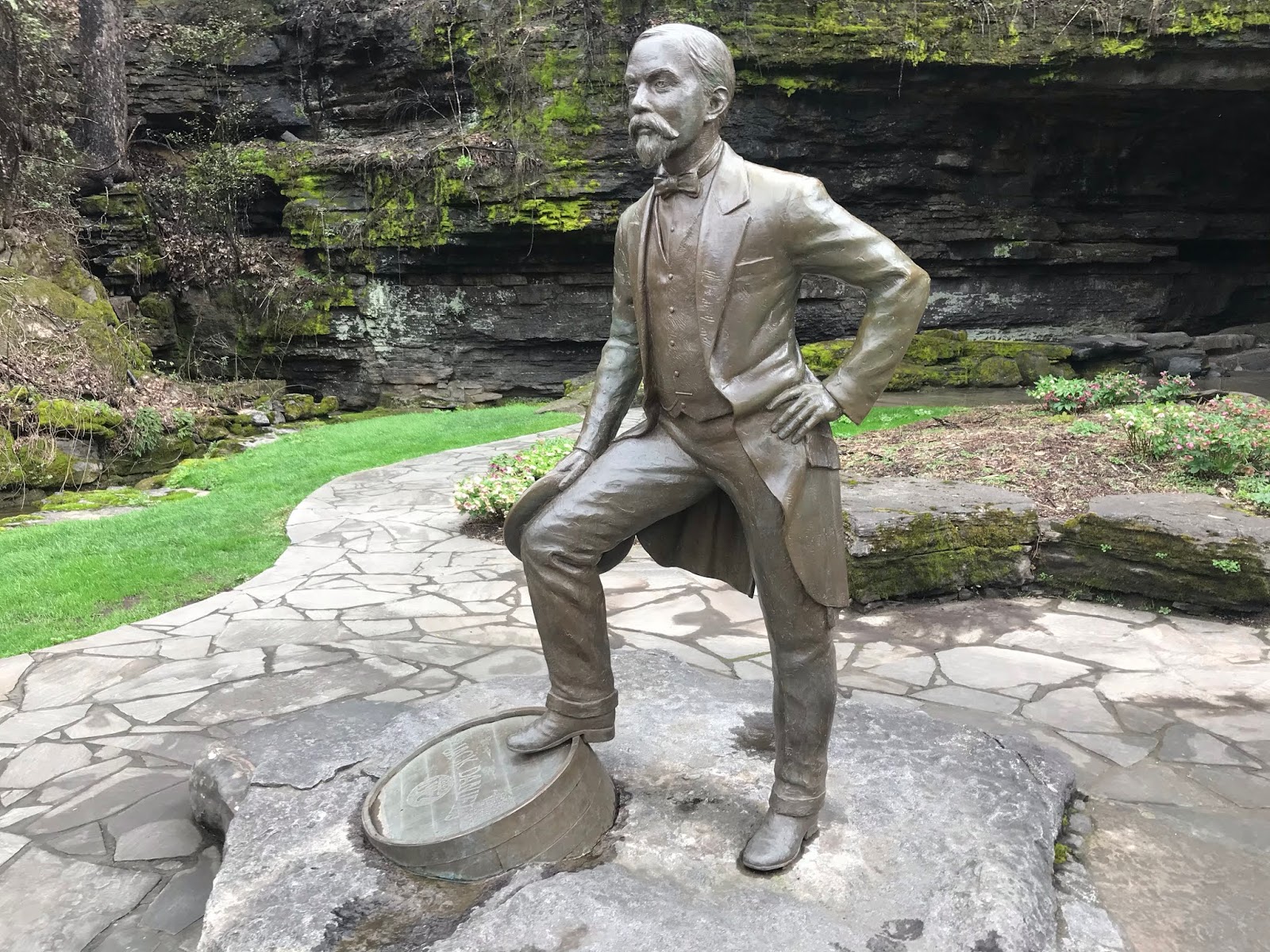
Jack Daniel
Circa 1849 - 1911
Lynchburg, TN
Now we turn to TENNESSEE in 1866.
The US Civil War, which raged from 1861 to 1865, was the bloodiest war in American history. Recent scholarship has raised the total American killed to around 750,000. The infrastructure of the South was devastated by Sherman and other Union forces. "Sherman's neckties" was the name given to bent and twisted railway ties in Atlanta and other parts of the south.
"In June 1861, Tennessee voted by referendum to become the last state to join the Confederacy. Most of eastern Tennessee, however, opposed secession. Thirty-one thousand Tennesseans fought in the Union ranks, while many more served in Confederate gray. Over 20,000 freed slaves from Tennessee joined the Union Army.
Tennessee’s geographic location in the Upper Confederacy and its extensive rail and river networks made it a strategic target for both sides during the Civil War. More battles were fought in Tennessee than in any state other than Virginia. Over 2,000 engagements were waged within the borders of Tennessee... " (Source: www.americainvaded.com)
Jack Daniel
Lynchburg, TN
Jack Daniel was one of ten children born into a poor Scots-Irish family in Tennessee. The actual year of his birth remains somewhat murky but ranges from 1846 to 1850. Jack was raised in part by Dan Call, a Lutheran minister who owned a whiskey sill. It was Nearest Green, one of Reverend Call's slaves, who taught Dan Call and eventually Jack Daniel the secret of the Lincoln County Sour Mash whiskey. The whiskey is leached through coal made of burnt sugar maple trees. The ultimate origins are lost to history but there is some evidence to suggest that it may be derived from water purifications processes that originated in Africa. The Reverend Call, pressured by the temperance movement, sold his whiskey sill to young Jack Daniel.
The Good Stuff
Fortunately for drinkers around the world, Jack Daniel did not serve as a soldier during the US Civil War. The closing days of the war were exceedingly dangerous for young men of Daniel's age in Tennessee many of whom deserted the Confederate cause forming dangerous criminal gangs. Tennessee and the entire south were ravaged by the war. Following the end of the war, the fate of the recently emancipated slaves was uncertain. But in 1866 Jack Daniel had the good sense to hire Nearest Green to be his master distiller. The elderly Green, for his part, was determined "to help 'his Master git back into production.'" (Source: Jack Daniel's Legacy, Green Ben, 1967, p 84, www.amzn.com/0692938486). While Jack Daniel was a lifelong bachelor, Nearest Green had many children. Generations of Nearest Greens' descendants, starting with Nearest's sons George and Eli, have worked for Jack Daniel's in Lynchburg.
Jack's Motto:
"Ye God, Every day we make it, we're going to make it the best we can."
Jack Daniel said, "Every day we make it, we'll make it the best we can." And so they have from that day to this.
Jack Daniels Distillery
Employs hundreds today in Lynchburg TN
Jack Daniel's distillery was purchased in 1956 by the Brown Forman company who own it today. It has become an iconic global brand. Many of the great and good have quaffed Jack Daniel's coal filtered whiskey over the years. William Faulkner is said to have enjoyed Jack on the rocks. (Source: Jack Daniel's Legacy, Green Ben, 1967, p 253, www.amzn.com/0692938486). Winston Churchill enjoyed sipping Jack Daniel's whiskey. Frank Sinatra once famously declared Jack Daniel's whiskey to be "the nectar of the Gods". Mia Farrow, his third wife, seems to have slipped a bottle of Jack into the crooner's coffin at his 1998 funeral. Jack Daniel's distillery paid tribute to "old blue eyes" with a premium bottle of Sinatra Select that combines "pleasant smokiness and vanilla finish" and costs over $100 per bottle.
CONCLUSION
Beignets and a shot of Jack Daniel's Whiskey may not be an effective cure for Coronavirus. But reflection on their origin in desperately troubled times may give us some hope in our own troubled times. There will be a "morning after". Good and even great things are born during times of crisis and catastrophe. It may be difficult now to discern what great things will come of Coronavirus of 2020 but history teaches us that it is certain that they will emerge in due course.
Tourist notes: Jack Daniel's Distillery in Lynchburg, Tennessee is a must see for anyone remotely interested in whiskey (https://www.jackdaniels.com/en-us/visit-us). Though it is temporarily closed to tourists due to the Coronavirus scourge, the distillery is continuing to make Tennessee sipping whiskey in the old style.
Cafe du Monde in New Orleans continues to turn fried dough and sugar into delicious beignets (https://shop.cafedumonde.com/). Even in these dark times takeaway is still available.
A new and exciting entrant to the world of whiskey is the Nearest Green Distillery in Shelbyville, Tennessee (https://unclenearest.com/). This award winning whiskey was founded by Fawn Weaver, a black woman entrepreneur and historian.
The Farragut Folklife Museum in Farragut Tennessee is reminder of the fact that Eastern Tennessee (the home of Admiral Farragut) was overwhelmingly Union in its sympathies during the Civil War. (http://www.townoffarragut.org/).
Commander K. at U.S. Space & Rocket Center
Huntsville AL
"Sweet home Alabama has been invaded and fought in many times over its history.
Humans first arrived in the area we know today as Alabama many thousands of years ago. Bows and arrows were introduced in the woodland era, from 300 BCE to AD 1000. The Mississippian culture, which began around AD 700, featured mound builders.
The Alabama, Choctaw, Cherokee, Chickasaw, and Creek (or Muscogee) were the principal tribes of Alabama. Alabama is a Muscogee word meaning campsite.
Native Americans
Museum of Alabama
The first Europeans to explore the area were the Spanish. For instance, as early as 1519, Alonzo Álvarez de Pineda was venturing into Mobile Bay. The Spanish explorer Hernando de Soto entered Alabama in 1540. It wasn’t an entirely auspicious start to European settlement in Alabama. At the Battle of Mabila, located somewhere in what is now Alabama, de Soto found himself outwitted and forced to flee from an ambush by warriors under the command of the local ruler, Chief Tuskaloosa
Other Spanish would follow him, but they too had little success in attempts to settle in the area. And then the French would arrive.
In 1702, the Le Moyne brothers—Pierre Le Moyne d’Iberville and Jean-Baptiste Le Moyne, Sieur de Bienville—founded Fort Louis de la Louisiane and its adjacent settlement, La Mobile, as the capital of New France in the Louisiana territory. In 1711, after a flood inundated Fort Louis, Bienville moved Mobile to its current location.
However, while the French were trying to establish themselves in the region, the English had their own plans for the area, and English traders began to be active there.
The French would control Alabama until the conclusion of the Seven Years’ War in 1763, when the territory passed to the British. Mobile briefly became the capital of British West Florida, thereby becoming part of the fourteenth British colony in the New World.
In January 1780, Captain William Pickles (great name!) of the Continental Navy rendezvoused with Spanish General Bernardo de Gálvez, who was leading over 750 Spanish troops. Their object was to attack the British outpost at Fort Charlotte in Mobile. The two-week siege lasted from March 2–14 and ended with British surrender. The city of Galveston, Texas, would later be named in honor of the Spanish general.
After the American Revolution, the southern half of what is now Alabama would form part of the Mississippi Territory. However, the section of Alabama that included the port of Mobile remained in Spanish hands.
The advance of American power in Alabama brought with it the usual process of pressuring Native Americans to relinquish control of their lands. Already, for instance, in 1805–6, lands were being opened up to settlers in large parts of western and northern Alabama, land that was held by Native American tribes such as the Muscogee and the Cherokee.
Tecumseh
1768 - 1813
In 1811, Tecumseh, a Shawnee chief born in present-day Ohio, came down to Alabama in an e ort to unite the Indian tribes against the encroachments of the American settlers. Most of the tribes ignored Tecumseh, but a portion of the Creek Nation known as the Upper Creeks did not. They allowed him to address their general meeting at Tukabatchee in what is today Elmore County. Tecumseh is reputed to have said:
Brush from your eyelids the sleep of slavery; once more strike for vengeance; once more for your country. The red men have fallen as the leaves now fall. I hear their voices in those aged pines. Their tears drop from the weeping skies. Their bones bleach the hills of Georgia. Will no son of those brave men strike the pale face and quiet these complaining ghosts? Let the white race perish! They seize your land; they corrupt your women; they trample on the bones of your dead! Back whence they came, upon a trail of blood, they must be driven!
The Creeks who were sympathetic to his message became known as the Red Sticks because of their red painted war clubs. The great comet of 1811 was seen by some as a portent for an uprising in the south; Tecumseh’s name in Shawnee meant shooting star.
Tecumseh would align himself and the tribes of the Great Lakes with Britain against the Americans in the War of 1812.
The Creek War broke out in southern Alabama on July 27, 1813, with the Battle of Burnt Corn Creek. Colonel James Caller of the Alabama militia attacked a party of about two hundred Red Sticks led by Peter McQueen. The Alabama militia had some initial success, but the Red Sticks launched a counterattack, driving the militia from the field.
Fort Mims Massacre, 1813
One of the deadliest attacks ever launched by Native Americans on settlers took place in Alabama during the Creek War. The Fort Mims Massacre, a reprisal for the Battle of Burnt Corn Creek, was fought on August 30, 1813. William Weatherford, known as Red Eagle, led thousands of Red Stick warriors against Fort Mims on the Alabama River. Around five hundred men, women, and children were killed that day with only about thirty of the settlers managing to escape the carnage. Fort Mims Park, featuring a partial reconstruction of the fort, is operated today by the Alabama Historical Commission.
On November 12, 1813, the small but memorable Canoe Fight occurred along Randon’s Creek. Four Americans, led by Captain Sam Dale, fought and killed a canoe full of eleven Red Stick warriors. Among the Americans was a black man named Caesar, who paddled the boat through the hand-to-hand struggle.
The Battle of Holy Ground was fought on December 23, 1813, between the US militia and Weatherford’s Red Sticks. Weatherford managed to escape by jumping, with his horse Arrow, o a fifteen-foot bluff.
The scale of the Fort Mims Massacre shocked Americans and drew national attention to Alabama. Andrew Jackson led a force of Tennessee militia south to fight the Creeks in Alabama. General John Floyd led elements of the Georgia militia west against the Creeks.
Andrew Jackson
1767 - 1845
Andrew Jackson was a complicated man. He demonstrated both surprising compassion and horri c cruelty during the course of the Creek War. On November 3, 1813, Jackson oversaw a massacre of Red Sticks at the Battle of Tallushatchee. Nearly two hundred Red Sticks were killed in the space of a half hour. Jackson showed compassion on the eld of battle by adopting an orphaned Creek boy and raising him as his own son, Lyncoya. Sadly, Lyncoya died of tuberculosis at age seventeen. Jackson and his wife Rachel had been planning to educate him at West Point.
On November 9, 1813, Jackson won a significant victory at the Battle of Talladega. Over three hundred Red Stick warriors were slain.
Andrew Jackson had another decisive victory over the Red Sticks on March 27, 1814, at the Battle of Horseshoe Bend. It must be noted that around six hundred Native American warriors from the Cherokee and Lower Creek tribes fought alongside Jackson against the Red Sticks. Approximately nine hundred Red Sticks were killed; Jackson’s forces lost fewer than eighty men.
Jackson ordered the cutting off of nose tips after the Battle of Horseshoe Bend in order to count the bodies. Old Hickory became known to the Creeks as Sharp Knife for this harsh approach.
After the Battle of Horseshoe Bend, Weatherford, who was half Scottish and half Creek, walked into the American camp and surrendered. He declared to Jackson, “I am in your power.” Sharp Knife chose to pardon Red Eagle, who lived peacefully in Alabama until his death in 1824.
Alabama Map
Museum of Alabama
Montgomery, AL
The Americans strongly suspected the Europeans of encouraging the Red Sticks in the Creek War. American forces discovered correspondence between the Creeks and officials in Spanish Florida. Major General James Wilkinson was ordered to seize Spanish-occupied Mobile. On April 14, 1813, Wilkinson landed with four hundred American troops. The outnumbered Spanish garrison surrendered the next day. By the terms of the Treaty of Ghent, Mobile was the only territorial gain of the War of 1812.
In September of 1814, British forces under the command of Lieutenant Colonel Edward Nicolls landed in Alabama in an attempt to seize Fort Bowyer near Mobile. The attack was repelled. On December 5, 1814, British Admiral Alexander Cochrane penned a letter to the Creeks that was an attempt to fan the fire ignited by Tecumseh.
'The Great King George, our beloved Father, has long wished to assuage the sorrows of his warlike Indian Children, and to assist them in regaining their rights and Possessions from their base and perfidious oppressors. ... If you want arms and ammunition to defend yourselves against your oppressors—come to us and we will provide you. ... And what think you we ask in return for this bounty of our Great Father, which we his chosen Warriors have so much pleasure in offering to you? Nothing more than that you should assist us manfully in regaining your lost lands,—the lands of your forefathers,—from the common enemy, the wicked People of the United States; and that you should hand down those lands to your children hereafter, as we hope we shall now be able to deliver them up to you, their lawful owners."
Even after Jackson’s decisive American victory at the Battle of New Orleans, the British did not abandon hope. In February 1815, British troops landed in Alabama and assaulted Fort Bowyer a second time, capturing the fort on February 11, 1815. The British would soon withdraw from Alabama after learning that the Treaty of Ghent, which ended the War of 1812, had been signed on December 24, 1814.
In 1819, Alabama became the twenty-second state to join the Union.
In the following decades, more Native American land was ceded to settlers. The years 1836–1837 saw the Second Creek War, which culminated in 1837 with the Battle of Hobdy’s Bridge, the last battle against Native Americans that took place in Alabama. In 1838, Native Americans were sent westward on the Trail of Tears.
Commander K. at
Crooked Creek Civil War Museum
Alabama, a slave state, joined the Confederacy in February 1861. Montgomery brie y became the first capital of the Confederacy, from February until May of 1861, when she was succeeded by Richmond, Virginia. Around 120,000 Alabamians would serve in the gray armies of the Confederacy. Alabama was also a center of iron manufacturing, contributing much-needed artillery to the rebel cause. The state itself, however, was mostly on the periphery of military action during the Civil War.
However, some fighting did take place there.
In February 1862, Union gunboats moved up the Tennessee River to Florence. And the Union established a stronghold in parts of northern Alabama.
In April 1863, Colonel Abel Streight led Union forces on a raid on Confederate communication lines. Despite a Union victory in the Battle of Day’s Gap, the raid turned into a disaster for Streight’s men, who eventually were forced to surrender to Confederate troops.
In July 1864, Major General Harrison Lovell Rousseau led a Union raid on Confederate targets in north and east-central Alabama, disrupting Confederate communications and destroying supplies.
David Farragut USN
Farragut Folklife Museum
Farragut TN
The year 1864 also saw Union land victories in the Battle of Athens and the Battle of Decatur. The naval Battle of Mobile Bay was fought o the Alabama coast on August 5, 1864. At the battle’s crisis, Rear Admiral David G. Farragut, the Union leader, famously exclaimed something like, “Damn the torpedoes, full speed ahead.” This Union victory contributed to Lincoln’s reelection in November of 1864.
CSS Alabama
The CSS Alabama, built near Liverpool, was the most famous Confederate commerce raider of the US Civil War. Her captain, Raphael Semmes, was born in Maryland but later adopted Alabama as his home. Under her bold captain, the Alabama terrorized Union shipping from the Atlantic to the Pacific for two years, capturing and burning sixty-five vessels. She was finally sunk on June 19, 1864, in the English Channel off Cherbourg by the armored Union ship Kearsarge.
In 1865, the war would hit Alabama even more severely. In March, Union Major General James H. Wilson launched a cavalry raid deep into Alabama, defeating Confederate forces and taking Selma before heading for Montgomery.
In April, after the Battle of Spanish Fort and the Battle of Fort Blakely, Mobile itself—one of the Confederacy’s last deep-water ports—finally fell to the Union.
On May 4, 1865, General Richard Taylor, commanding the last major Confederate force in Alabama, surrendered at Citronelle.
USS Alabama
Mobile, Alabama
The USS Alabama is a South Dakota-class battleship that was launched in 1942 and supported the liberation of the Philippines in World War II. She can be found today at the Battleship Memorial Park in Mobile.
The training of African-American airmen at Tuskegee is also a note- worthy feature of Alabama’s war effort during World War II. In March of 1941, First Lady Eleanor Roosevelt was a passenger in a plane own by an African-American pilot over Alabama.
German U-boats operated in the Gulf of Mexico in 1942 and 1943. During the month of May in 1942, they sank forty-one merchant ships in the Gulf."
Tourist Notes: Alabama has so much to offer. Natural Beauty. Incredible BBQ. Amazing College Football. And a heaping helping of History too. Here are some of my personal favorites...
Dreamland Barbeque: This is my favorite place for authentic Alabama BBQ...https://www.dreamlandbbq.com/. Be sure to save room for some Banana Pudding!