Commander Kelly's Conservative tour of London continues with a detour to Oxfordshire to the site of Blenheim Palace.
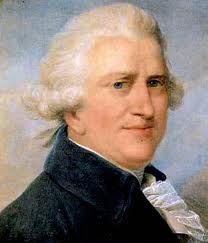
Sir John Churchill, 1st Duke of Blenheim 1650 - 1722
Blenheim Palace (http://www.blenheimpalace.com/) near Oxford was the home of two of Britain's most remarkable men. Sir John Churchill was awarded the house and grounds by a grateful nation by Queen Anne after having led British forces and their allies at the battle of Blenheim on August 13, 1704. Blenheim was a decisive British victory in the War of Spanish Succession that checked the ambitions of Louis XIV of France, the Sun King. The Duke of Marlborough was, therefore, responsible for halting the advance of a centralising authoritarian government by a Parliamentary democracy. He was, in short, a champion of limited government and Conservative principles.
The Duke of Marlborough was also a military genius who, like the Duke of Wellington, never lost a battle. He also had a reputation for being solicitous on behalf of his troops who were well-fed and well supplied before battle. Winston Churchill (1874 - 1965) wrote of his ancestor that, "The First Duke's victory at Blenheim changed the political axis of the world."
Blenheim Palace (Photo: Jeff Dody)
Long Library at Blenheim
Blenheim Palace is an extraordinary baroque building designed by the architect Sir John Vanbrugh. It is filled with splendidly decorated rooms, historically important paintings and tapestries and an opulent long library.
Commander K. at Blenheim
You will find the bed and room in which Winston Leonard Spencer Churchill (see earlier post, Churchill War Rooms, 2/12/12) was born at Blenheim Palace on November 30, 1874. On the grounds of Blenheim Palace you will also find the temple of Diana which is the location where Winston proposed to Clementine Hozier on August 11, 1908. Churchill wrote, "At Blenheim I took two very important decisions: to be born and to marry. I am happily content with the decisions I took on both those occasions."
Commander K. in front of the Temple of Diana (Photo: Jeff Dody)
"It is not given to us to peer into the mysteries of the future. Still, I avow my hope and faith, sure and inviolate, that in the days to come the British and American peoples will for their own safety and for the good of all walk together side by side in majesty, in justice, and in peace." Winston Churchill.
Winston and Clemmie
I had an opportunity to visit Winston and Clemmie's grave at St. Martin's church in nearby Bladon. It is remarkable to see how simple their gravesite truly is. Churchill could, of course, have been buried at St. Paul's, Westminster Abbey or with whatever grand monument he liked. Instead, he chose to have his mortal remains return home near the site of his birth, in celebration of the site of his marriage proposal and alongside his American mother, Jennie Churchill. The man who has been acclaimed the greatest Briton was content with the plainest of monuments. This is a moving testament to his humility and his humanity.
Commander K. with WSC and Clemmie (Photo; Jeff Dody)
In the fall of 1793 Horatio Nelson (see earlier post, Horatio Nelson Champion of Liberty, 1/15/12) was given command of a small squadron of ships and ordered to effect a blockade of the French occupied island of Corsica. The British were at war with revolutionary France and were supportive of Corsican independence and resistance to France. In 1794 Horatio Nelson served on shore commanding gunners that were besieging the Genoese-built citadel at Calvi. It was on July 12 1794 while directing a land battle on the island that Nelson was wounded by a cannonball that displaced sand and grit into his right eye. He was never able to see properly out of his right eye for the rest of his life.
Calvi surrendered to the British on 10 August, 1794.
Commander Kelly at bay of Calvi
Years later, at the battle of Copenhagen in 1801 when things were getting hot his more timid superior officer signalled for Nelson's fleet to retreat. Nelson said to his flag captain, 'You know, Foley, I have only one eye. I have a right to be blind sometimes.' He raised the telescope to his blind eye, and said 'I really do not see the signal." Nelson proceeded to destroy the Danish fleet at Copenhagen.
View from the Genovese Citadel of Calvi
The British briefly occupied much of Corsica, including Ajaccio and even the house where Napoleon was born.
Today Calvi is a beautiful seaside town that is home to the paratroopers of the French Foreign legion.
In The Dictator (see earlier post, The Dictator, 5/29/12) there is a hilarious/tasteless scene depicting Cohen's character, Aladeen, playing a video game that simulates the slaughter of Israeli athletes at the 1972 Munich Olympic games. The film pays its viewers the compliment of presuming that they remember or understand what happened 40 years ago in Munich (http://en.wikipedia.org/wiki/Munich_Olympics_massacre). As Ali G. would say, "Respect!"
Separately, there have been internet hoaxes about the banning of the teaching of the Holocaust in the UK Curriculum that have proven to be false. I was, however, astonished to learn recently that a non-muslim Tory politician, Lord Baker, has actually come out in favour of such a ban...
What harm could a minute of silence in London this summer possibly represent? Apparently it is too great a risk for the IOC to contemplate. This may give many a prospective Olympic tourist guest pause. What is the IOC afraid of anyway? Will Oldman imitators (see earlier posts, Oxford-Cambridge Boat Race 4/15/12 and Breivik and Oldman, 4/20/12) disrupt the games on behalf of their respective causes? What exactly is Lord Baker afraid of anyway?
The Dictator features Sacha Baron Cohen in an acting role as a Qaddafi-like figure (he even has a golden gun) who comes to New York, falls in love and becomes slightly human. Cohen is no longer trying to fool anyone into thinking that he really is Borat, Bruno or Ali G. Cohen is an incredibly gifted and brilliant comedian who has made a career of provocative risk-taking humor experiments. He thrives on skating on the edge. The Cambridge-educated Cohen claims to have been sued more than any other living actor and it could well be true.
The movie begins with a moving dedication -- "In Loving memory...Kim Jong Il"!
Cohen then proceeds to rip the dictator lifestyle. The film is allusive to Chaplin's "The Great Dictator" which mocked Hitler prior to World War II. One could also compare it to The Emperor's New Clothes with Ian Holm about the taming and domestication of another dictator, Napoleon. I found The Dictator incredibly funny.
Cohen is ably assisted by Anna Faris who plays a somewhat butch organic market owner based in Brooklyn and his inevitable love interest. She has appeared in the Scary Movie parodies among other films. Ben Kingsley of Gandhi fame plays Cohen's scheming rival for power.
There are brief hilarious cameo appearances with Gary Shandling and Megan Fox.
The key to all good comedy is good writing and this movie has it in spades.
The conclusion of the movie is marred by a rather tedious scene in which Cohen would appear to endorse the bromides of the scruffy Occupy Wall Street crowd. There is also a brief cheap shot at Dick Cheney. These are balanced out by the rough treatment meted out to the tofu and spouts eating crowd in the Faris scenes. For those with delicate sensibilities a warning: Whole Foods is mocked and derided!
The movie, while being consistently funny, does also touch on some incredibly serious topics such as nuclear proliferation, violent hatred of Israel, the danger of Iraq, racial and gender stereotypes. By far the greatest question raised, however, is the broader question of tyranny. What drives a tyrant? How can the rest of the world deal with the reality of tyranny in our troubled world? What happens when tyranny acquires technology that gives fuel to megalomaniacal dreams of conquest and destruction?
Another dictator, Napoleon, once said, "From the sublime to the ridiculous is but a single step." The Dictator, however, suggests that from the "ridiculous to the terrifying may also be but a single step."
A case can be made that Napoleon had strongly conservative instincts. He initiated the Concordat which made peace with the Roman Catholic church (while a conservative need not be religious, it does not hurt to believe) ending the secular excesses of the French Revolution. He also brought a halt to the terror of the Revolution that had sent so many to the guillotine. He was clearly opposed to the chaos that was unleashed by the Revolution; the French people craved a re-establishment of order after the turmoil of the revolution. He reformed and modernised the French state with his Code Napoleon. This guaranteed that France would be a meritocracy very much unlike the patronage system prevalent across the channel in Great Britain. He commanded the respect and loyalty of his soldiers who he showered with baubles such as La Legion d'Honeur. All of these elements a Conservative would applaud.
On the other side of the ledger, however, Napoleon displayed a ruthless disregard for the value of human and, for that matter, equine life. Well over 3 1/2 million Europeans perished as a result of the Napoleonic wars along with countless horses After the battle of Jaffa in the Egyptian campaign General Napoleon ordered the slaughter of 1,400 prisoners on the beach by bayonet or drowning. During the same campaign he ordered the poisoning of some of his own soldiers who were afflicted with plague in order to speed the retreat from Acre.
In 1804 Emperor Napoleon ordered the execution of the Duke D'Enghien (son of Louis Henri de Bourbon and a Prince du Sang) on trumped up charges in the moat of the Chateau of Vincennes. Napoleon's minister of police, Fouche, said of the judicial murder, "It was worse than a crime; it was a blunder!"
Napoleon was certainly no great champion of individual human rights. He plotted to reintroduce slavery into Haiti (see earlier post, Toussaint L'Ouverture Champion of Freedom and...Conservative, http://americanconservativeinlondon.blogspot.co.uk/2012/04/toussaint-louverture-champion-of.html). He was a pioneer in the art of political propaganda and would never have tolerated a free press in the Empire. He oversaw a police state full of informers and rogues supervised by Fouche.
He divorced Josephine -- the only woman that he ever truly loved and who loved him as well -- for reasons of state. He needed an heir and she could not provide him one. The subordination of the personal family life to the requirements of the state is hardly a conservative trait.
Napoleon's greatest political crime was, however, the annihilation of the Venetian Republic. The longest representative democracy in Europe was snuffed out with all the grace and dignity of a wheel chair-bound senior citizen being shoved into a Venetian canal!
After Nelson's decisive victory over the Franco-Spanish fleet at Trafalgar, Napoleon's dream of a cross channel invasion of Britain vanished. The only way to prosecute the war against England seemed to be launching a trade war with Britain. Napoleon introduced the Continental system which embargoed all trade with Britain. The price of commodities such as sugar skyrocketed. Smugglers continued, however, to evade the Continental system and trade with Britain and her empire. Frustrations with the flouting of the Continental system by Tsarist Russia (who sold critical ship-building timber to England, for example) led Napoleon to proceed with his disastrous invasion of Russia two hundred years ago. Napoleon's Continental system was, in fact, the ultimate reductio ad absurdum of protectionist economic policies and was diametrically opposed to the free trade policies endorsed by Conservative/libertarian economists such as Adam Smith.
Beethoven famously lionized Napoleon early on dedicating his 3rd Eroica symphony to him, but then later grew totally disillusioned by him. He then dedicated a work (Wellington's Victory or The Battle of Vitoria) to Napoleon's nemesis, the Duke of Wellington. He raised nationalistic hopes in Germany, Italy and Poland though endless war prevented these from coming to fruition.
Napoleon famously and ironically declared that "La Revolution, c'est moi." He was the revolution's consummation and its terminus.
At the end of the day, Napoleon was a dictator who recklessly spent the lives of his citizens as if they were counterfeit coins and bankrupted his country in the process. A dictator seeks to centralise all the powers of the state towards his own will. A dictator, even when highly gifted and well-intended, cannot truly be a conservative.
I was somewhat astonished to learn last week that Corsicans do not, in the main, have a favorable view of their most famous native son -- Napoleon. He and his family committed the great crime of switching allegiance and siding with France against Paoli in the struggle for independence. As a result, Napoleon received an education at Brienne military school in France but he and all his family were compelled to flee the island. The entire Bonaparte clan is regarded in Corsica with all the respect accorded Benedict Arnold in the USA.
His last visit to Corsica took place in 1799 on his return from Egypt when he was 30 years old. He never returned to Corsica as First Consul or Emperor.
You will, nevertheless, find the spirit of Napoleon throughout the island of Corsica to this day. Consider the Napoleon Grotto near Bonifacio. Napoleon seems even to have become a part of the natural landscape of the island (see photos below)!
Napoleon's Grotto (Photo: Tom Ziemba)
Napoleon's Grotto, near Bonifacio
You will find more evidence of Napoleon in the exquisite town of Bonifacio where Napoleon stayed briefly in 1793...
Napoleon slept here, Bonifacio
It is in the sleepy Corsican Capital of Ajaccio that you will find the epicentre of the Napoleonic world, for it was here that Napoleon was born and spent his youth. Under the shadow of a monument to Napoleon you will hear the "clack-clack" of Frenchmen of a certain age playing boules in the sun...
Frenchmen at work, Ajaccio
In Ajaccio you will find Napoleon decked out as a Roman emperor on the town square...
Napoleonic Toga Party, Ajaccio
In Ajaccio you will find the church in which Napoleon was baptised...
Napoleon's first church
You will find Napoleon even in the bars and restaurants of Ajaccio...
Spirits of Napoleon, Ajaccio
You will also find the Palais Fesch, a wonderful museum founded by Napoleon's maternal uncle, Cardinal Fesch. This museum is home to works ranging from medieval through to contemporary Corsican art.
Cardinal Fesch, Palais Fesch
Ajaccio had another favourite son -- the singer and actor Tino Rossi. You will find his home on the beach near Ajaccio. Here is a sample of Tino Rossi...
The liberation of France did not begin on June 6th 1944 as many believe, but rather commenced on September 15, 1943. The first Department of France to be liberated was Corsica in September-October of 1943 with operation FIREBRAND.
Maquis near Calvi
The English referred to Corsica as the "Perfumed Isle" because of its fragrant maquis. The maquis is a dense undergrowth of mixed vegetation up to 10 feet high that covers nearly half of the surface area of Corsica. It is made up of various plants and trees including myrtle, oregano, rosemary and mint. "Maquis after all is the Corsican name for the thick local brushwood, and partisan forces made extensive use of it." (SOE in France, M.R.D. Foot, 1966 http:/www.amzn.com/0415408008) The term Maquis was later generalised to represent all resistance activity throughout France.
The SOE -- Special Operations Executive (HQ on Baker street in London) -- had been charged by Winston Churchill during World War II to "set Europe Ablaze." Twenty-six SOE agents sent in from Algiers, three SOE instructor officers and the SOE-trained Free French battalion de choc landed at Ajaccio on September 15, 1943. Italian fascist troops had been occupying the island. Germans units that had been based in Sardinia were attempting to retreat back to the continent through Corsica. The last Germans were chased out of Bastia on October 4, 1943.
General George S. Patton visited Corsica and made the pilgrimage to Napoleon's home town of Ajaccio in late 1943 after the invasion of Sicily.
The island was then transformed into a massive airbase for the allied air forces. The allies referred to the USS Corsica -- an unsinkable aircraft carrier in the Mediterranean. Many allied bombing missions originated out of Corsica. Joseph Heller (http://en.wikipedia.org/wiki/Joseph_Heller), author of Catch 22, was a bombardier in a B-25 based on Corsica and flew 60 missions (see earlier post, Duxford and George Carlin 4/30/12).
It is interesting to note that Heller, in spite of having authored Catch 22, had no real complaints about his time spent as a bombardier in the Army Air Corps. He was, of course one of the "lucky ones" who survived the war and even actually benefited from the experience.
Catch 22 in 1 minute
The 57th Bomb Wing was stationed on the east coast of Corsica from Bastia in the north to Solenzara in the south. The island was also used as the staging point from which Operation Dragoon (commencing on August 15, 1944) was launched to liberate the south of France.
I have had a lifelong interest in Napoleon and always wanted to go to Corsica. Last week Commander Kelly fulfilled his lifelong dream and finally visited Corsica! I learned that Corsica is far more than just the birthplace of Napoleon. Corsica is an island of mystery, an island of beauty. It is a perfumed isle, scented by the Maquis. It is a towering mountain rising out of the sea. Its fiercely independent and creative island people have longed for independence while living under the boot or shadow of nearby and more powerful political entities (somewhat akin to Ireland). The term "Vendetta" was invented in Corsica and they have long memories here.
Filitosa Statue
Man's first settlement in Corsica dates back to the seventh millennium before Christ -- a staggering 9,000 years ago! This was, therefore, long before the Egyptians built the Pyramids. You can see the ruins of this at Filitosa (http://www.filitosa.fr/en/index.html) near the southwest coast of the island. This area was first rediscovered by novelist Prosper Merimee in 1839.
Commander K. at Cuccuruzzu
Corsica boasts the seat of the oldest castle in Europe -- Cuccuruzzu -- a bronze age fortification that dates back three thousand years. Ancient Corsica was settled by the Greeks and later Romans. It was occupied by the Pisans then the Genoese. The Barbary pirates (see earlier post, The Pirate Coast 5/9/12) raided it along with most islands in the Mediterranean. Land on the coast (ocean views) was traditionally viewed as being worthless due to the fear of abduction and seaborne violence. The Maison Napoleon (his birthplace) in Ajaccio has a trap door in the second floor which would have allowed residents to conceal themselves from marauding pirates. Napoleon is alleged to have taken refuge here at some point in his youth, perhaps from his unruly siblings...?
Note Trapdoor in floor of Maison Napoleon, Ajaccio
Pasquale Paoli 1725 - 1807
Pasquale Paoli (http://en.wikipedia.org/wiki/Pasquale_Paoli) was the leader of movement for an independence from the Genovese and, later, the French (to whom Corsica had been sold). He was the elected leader of a representative democracy where he was also Commander in Chief. He was also author of its constitution. Does this all sound vaguely familiar? The Corsican Constitution was, in fact, a model for the American founding fathers who created the US Constitution. The Corsican Constitution Paoli wrote was far ahead of its time, even guaranteeing voting rights for women in the 18th century! Napoleon's father Carlos Maria served under Paoli. After Paoli's defeat by the French in 1769, he retreated into the mountains and continued a guerrilla struggle. The town of Paoli, PA is named in his honor.
After having been conquered and assaulted so many times, Corsica perhaps avenged her honor when its most famous native son, Napoleon Bonaparte, managed to conquer most of Europe at the start of the 19th century (see earlier post Napoleon..Relevant to Americans in 2012, 5/28/12).
Corsicans have a well-deserved reputation for toughness. The paratroopers of the French foreign legion make their home in Calvi. The Union Corse (mentioned by Ian Fleming in Casino Royale) was/is a Corsican mafia (drugs, prostitution, etc.) that dealt harshly with French collaborators in southern France after the Second World War.
The Corsicans' favorite French verb is "plastiquer" -- to blow something up with plastic explosives! I saw buildings on the Corsican coast that had been blown to smithereens.
Romaneque Church, near Calvi
Corsica has a year-round population of 300,000 but swells to 1.5 million during the summer months! It is a part of France, though often an unwilling part. Corsica has no industry to speak of. It does, however, have unspoiled natural beauty, a moderate climate, hearty cuisine and good affordable wines. The Chestnut-flavored beer, Pietra, is not to be missed. This combines to form a the booming tourist trade in the summer months.
Do not allow any possible feelings of Franco-phobia to deter you from making a visit to Corsica. There are no "French Surrender-monkeys" hiding in the Corsican mountains! The brutal truth is that most Corsicans cheerfully despise the French!
Commander Kelly says that a great way to see and explore Corsica is to go on a hiking tour with Butterfield and Robinson (http://www.butterfield.com/)
Special Thanks to Marya Dumont and Dale Sherrow (of B&R) who were my outstanding guides to Corsica last week!
Is Napoleon relevant in any way to Americans today? Does our war-weary nation simply regard him as the ultimate "War lover" and a bloated symbol of an outdated Imperialism? Perhaps, but consider the following...
1) Louisiana Purchase. In 1803 the Jefferson administration purchased the Louisiana territory from Napoleon for the sum of $15 million or about 3 cents an acre. The Louisiana purchase accounts for 23% of all current US territory including ALL of the states of Arkansas, Kansas, Missouri, Iowa, Oklahoma, and parts of Minnesota, North and South Dakota, Colorado, Wyoming, Montana, New Mexico, Northern Texas and Louisiana. Furthermore, the Louisiana purchase enabled the US to expand even further westward pushing on to the Pacific.
Commander Kelly and Self-made man shirt
Marshal Murat...Rock Star?
2) Self-Made Man. Napoleon's life exemplified the social mobility beloved by Americans. The Code Napoleon stipulated that government jobs would be awarded on the basis of merit. He disrupted forever the hidebound class system of Royalist France. He extended opportunity to those in the French military by promoting according to merit and asserting that there was the potential for "a marshal's baton in every soldier's knapsack." Marshal Ney, the bravest of the brave, was the son of a barrel cooper. Marshal Murat, who looked like a rock star, was the son of an innkeeper. Marshal Massenna was the son of a shopkeeper. Nor was he unwilling to promote nobly-born officers such as Marshal Davout -- probably his most able subordinate.
Napoleon was the son of a petite bourgeoisie family who rose to become Emperor. He was, as the t-shirts in Ajaccio say, a "self-made man."
3) Napoleon -- Amercian Ally. This year, 2012, marks the bicentennial of the start of the War of 1812 againt Great Britain (see earlier post War of 1812, http://americanconservativeinlondon.blogspot.co.uk/2012/04/war-of-1812.html) . During this three year conflict Napoleonic France was the de facto ally of the United States. The enemy of my enemy is my friend.
4) Napoleon and Modern Family. Napoleon was part of a complicated blended family. He was the second oldest of eight children. His father Carlo Maria Buonaparte was a lawyer who died when Napoleon was only 16. His first wife, Josephine had creole (mixed race) roots. Napoleon had two stepchildren, two wives and numerous mistresses. He attempted to run Europe as if it were the Bonaparte family business with brothers assigned to thrones in Spain, Holland, Italy and Germany.
Napoleon briefly had an American sister-in-law named Elizabeth Patterson from Baltimore who wed his youngest brother Jerome in 1803 with the marriage later being annulled by Napoleon who had other plans for his brother.
Napoleon was, like so many American men, a mamma's boy. Napoleon once said, "It is to my mother that I owe my fortune and all the good I have achieved."
Vote Napoleon!
5) Napoleon and Modern Politics. Napoleon was, in many ways, the first modern politician. William Dietrich writes, "modern politicians who seem coated with Teflon (meaning that nothing critical sticks to them) cannot compare to the slickness of Napoleon Bonaparte." The Rosetta Key, William Dietrich 2008 (http:/www.amzn.com/0061239550). After the debacle of his expedition to Egypt where his army was a marooned when Nelson led the Royal Navy victory at the battle of the Nile. Napoleon fled back to France on a Frigate abandonning his army but his spinmasters went into overdrive touting his land battles against the Mamelukes and cultural gleanings from the invasion. He was shrewd in his manipulation of the media -- he would sometimes dictate articles in newspapers like the Moniteur.
6) Napoleon and Louisiana. The Code Napoleon was once in force in Louisiana and the state still is affected, for better or worse, by Napoleon. Louisiana is divided into parishes rather than counties due to Napoleon. Some argue that the curious structure of Louisiana may have have hampered relief efforts during hurricane Katrina.
In New Orleans today you can enjoy a drink at the Napoleon House (http://napoleonhouse.com/) which was the building that Bonapartist conspirators hoped to bring him to after rescuing him from the clutches of the British on the barren south Atlantic island of St. Helena. Napoleon himself foiled the conspiracy by dying at the age of 51, most likely as a result of stomach cancer.
7) Napoleonic and Food and Drink. Have you ever eaten Napoleonic? The Napoleon mille feuille pastry is delicious. Chicken Marengo, which includes crayfish, tomatoes and garlic, is a classic dish known world-wide. Pumpernickel bread was allegedly invented for Napoleon who responded to its creation with "C'est bon pour Nichole!" -- "It's good for (my horse) Nichole!"
Du Vin Napoleonique
Have you ever drunk Napoleonic? Ever quaffed a Napoleon brandy? Ever sipped a glass of Chambertin Clos de Beze -- Napoleon's favourite wine? He insisted that cases of this delightful Burgundy accompany him on his campaigns. In Corsica today you can even find a wine called simply 1769 -- the year of Napoleon's birth.
8) Napoleon, Art and Museums. Have you ever visited the Louvre? It was once known as the Musee de Napoleon. Visit and you may find the sword de Valette which was stolen at bayonet point from the knights of Malta when Napoleon's force captured the island in 1799 on his way to Egypt. The inscription reads "A gift from the people of Malta to the People of France," thereby explaining much of art collecting history!
Maltese Gift to France...?
Have you been to the British Museum in London? Have you perhaps studied a foreign language with a certain company? Are you interested in mummies, pyramid power or Egyptology? It was Napoleon's expedition to Egypt that discovered the Rosetta stone which was the key breakthrough that allowed translation of Egyptian hieroglyphics. For an entertaining take on Napoleon's expedition to Egypt Commander Kelly says "check out William Dietrich's novels Napoleon's Pyramids, 2007 (http:/www.amzn.com/0060848324) and The Rosetta Key, 2008 (http:/www.amzn.com/0061239550)!"
Napoleonic Air Force - Bonaparte's Gull
9) Napoleonic Names and Places. Still don't think Napoleon is relevant to 2012? You must not live in or near Napoleon Michigan, Napoleon Mississippi, Napoleon North Dakota and or Napoleon Missouri! You must not live near Bonaparte Lake in my adopted home state of Washington. Have you ever been to the beach and seen a gull flying overhead? You may have seen a Bonaparte's Gull which was actually named after Napoleon I's nephew Charles Lucien Bonaparte who studied birds in America with James Audobon.
10) Napoleon and Film. Have you ever seen a Napoleonic film or TV program? Master and Commander was based on the Patrick O'Brian novel series and featured Russell Crowe. The Hornblower TV series with Iaon Gruffud was exceptionally well-produced. The Sharpe Novels of Bernard Cornwell were rendered into a TV series with a terrific cast featuring Sean Bean. The Emperor's New Clothes was a charming non-military take on Napoleon that featured Ian Holm as Napoleon. Then, of course, there is always the 2004 classic Napoleon Dynamite!
Sweetings is a refreshing stop on the American Conservative tour of London. It was founded in 1830 and has been operating from the present location since 1889. It is a great place for fresh seafood -- native oysters, dover sole, smoked Scottish salmon, lobster and some of the best fish and chips in London. All of this can be washed down with an excellent selection of French wines and also tankards of black velvet (a combination of Guiness and champagne that was reputedly invented as the funeral beverage of Prince Albert -- black for a funeral, champagne because Albert loved it). Be sure to leave room for spotted Dick with cream for dessert!
Sweetings is a friendly though quirky restaurant located in the City of London near St. Pauls' cathedral and is open Monday through Friday for lunch only! It does NOT take reservations. It also refuses to serve coffee.
Tradition, individuality, good seafood and adult beverages -- what more could a conservative want?
As a father, I write in the hope that my children will, someday, read me. I write in answer to the age-old question asked by children to their mothers everywhere, "Why is dad so grumpy, anyway?"
I write in order to say that which ought to be said, but is, somehow, not being written elsewhere.
I write, not to praise war, but rather to understand it better.
I write to help understand the foundation of my own opinions and to test them in the fire of opposition.
I write in reverence for the past and its profound impact on our present, its influence on our future.
I write in reverence for the value of human life and the importance of liberty for all people.
I write against those who would ignore or distort the past to grind their ideological axes whether they are libertarians, Marxists, etc.
The American Conservative tour on London resumes with a tour of Arsenal Football Club's home in London. Emirates stadium in Holloway is now where you will find the legendary Arsenal Football Club playing its home games (http://en.wikipedia.org/wiki/Arsenal_F.C.). Arsenal was founded in 1886. The team was created by fifteen workingmen employed at the Royal Arsenal in Woolich that supplied weapons and munitions to the British military. Each of the workingmen / partners put up sixpence for their interest in the team (then called "Dial Square") and a another bloke kicked in three shillings to buy the ball for a team's first game!
Go Gunners! (Photo: Lari Abraham)
Arsenal holds the record for the longest uninterrupted period in the English top flight (Premier league) and would be placed first in an aggregated league of the entire 20th century. The Gunners have won 10 FA cups. They have been coached since 1996 by the aptly-named Arsene Wenger, a French player and one of the best coaches in the game. Controlling interest in "The Gunners" is now owned by Stan Kroenke -- an American sports tycoon who also has interests in the St Louis Rams NFL, Denver Nuggets NBA, Denver Avalanche NHL and the Denver Rapids Major League Soccer and other sports franchises.
Commander Kelly at Emirates Stadium (Photo: Lari Abraham)
Emirates stadium was completed in 2006 and features a pair of historic brass cannon at the front. Arsenal is not bashful about celebrating its military roots. Consider how very different this is from the names of professional sports franchises in the USA. Our most violent and aggressive national sport, NFL football, features only three vaguely combative historical team names -- the Patriots, Raiders and Buccaneers. The US Constitution has at the Second amendment and millions of Americans support the NRA, but what US professional team would dare to put a gun on its uniform? The Cowboys of Dallas, for example, may have had six-shooters, but you won't find any on Tony Romo! The British, however, are fiercely proud of their island heritage and the role that their armed forces have played in building an Empire that, in general, advanced the cause of liberty around the world.
Soviet Philately
If you want to learn more about historical Gunners and the history of artillery Commander Kelly suggests that you also visit Woolich (the original home of Arsenal) and tour the Firepower museum -- The Royal Artillery Museum. This museum first opened in 1820 and is one of the oldest military history museums in the world. It features a host of interactive elements and is very child-friendly. Here is the link... http://www.firepower.org.uk/index.asp
Napoleon and his guns
Artillery is by far the deadliest and most effective form of land-based armament; in the Napoleonic Wars, World War I and World War II the vast majority of combat deaths were caused by artillery (source: Wikipedia). The father of the creator of James Bond, Valentine Fleming, was killed by an artillery shell in World War I.
Any list of world-famous artillerymen must begin with Napoleon, who commanded the French Republican guns that drove the British from Toulon in 1793. He was promoted to Brigadier General at the age of 24 after this feat. He defeated a royalist insurrection on October 5, 1795 (13 Vendemiaire) with a famous "whiff of grapeshot" advancing himself further. Other great artillerymen include the German philosopher Friedrich Nietszche who once wrote, "had God thought of 'heavy artillery' he would never have created the world". The American President who dropped two atomic bombs on Japan, Harry Truman, was a proud veteran of battery "B" in World War I.
It was Friedrich the Great, the Prussian warrior-King, who said, "Artillery adds dignity, to what would otherwise be an ugly brawl." He recognised the care, precision and science which distinguish the role of artillery on the battlefield.
The etymology of the word "artillery" is both controversial and suggestive. The English word "artillery" dates back to the Middle ages. One version holds that the word is derived from the French verb "atelier" or "to arrange." Another theory holds that "artillery" comes from the Italian expression "arte de tirare" or the "art of shooting." Both derivations, however, suit "The Gunners" of Holloway very well.