Wednesday, May 9, 2012

The Pirate Coast

Lively History


Richard Zacks' excellent history, The Pirate Coast: Thomas Jefferson, the First Marines, and the Secret Mission of 1805, was published in 2005.  It tells the timeless and yet timely tale of America's first major covert operation which was led by the now almost forgotten William Eaton (http://en.wikipedia.org/wiki/William_Eaton_(soldier)).  He was an ex-captain in the US army and former consul to Tunis who was dispatched by President Jefferson to north Africa on a mission to liberate the crew of the USS Phiadelphia.

The Babary pirates of north Africa  (see earlier post, The Shores of Tripoli, Jefferson in London and the Birth of the US Navy, 4/20/12) had been terrorizing, kidnapping and enslaving westerners for centuries.   An old a Barbary maxim statures: "Whoever acts like a sheep, the wolf will eat."   Most Western nations had simply opted to pay tribute to the wolf rather than confront the pirates.  After the American revolution, the USA no longer had the protection of the Royal Navy on the high seas.  In 1803 the entire American fleet consisted of six ships.  The Philadelphia, launched in 1799, was a 36-gun American frigate commanded by Captain William Bainbridge (the same Bainbridge after which Bainbridge island in my adopted home state of Washington is named).  The US did not want to be mistaken for a sheep and, therefore, dispatched the Philadelphia to the Mediterranean.  Bainbridge had orders to confront the Barbary pirates, instead he managed on October 31, 1803 to run his ship aground in Tripoli harbor.  The crew of 307 officers and sailors was captured and held hostage by Yussef Karmaanli, the Bashaw of Tripoli.  Yussef has the distinction of being the first foreign ruler to ever declare war on the United States.

William Eaton -- American Hero
William Eaton was a flinty New Englander who had served in the continental army during the American Revolution, attended Dartmouth college after the war and served as the American consul in Tunis.  Jefferson and his secretary of state, James Madison, opted to dispatch William Eaton to try to effect the release of the American hostages.  Yussef Karmaanli had a brother Hamet who was his political rival for the throne of Tripoli.  The Jefferson administration hoped Eaton would stir up a civil war that would topple Yussef and liberate the American sailors.  It was therefore, the libertarian Jefferson who first implemented an American policy of using a covert force to effect a "regime change" in a foreign country.

William Eaton had some choice words in support of aggressive American action against the pirates of the Barbary coast.  He said, "If the Congress do not consent that the government shall send a force into the Mediterranean to check the insolence of those scoundrels and to render the United States respectable, I hope they will resolve at their next session to wrest the quiver of arrows from the left talon of the (American) Eagle...and substitute a fiddle bow or a cigar in lieu."

Eaton was given the vague title of "Navy Agent of the United States for the Several Barbary Regencies".  With long delays in orders due to the communications realities of the time, Eaton had been granted great latitude to get the job done.

In spite of a lack of personnel, money and resources Eaton managed to link up with Hamet and lead a rag tag band of US marines (ten in all), Greeks soldiers and native mercenaries on a 500-mile overland desert journey from Alexandria to Derne in Tripoli.  Eaton, greatly outnumbered, led these and US naval forces in the battle of Derne on April 27, 1805 and triumphing over the Bashaw's forces capturing the fortifications of Derne in what is now Libya.  His faithful Lieutenant Presley O'Bannon of the US marines raised the American flag over a foreign fort for the first time in history.  The Marine hymn owes its reference to the "shores of Tripoli" due to this battle.  With the capture of Derne and a US naval blockade of Tripoli, victory seemed to be within the grasp of the American forces.

Jefferson, however, had been secretly proceeding down a double-tracked strategy, having also appointed Tobias Lear, formerly George Washington's private secretary, as US consul general to the Barbary Regencies with the task of negotiating a quick peace with Bashaw Yussef.  Lear was a Harvard graduate who had embezzled from his boss, Washington and most likely destroyed some of his Washington's private correspondence, particularly with Jefferson.  This naturally endeared Lear to Jefferson.  Lear succeeded in making peace with Yussef by promising to abandon Derne, give up the naval blockade of Barbary ports and pay the sum of $60,000 for the release of the Philadelphia crew.
The Slave Market, Jean-Leon Gerome

Eaton was horrified to discover that his country would pay tribute to a tyrant and abandon their sometime ally, Hamet even when the Americans seemed to be on the verge of total victory.  Hamet and his loyalists were evacuated by the US navy and dropped off in Syracuse on Sicily.  Eaton returned to the United States despondent at Jefferson's betrayal of his and Hamet's fondest hopes.  He was astonished to discover that he would be feted as a hero for his victory at Derne which was perceived to have led directly to the speedy conclusion of peace with the Bashaw and the liberation of American captives.

On his return to the United States, Eaton stood, Zacks writes, "at a strategic crossroad in his life.  He could back the president by downplaying his disappointment over the treaty and the handling of Hamet.  By doing so, he would be ensured a long status as a national hero, and might be short-listed for an appointment as a U.S. army general.  He also still owed the government the huge sum of $40,000 for his unsettled expenses in Tunis and could expect favourable treatment.  Or he could stand honest to what he perceived as the administration's failings."

In a letter to the secretary of the navy Eaton wrote, "It is impossible for me to undertake to say that the bashaw has not been deceived.  Nor can I by any shape in which the subject can be viewed reconcile the manner of his being abandoned with those principles of national Justice and honour which has hitherto marked our character."

Zacks calls this a "declaration of war against Jefferson."  Instead of doing the "sensible" thing, keeping silent and taking a share of the credit, he stuck to his principles and denounced Jefferson, the most powerful man in America at that time.  It was a career-ending decision.  Eaton, in spite of the support of many Federalists, would never return to government service of any kind.  He would beat a hasty retreat into alcoholism that shortened his life, dying in 1811 at the age of forty-seven.  He is buried in Brimfield Massachusetts.

Eaton's Tripoli adventure, however, had a profound influence on Thomas Jefferson's thinking, and, therefore, the future of American defence and foreign policy.  As Zacks writes, "Jefferson had always distrusted the idea of creating a strong permanent navy of massive warships.  And yet, on June 19, 1813 he wrote to Tobias Lear: "I suppose we can do little with the Dey of Algiers till we have peace with England, but then I would at any expense, hunt him from the ocean, a navy equal to that object we should ever keep."  Zacks continues, "In his later years, Jefferson inched closer to Eaton's view that the United States must spend money to create a military force large enough to compel respect."

Concluding Postscripts.  Tobias Lear would commit suicide in 1816 without bothering to leave a note.  William Bainbridge would redeem himself as captain of the USS Constitution in the war of 1812 with the defeat of HMS Java.  Bashaw Yussef Karamanli continued "to extort a luxurious lifestyle out of the nations of Europe and the United States" until he was forced from the throne by his own son in 1835, dying unmourned in 1838.

Given recent tumultuous history in Libya and north Africa it is very interesting to ponder the lessons learned from The Pirate Coast.    The fickleness of American politicians, the steadfastness of America's serving military personnel, the risky nature of covert operations and the precarious and menacing nature of the external world are enduring themes.

You can read more in Richard Zack's fascinating The Pirate Coast. 2005...http:/www.amzn.com/140130849X

Special thanks to William Funk, USMC, for bringing Zacks' book to my attention!
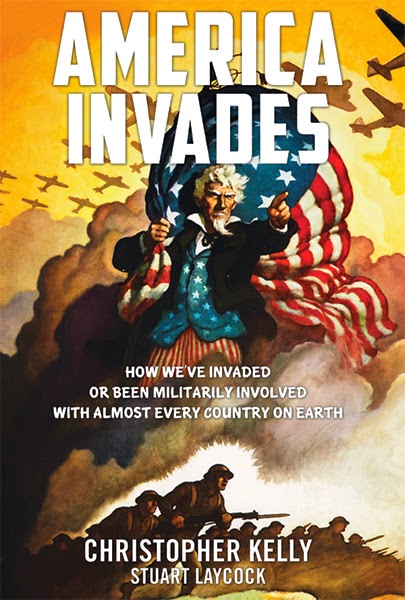


In 2014 Richard Zacks wrote this about America Invades...

"I would have lost the bet. I had no idea that the United States over its history has invaded almost HALF the countries on the globe. That’s an astounding amount of K-rations and munitions and mayhem, however well-intentioned. Authors Laycock and Kelly, with breezy wit and a dogged pursuit of neutrality, deliver a country-by-country compendium of U.S. intervention. Use it as reference; or, read it cover to cover, sea to shining sea, for the adventures and misadventures of American attacks on foreign soil. An eye-opener! a mind-expander! Can an attack of Bhutan or Lichtenstein be far off? One important final note:  this book is written with respect for the men and women of the U.S. armed forces."

Richard Zacks, author of "The Pirate Coast: Thomas Jefferson, the First Marines and the Secret Mission of 1805" and  "An Underground Education"

You can now purchase Commander Kelly's first book, America Invades here...www.americainvades.com or on Amazon...www.amzn.com/1940598427


Saturday, May 5, 2012

Toussaint L'Ouverture versus Barack Obama

Barack Obama
                           
                              Toussaint L'Ouverture


                                        Tousaint L'Ouverture                                    Barack Obama


Education                         Almost none, some Jesuit instruction           Harvard

Religion                            Devout Catholic                                            Jeremiah Wright

Early Experience              Slave, Coachman, House steward                 Community Organizer

Chief Accomplishment     Freed Slaves of Haiti                                    Obamacare

Property Rights                 Supported Property Rights                            Wavers

Taxes                                 Lowered Taxes                                             Supports new Buffet tax                                      
                                                                                                                Wants to end Bush tax cuts

Guns                                  Bought 30,000 muskets from the USA         Gun Control

Military Experience            Extensive, Fought three nations, Britain,      None
                                           Spain and France for 12 years

Military leadership Style     Led from the front                                       Push button warrior,  Drones on  
                                                                                                               and on

Constitution                        Created Haiti's first Constitution                 Taught Constitutional law

Legislative Style                 Governor for life                                        Voted "Present" nearly 130 times
                                                                                                               as an Illinois state senator

Ideology                             Believed in the Rights of Man                    Believes in himself, sort of

Trust Issues                        Trusted the French                                      Trusted the Secret Service

Named after him                Airport                                                         Elementary schools, some roads

Family Life                        Supports Marriage and Legitimacy              Supports Gay Marriage


Friday, May 4, 2012

Cutty Sark

Commander and friends at Cutty Sark, Greenwich (Photo: Jon Shields)

The Conservative tour of London continues with a celebration of free trade at the Cutty Sark (http://en.wikipedia.org/wiki/Cutty_Sark) in Greenwich.  Any American conservative who likes the tea party (TEA = Taxed Enough Already) cannot afford to miss out on seeing the most famous tea Clipper of them all -- the Cutty Sark.  I went with some friends to see the newly re-opened Cutty Sark in Greenwich just one week after the Queen's ribbon cutting ceremony.  I had, like millions of others, seen her before.  Nevertheless, I was truly astonished by how gorgeous, different and better she looks today.  She is, arguably the most beautiful ship ever built by man, perhaps simply one of the most beautiful objects ever created.

She was built to bring tea back from China to London quickly.  She was a composite ship built of wood and iron launched in 1869.  She cost 16,150 pounds to build.  She was among the fastest ships in the world at that time reaching a top speed of 17.5 knots and once recording 363 nautical miles in a 24 hour period.

A "Cutty Sark" is a womans' undergarment and is a reference to Robert Burns' poem Tam O'Shanter.  This is a charming traditional Scottish poem wherein the hero, Tam, gets drunk every market day and rides to town.  Riding home late that night on his faithful horse "Maggie," he notices that the lights are on in the church and that witches and warlocks have desecrated the church and are dancing to a tune played on the bagpipe (what else?), played by the devil himself.  All the witches are old and repulsive, save one -- Nannie Dee.  She is...

ae winsome wench and waulie 
Her cutty sark, o'paisley harn,
That while a lassie she had worn,
Commander and the Keel (Photo: Jon Shields)
In longitude tho' sorely scanty,
It was her best, and she was vauntie* 


Tam, thunderstruck by this apparition cries out, "Weel done, Cutty Sark!"  The witch Nannie Dee then grab's Tam's horse tail which you will find ornamenting the prow of the ship.


When you see the Cutty Sark today you too may exclaim, Weel done, Cutty Sark!"  The ship suffered a major fire in 2007 and was closed to the public and in restoration up until late April of this year.  The cost to restore the ship was 50 million pounds!  The entire ship has been raised up above a spiffy new cafeteria. The keel, which was rotting away and invisible to the public is now a highlight of the tour, sparkling with newly installed and highly polished brass.

Commander and the figureheads (Photo: Jon Shields)
The glorious collection of figureheads from ships now long gone is on display near the ship's keel.  They feature famous Victorians such as Disraeli, Gladstone, General "Chinese" Gordon, and Florence Nightingale.

Cutty Sark, launched in 1869, was made obsolete the very same year with the opening of the Suez canal to steamship traffic.  Sailing vessels could not navigate the canal without great difficulty and the steamers could now take a shortcut eliminating the long trip around the horn of Africa for ships bound between Europe and Asia.  Cutty Sark was repurposed to haul Merino wool from Australia to Europe.

The temperance movement, which was powerful in Britain and the USA in the 19th century, encouraged tea as temperance beverage, spurring demand for tea clippers like Cutty Sark.  It is, therefore, somewhat ironic that the wine merchants, Berry Brothers and Rudd, (http://www.bbr.com/?referring_site=googleadwords&gclid=CIWMi7aT568CFQ1lfAodsndl1Q) would chose the name "Cutty Sark" for the blended whisky product that they hoped to introduce in 1923 to the north American market.  Due to Prohibition, they would need to wait ten years before they could begin exporting to the USA.

 If these "dry" ideas are making you thirsty, then Commander Kelly suggests that you repair to the nearby Trafalgar Tavern (http://www.trafalgartavern.co.uk/)  or the Meantime Brewery (http://www.meantimebrewing.com/) for some much-needed refreshment.


 Source: Cutty Sark Souvenir Guide, Dr. Eric Kentley, 2012

* Vauntie: vain, boastful proud

Horatio and Commander by Trafalgar Tavern (Photo: Jon Shields)


The Cutty Sark ad


If you like the ship, you'll love the store...http://www.cuttyantiques.com/

You can purchase signed copies of America Invades here...www.americainvades.com
or copies on Amazon...
www.amzn.com/1940598427


Monday, April 30, 2012

Duxford and...George Carlin?


Commander Kelly with B-17, Duxford (photo: Jim Hooper)

The American Conservative Tour of London continues at the Imperial War Museum at Duxford (http://www.iwm.org.uk/visits/iwm-duxford), near Cambridge.  Cambridge is an easy 45 minute train ride from London and Duxford is a short cab or bus ride from the train station.  I was fortunate to be able to visit last week with some friends.

Duxford has nine enormous hangars filled with aviation history.  You can walk though an experimental Concorde that could cruise at Mach 2 or twice the speed of sound.  You will see biplanes and monoplanes form the earliest days of flight.  There is a hangar devoted to the Battle of Britain, when Britain stood alone against Hitler's Reich.  You will find Hangars devoted to naval aviation, World War II land combat and much more.  The nearby airfield has historic planes and helicopters landing and taking off on a regular basis.
Close air support A-10 and P-47 (Photo: Jim Hooper)

American Hangar, Duxford
My personal favorite part of Duxford is the American Hangar.  It contains a truly awesome display of American military might.  It was built in 1997 with generous grants from The Saudi government, Ford Motor company, Boeing, and others.  The late Charlton Heston helps provide voice over narration at some of the exhibits and the NRA is also a sponsor.
The American hangar features almost every major American warplane that you can think of.  You will find the massive B-52 -- first launched in 1955 and still in service today.  You will see the fastest plane ever -- the SR 71 spy plane.  The ungainly A-10 Warthog, championed by Boyd (see earlier post, Colonel John Boyd, 1/6/12) and so effective at destroying the Iraqi Republican guard during the first Gulf war, is here on display.  The famous  P-51 long range fighter is here.  It was the initial deployment of this plane, that could escort bombers from Britain to Berlin and back that sealed the doom of Nazi Germany according to air marshall Goering.  "When I saw Mustangs over Berlin. I knew the war was lost," he said.  You will see bombers with the distinctive D-day black and white stripes that were painted on all allied aircraft to avoid friendly fire just prior to June 6, 1944.

A visit to Duxford is a chance see some marvellous aircraft and to learn more about aviation history.  Here you will learn about the Allied bombing offensive in the Second world war.  Duxford airbase was used by the US 8th Army Air corps from April, 1943 until the conclusion of the war.  The bombing campaign in Europe claimed the lives of about 700,000 people, the bombing in Japan it accounted for 500,000 people with most of these casualties civilians.  Meanwhile, allied bomber crews lost over 100,000 crewmen over Germany and the KIA rate for heavy bomber crews was a staggering 71%.   The bombing offensive did not break the will to resist of the Germans or the Japanese, but it did divert precious Axis resources away from the fight against the allies.
Albert Speer, Hitler's Armaments Minister, laid out the best case for the allied bombing offensive when he said in 1959, "The real importance of the air war consisted in the fact that it opened a second front long before the invasion in Europe . . . Defence against air attacks required the production of thousands of anti-aircraft guns, the stockpiling of tremendous quantities of ammunition all over the country, and holding in readiness hundreds of thousands of soldiers, who in addition had to stay in position by their guns, often totally inactive, for months at a time . . . No one has yet seen that this was the greatest lost battle on the German side."  (source: http://en.wikipedia.org/wiki/RAF_Bomber_Command)

Nor can one fail to recall the 40,000+ casualties that Britain suffered during the Blitz, the attacks on Rotterdam and other Allied cities and the 30,000+ casualties that resulted from the Nazi's hail of V1 and V2 rockets.  You will find Anderson shelters and V1 rockets and launchers at Duxford.

Seeing these aircraft in Duxford compels us to remember some of those brave and diverse individuals who served their countries in Allied military aviation in World War II.  Consider just a few of those fortunate enough to survive the war...

President George H.W. Bush (http://en.wikipedia.org/wiki/George_Bush_Sr.) was a US naval aviator who flew 58 combat missions in the Pacific theatre in a Grumman TBM Avenger.  He won the Distinguished Flying Cross (DFC).  Bush was shot down on September 2, 1944 and was incredibly fortunate to be picked up by a passing American submarine.  His story is well told in James Bradley's 2001 Flyboys (http:/www.amzn.com/0316105848).


Jimmy Stewart 1908 - 1997
Jimmy Stewart (http://en.wikipedia.org/wiki/Jimmy_Stewart) was drafted by the US army in 1940 and became the first major American movie actor to serve in the war.  He piloted over 20 combat missions in a B-24, bombing Axis targets.  He won two DFC's and the Croix de Guerre.  He later rose to the rank of Brigadier general in the USAF and even flew over a mission over Vietnam in a B-52 (also on display at Duxford) while in the reserves.  He starred in the Glenn Miller Story among many others.
Leo McKern (http://en.wikipedia.org/wiki/Leo_McKern) , who played Horace Rumpole in Rumpole of the Bailey, served in a RAAF (Royal Australian Air Force) ground crew during the war.

Sir Kenneth Adam
While strolling through the Battle of Britain hangar at Duxford it is interesting to reflect upon the wonderful life of Ken Adam (http://en.wikipedia.org/wiki/Ken_Adam) who was one of only two German nationals to serve in the RAF during the Battle of Britain.  He piloted a Hawker Typhoon on tank-busting missions.  He was Jewish and would have been shot as a traitor if he had gone down over Nazi-occupied Europe.  Ken Adam would survive the war and become the principle set designer for 2001: A Space Odyssey and the early Bond films.  Sir Kenneth Adam is now 91 years old.


Joseph Heller, the author of Catch 22, served as a bombardier on a B-25 in 60 combat missions while based in Corsica. (http://en.wikipedia.org/wiki/Joseph_Heller).
Roald Dahl

Roald Dahl (http://en.wikipedia.org/wiki/Roald_Dahl), author of Charlie and the Chocolate Factory and many other books, was one of "the few" who served in the RAF during World War II.  He crashed in a Gloster Gladiator in Africa and was nearly killed.  He became an ace while later flying a Hawker Hurricane in the Greek campaign.  He wrote memorably about his RAF experiences in Going Solo (http:/www.amzn.com/0142413836).  He later served in British intelligence alongside Ian Flemming.

Visiting Duxford is a marvellous antidote to the prevailing view of war that popular culture seems to accept today and is best exemplified by George Carlin (http://en.wikipedia.org/wiki/George_Carlin)... who famously claimed that we Americans love war.


If you loathe the USA and believe that American military power is primarily deployed in "bombing brown people" then a visit to Duxford may open your eyes a bit.  Note carefully the Orwellian elements in the late Carlin's routine.  For Carlin "critical thinking" means a willingness to swallow unfounded conspiracy theories.  "Thinking for yourself" means hewing closely to the Marxist / Freudian / Chomsky party line.  "Americans love war!"

You may object that Carlin is simply a comedian.  Yet many on the radical left, in the Occupy Wall Street movement and, of course, the fence-sitting libertarian Paul-bots ("both parties just the same, elections are illusions," etc.) accept Carlin's routines as holy writ.  Carlin was labeled "an unproductive airman" and discharged less than honourably from the USAF in 1957.  The last presidential candidate that Carlin actually voted for and supported was George McGovern in 1972.  Yes, that was the same George McGovern who flew 35 missions as a B-24 bomber pilot in World War II -- See Stephen Ambrose's Wild Blue, 2001. (http://www.amazon.com/The-Wild-Blue-Germany-1944-45/dp/0743203399/ref=sr_1_1?ie=UTF8&qid=1335774040&sr=8-1).


Tuskeegee Airmen
How does the "bombing brown people" analysis really work in describing America's historical armed conflicts?  Not too well when one considers the matter.  The American Revolutionary war which, shockingly, claimed the highest percentage total American casualties, was against the "white" English aided by their native American and Hessian mercenaries.  The War of 1812 was a "white on white" war.  The US Civil war, the most costly American war, was largely a "white on white" war that led to a "new birth of freedom," as Lincoln said, for black American slaves.   The Spanish-American war, a favorite of the anti-war crowd (see earlier post, Remember the Maine, but forget The War Lovers,  2/20/12) began with one "white" nation, the Spanish, probably blowing up a US naval vessel filled with mostly "white" crewmen.  Black buffalo soldiers distinguished themselves alongside Teddy Roosevelt at San Juan hill in Cuba.  World War I against the Kaiser's Germany was a terrible tragedy, but not a race war.  America's direct involvement in World War II started with "yellow people," in Carlin's parlance, bombing Americans at Pearl harbor.  The "white" American Air Corps then went on to devastate "white" Germans and Italians in Europe, thereby helping to finish off the most anti-semitic, racist and barbarous regime in world history.  The famous "black" Tuskeegee airmen (http://en.wikipedia.org/wiki/Tuskeegee_airmen) flew escorts for the allied bomber offensive.  The "red" Navajo tribesmen became the "code talkers" (http://en.wikipedia.org/wiki/Code_talker) who helped keep US communications secure in the war.   In the Korean war, a brutal "red" man, Stalin, instigated some "yellow" men to attack other "yellow" men and the United Nations ("rainbow") intervened.  In the gulf war which triggered Carlin's rant a "brown" dictator invaded a "brown" nation (Kuwait) and the United Nations ("rainbow") again intervened.  In Libya just last year a "brown" man killed off another "brown" man ending another fearful dictatorship (see earlier post, Yankee fan kills Gaddafi with his own Golden Gun, 1/15/12).


Carlin was able to exercise his freedom of speech defaming his country and make a pretty good living doing it because of the sacrifices of those who served in the allied armed forces.  The counterculture is now mainstream, in case you hadn't noticed.

Commander Kelly agrees with Freud that sometimes, "a cigar is just a cigar!"  Moreover, Sometimes a fuselage is just a fuselage!

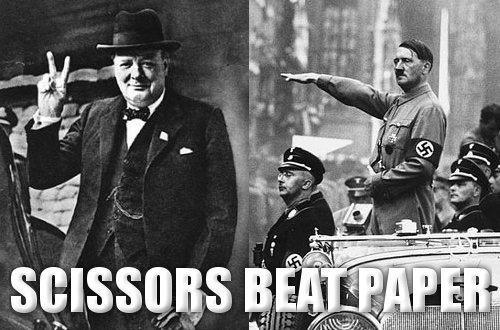
"SCISSORS BEAT PAPER," Amen!

Please Pre-order your copy of America Invades here...www.amzn.com/1940598427


Glenn Miller's American Patrol


Glenn Miller 1904 - December 15, 1944 MIA


Commander Kelly's first book, America Invades, is now available here...www.americainvades.com
and on Amazon...www.amzn.com/1940598427


Saturday, April 28, 2012

Breivik Tortured in Oslo!


Cruel and Unusual Punishment in Norway!


About 40,000 heartless Norwegians gathered recently to torture mass murder suspect Breivik recently in Oslo.  Their inhuman torture method was not water-boarding, but rather a mass singing of Marxist folk songs!  http://www.vancouversun.com/news/Anders+Breivik+Norwegians+mock+killer+with+Marxist+song+with+video/6521469/story.html

Perhaps he will be compelled to watch endless re-runs of the Eurovision song contest as well?  When will Human Rights Watch step in and end this senseless brutality?

Why didn't we Americans think about gathering together to serenade Timothy McVeigh with Bob Dylan and Joni Mitchell tunes?  "The answer, my friend, is blown' in the wind", etc.  This would have been so much more effective than the lethal injection that he received on June 11, 2001.  Now McVeigh is the poster boy for capital punishment in the USA.

Behring Breivik admits to having killed 77 people.  There is, however,  no possibility that he or any other murderer in Europe will be executed for their crimes -- the European Union forbids it.  After being convicted he will be a guest of the Norwegian royal family at the taxpayer's expense for what, we can hope, will be a lifetime prison sentence.

In August 2011, a representative survey conducted by Angus Reid Public Opinion showed that 65% of Britons support reinstating the death penalty for murder in Great Britain.  They will be disappointed as democracy is now trumped by bureaucracy in contemporary Europe.

Hung Drawn and Quartered (Photo courtesy: Jim Hooper)

An excellent place to meditate upon the sad state of justice in modern Europe is London's Hung Drawn and Quartered (http://www.fullers.co.uk/rte.asp?id=4&itemid=148&task=View) -- just feet away from Tower hill, site of so many executions.  This boozer is a Fullers pub that  serves the delicious Honey Dew beer (Commander Kelly says "try it!"). <!-- Start Alexa Certify Javascript -->

The Haitian Revolution and the USA


The Voodoo that you do so well!

The Slave rebellion in Haiti (San Domingo) had an enormous impact on the USA in two very important  and distinct respects.

First, the success of a slave rebellion that actually did emancipate some 1/2 million black slaves in North America not far from America shores terrified the slave owning white population of the southern states.  Thomas Jefferson was an extraordinary man who was, at the same time not atypical of his place and time.  He denounced a slave-ruled Haiti as "the Cannibals of the terrible republic".

Jefferson Memorial, Washington D.C.

In 1776 Thomas Jefferson, in the Declaration of Independence had proclaimed to the world that, "We hold these truths to be self-evident, that all men are created equal, that they are endowed by their Creator with certain unalienable rights, that among these are life, liberty and the pursuit of happiness."  Yet Jefferson was a slave owner and Sally Hemmings was his mistress.  Jefferson, after the Missouri compromise of 1820 wrote that freeing of slaves in itself "would not cost me a second thought if, in that way, a general emancipation and expatriation could be effected; and, gradually, and with the due sacrifices, I think it might be.  But as it is, we have the wolf by the ears, and we can neither hold him, nor safely let him go (Commander's italics).  Justice is in one scale, and self-preservation in the other...I regret that I am now to die in the belief, that the useless sacrifice of themselves by the generation of 1776, to acquire self-government and happiness to their country, is to be thrown away by the unwise and unworthy passions of their sons, and that my only consolation is to be, that I live not to weep over it."   In a separate letter to Adams he wrote further, "Are our slaves to be presented with freedom and a dagger?"  In a letter to Albert Gallatin, "All whites south of the Potomac and Ohio must evacuate their states; and most fortunate those who can do it first."  (Thomas Jefferson: Author of America, Chistopher Hitchens, 2005)

A just God...?


Jefferson also said, "I tremble for my country when I reflect that God is just."

It was the fearful example of the Haitian Revolution, led by Toussaint L'Ouverture, that put the fear of God into southern whites and made them so resistant to any reform of their "peculiar institution".  The legend of Toussaint L'Ouverture grew to almost mythical proportions among the American slaves who learned of his life and a "free" Haiti.  Northern abolitionists cited Toussaint as a heartening example of black self-rule.

Second, the destruction of the army that Napoleon dispatched to put down the rebellion in San Domingo would have fateful and wide-reaching implications for the United States; indeed it would be the making of many states.

The reconquest of San Domingo was just the first stage of Napoleon's orders to his brother-in-law LeClerc.  After putting down the slave rebellion he was then to proceed to New Orleans and solidify France's position on the North American continent that had been acquired recently from Spain.  The destruction of the French army and the death of Leclerc made this impossible.  Napoleon was forced to revise his plans and consider the sale of the Louisiana territory to the United States as it could no longer be defended.

Jefferson negotiated the greatest real estate deal in history, doubling the size of the US at a price of 4 cents an acre.  "Overnight the upstart nation acquired land physically larger that France, Spain, Portugal, Italy, Holland, Switzerland, and the British Isles combined.  Crowning the vast territory was the magnificent city of New Orleans, which gave western farmers a much-needed water outlet to world markets." (Financial Founding Fathers, Robert E. Wright and David J. Cowen, 2006).

The bold treaty affirming the Louisiana purchase was swiftly approved by the US senate.  On its signing, Robert Livingston said "From this day, the United States take their place among the powers of first rank."
French Soldier Dispensing Equality?

Jefferson displayed the elasticity of his principles with the Louisiana purchase (see earlier post, Ambrose Bierce's Very short Story 2/1/12).  He was a a devotee of limited government and a strict constructionist, but nowhere does the US Constitution authorise  the purchase of territory from foreign powers by the Executive or any other branch of government.  John Quincy Adams pointed out that the president would now dispose of "an assumption of implied power greater...than all of the assumptions of implied power in the years of the Washington and Adams administrations put together."  (Thomas Jefferson: Author of America, Chistopher Hitchens, 2005)

Ironically, Jefferson's Louisiana purchase also owed a great deal to his archival Alexander Hamilton;  it was Hamilton's astute management of the Treasury during the Washington administration that had repaired the US government's creditworthiness.  The United States was able to easily borrow $15 million to pay off Napoleon (Albert Gallatin, Jefferson's Treasury secretary "floated a bond issue through the Dutch banking house of Hope and Company, which promptly sold it to Baring Brothers, a British investment bank." (Financial Founding Fathers, Robert E. Wright and David J. Cowen, 2006).

The United States of America is much indebted to Toussaint l'Ouverture and the Haitian Revolution.  Jefferson's Louisiana purchase, made possible by the Haitian revolution, gave the United States an expansionist future.  This also meant that a divided nation would quarrel over the issue of "slave" or "free" in the new territories to be added to the Union.  Thus we can argue that while the Haitian revolution was, in some ways the making of the United States, it also sowed the seeds of our tragic Civil war.

http:/www.amzn.com/0060837063
http:/www.amzn.com/0226910687


Please Pre-order your copy of America Invades here...www.amzn.com/1940598427


Friday, April 27, 2012

Toussaint L'Ouverture Champion of Freedom and...Conservative?

Toussaint L'Ouverture c. 1743 - 1803


CLR James opens his work Black Jacobins (http:/www.amzn.com/0679724672) as follows, "In 1789 the French West Indian colony of San Domingo supplied two-thirds of the overseas trade of France and was the greatest individual market for the European salve trade.  It was an integral part of the economic life of the age, the greatest colony in the world, the pride of France, and the envy of every other imperialist nation.  The whole structure rested on the labor of half-a-million slaves."

The Haitian revolution, triggered by the revolution of 1789 in France, lasted from 1791 to 1802 and was the only successful slave revolt in history.

Toussaint L'Ouverture (http://en.wikipedia.org/wiki/Toussaint_Louverture), the leader of the Haitian Revolution, was, by all accounts a remarkable man.  He was born a slave win the French colony of San Domingo.  This was a very prosperous colony whose primary export was sugar cane.  San Domingo was a slave economy which exploited the labor of African slaves in the sugar plantations.  The life of a plantation slave was extremely difficult, lashings were commonplace and the life expectancy of a slave was about three years.  In 1789 the population was divided into three primary groups a minority of about 30,000 whites, half a million black slaves and, inevitably, some 40,000 mulattoes.  When the French Revolution burst onto the world in 1789 the blacks on the island took its Declaration of the rights of man at face value, a promise of their liberation.

165 Railton Road, Brixton
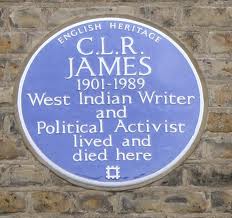
CLR James (http://en.wikipedia.org/wiki/CLR_James), the author of Black Jacobins, was a Troskyite / Marxist historian from the island of Trinidad who wrote his book in 1938 on the eve of the Second World War.   He later lived and died in London (see blue plaque).  As a passionate partisan, James clearly wishes to paint Toussaint L'Ouverture as a revolutionary hero in the Marxist mold.  James attempts to fit Toussaint into the Procrustean bed of his Marxist dialectic, but with scant credibility--perhaps due to the absence of urban proletariats in 18th century San Domingo.  Toussaint has been variously described as the "black Spartacus," the"black Washington" and the "black Napoleon".  Toussaint had actually been freed in 1776, years before the revolt.  As a child he received no formal education, but did receive some instruction from the Jesuits.  At the outset of the uprising, he carefully escorted his own masters to safety.  Toussaint famously said, "I was born a slave, but nature gave me the soul of a free man."

Consider, however, the way in which CLR James describes Toussaint L'Ouverture...

"A sincere Catholic and believer in the softening effect of religion on manners, he encouraged the practice of the Catholic religion, and wrote to that old friend of the blacks, the Abbe Gregoire, for advice.  He favoured legitimate children and soldiers who were married, and forbade his officials and commandants to have concubines in the houses of their wives, a legacy of the old disreputable white society....

Personal industry, social morality, public education, religious toleration, free trade civic pride, racial equality this ex-slave strove according to his lights to lay their foundations on the new State.  In all his proclamations, laws and decrees he insisted on moral principles, the necessity for work, respect for law and order, pride in San Domingo, veneration for France.  He sought to lift the people to some understanding of the duties and responsibilities of freedom and citizenship.
San Domingo - Haiti

He had the extraordinary faculty of satisfying all who came to see him, and was known all over the island as a man who never broke his word.  Even Sonthonax, the Jacobin lawyer and a very finished intriguer himself, said in the French Chamber that Toussaint was incapable of telling lies" ("Much like George Washington", adds Commander Kelly).

Toussaint wrote in a letter, "I have always done as much as lies in my power to preserve the property of each and every one..."

After the abolition of slavery he quickly recognised economic necessity proclaiming, "Work is necessary, it is a virtue, it is for the general good of the state."  James continues, "His regulations were harsh.  The labourers were sent to work 24 hours after he assumed control of any district, and he authorised the military commandants of the parishes to take measures necessary for keeping them on the plantations."

Toussaint said, "Learn, citizens, to appreciate the glory of your new political status.  In acquiring the rights that the Constitution accords to all Frenchmen, do not forget the duties it imposes on you.  Be but virtuous and you will be Frenchmen and good citizens...Work together for the prosperity of San Domingo by the restoration of agriculture, which alone can support a state and assure public well being...The age of fanaticism is over.  The reign of law has succeeded that of anarchy.

"The finance of the old regime was complicated and irksome.  Toussaint demanded first 'an exact inventory of our resources'; then abolished the numerous duties and taxes which were only a source of fraud and abuses.  He gave the gourde, the local unit of money, a uniform value for the whole island...Thus he was able to get rid of the numerous officials whom the old system demanded; each taxpayer knew how much he had to pay, and the simplicity of the system and his strict supervision raised the standard of probity...He lowered the tax on fixed property from 20 to 10 per cent, and on the advice of Stevens, the United States Consul, abolished it altogether soon afterwards.  The 20 per cent tax on imports acted as a check on the purchases of the merchants, and Toussaint lowered it to 10 per cent; later, to encourage the poor, he lowered the duty on articles of the first necessity to 6 per cent."

He negotiated trade agreements with the United States and Great Britain.

Toussaint L'Ouverture, an uneducated ex-slave, was, in short, far more successful in executing his economic program than has been the current occupant of the White House!  Toussaint, in spite of being an ex-slave rather than a slave owner, was, Like George Washington, a deeply conservative revolutionary (see earlier post, George Washington in London? 2/8/12), .   He was a devout Catholic in spite of his island's peculiar fondness for Voodoo.  He supported reconciliation with the whites as opposed to retribution.  He defended property rights for all races and favored low taxes and free trade--he even bought 30,000 muskets from the Americans.  Sixty-two years before Lincoln's Emancipation Proclamation, Toussaint was abolishing human slavery in a piece of North America.  He created a written Constitution that made him Governor for life.  This document also said, "There cannot exist slaves, servitude is therein forever abolished. All men are born, live and die free and French."

Toussaint loved liberty, guns, religion, military discipline and low taxes.  Today he might be labelled a "bitter clinger" for these convictions.  Voltaire, who detested slavery, and Toussaint were both "God and Liberty" conservatives (see earlier post, Voltaire Conservative of the Enlightenment, 3/3/12).
Black Conservative?

It was on the battlefield that Toussaint displayed his most remarkable powers.  In the course of the 12 year struggle the slaves under his leadership "defeated the local whites and the soldiers of the British monarchy, a Spanish invasion,  a British expedition of some 60,000 men, and a French expedition...under Bonaparte's brother-in-law. "  He demonstrated tremendous physical courage usually leading his men from the front of each engagement.

Toussaint, however, made one great mistake.  He trusted and was faithful to the French who ultimately betrayed him.  Napoleon, believing the dispossessed whites in France who claimed that San Domingo could only recapture its former economic glory with the re-institution of slavery, dispatched his brother-in-law, General Leclerc, with an army of 40,000 thousand men to recapture San Domingo for France.  Napoleon, who claimed the "La Revolution c'est moi" was committed to destroying one of its few undeniable accomplishments--the abolition of slavery.  After a brutal campaign, Toussaint was eventually captured and sent back to France where he was imprisoned in Fort de Joux in the Doubs.  He died shortly afterward in 1803.

After his capture he said, "In overthrowing me you have cut down in San Domingo only the trunk of the tree of liberty; it will spring up again from the roots, for they are many and they are deep."  His words were indeed prophetic.

The occupying French forces were decimated by Yellow fever.  General Leclerc himself died in Haiti at age 30, leaving Pauline Bonaparte a widow.  Napoleon's forces were ultimately defeated (the final straw was the Battle of Vertières on November 18, 1803) by Toussaint's second-in-command, Dessalines, leading to "the establishment of the Negro state of Haiti which has lasted to this day."

http:/www.amzn.com/0679724672


Tuesday, April 24, 2012

Happy Belated Earth Day!

If I wanted America to fail....

Monday, April 23, 2012

La Rochefoucauld -- Selected Maxims

Francois, Duc de La Rochefoucauld 1613 - 1660

Before there was Nietzsche, there was Francois de La Rochefoucauld, the great aphorist (http://en.wikipedia.org/wiki/François_de_La_Rochefoucauld_(writer)).  These are timeless nuggets of wisdom, worldliness and psychological penetration from 17th century France.  Each one of his sentences sparkles like a freshly poured flute of champagne.  Commander Kelly says, "Enjoy!"

"People would never fall in love if they hadn’t heard love talked about.

Good advice is something a man gives when he is too old to set a bad example.

Gratitude is merely the secret hope of further favors.

Hypocrisy is the homage which vice pays to virtue.

He who lives without folly isn't so wise as he thinks.

If we had no faults of our own, we would not take so much pleasure in noticing those of others.

Our repentance is not so much regret for the ill we have done as fear of the ill that may happen to us in consequence.

Many people despise wealth, but few know how to give it away.

Preserving health by too severe a rule is a worrisome malady.

The glory of great men should always be measured by the means they have used to acquire it.

The pleasure of love is in loving.


We all have strength enough to endure the misfortunes of others.

We are so accustomed to disguise ourselves to others that in the end we become disguised to ourselves.

We confess our little faults to persuade people that we have no large ones.

To listen closely and reply well is the highest perfection we are able to attain in the art of conversation.

The only thing constant in life is change.

We pardon to the extent that we love.

When we are unable to find tranquility within ourselves, it is useless to seek it elsewhere.

The most certain sign of being born with great qualities is to be born without envy.

When we are in love we often doubt that which we most believe.

Neither love nor fire can subsist without perpetual motion; both cease to live so soon as they cease to hope, or to fear.

If we are to judge of love by its consequences, it more nearly resembles hatred than friendship.

Perfect valor is to behave, without witnesses, as one would act were all the world watching.

When our hatred is violent, it sinks us even beneath those we hate.

We seldom find any person of good sense, except those who share our opinions.

Few persons have sufficient wisdom to prefer censure, which is useful, to praise which deceives them.

It is with true love as it is with ghosts; everyone talks about it, but few have seen it.

No man is clever enough to know all the evil he does.


Vive La Rochefoucauld!
Fights would not last, if only one side was wrong.

A true friend is the greatest of all blessings, and that which we take the least care to acquire.

Envy is more irreconcilable than hatred.

There are heroes in evil as well as in good.

Lovers never get tired of each other because they are forever talking about themselves.

Youth is a perpetual drunkenness; it is the fever of reason.

Few people know how to be old.

Old age is a tyrant, who forbids, under pain of death, the pleasures of youth.

Neither the sun nor death can be looked at with a steady eye.

If I advance, follow me! If I retreat, kill me! If I die, avenge me!"

http:/www.amzn.com/0199540004


You can purchase your copy of Commander Kelly's America Invades here...www.americainvades.com
or here on Amazon...www.amzn.com/1940598427


Adam Smith's Recipe for prosperity

Adam Smith -- (Photo: James Hooper)

Adam Smith writing in his 1755 Lectures on Jurisprudence had a simple straightforward recipe for national prosperity which seems almost forgotten in our own day...

Commander K. at Adam Smith Institute, London
"Little else is requisite to carry a state to the highest degree of opulence from the lowest barbarism, but peace, easy taxes and a tolerable administration of justice; all the rest being brought by the natural course of things.  All governments which thwart this natural course, which force things into another channel or which endeavour to arrest the progress of society at a particular point, are unnatural, and to support themselves are obliged to be oppressive and tyrannical."

Commander Kelly says, "This should be platform number one for Conservatives in the USA this fall, and always!"

Source: One Nation Under Debt, Robert E. Wright, 2007.  http:/www.amzn.com/0071543937 <!-- Start Alexa Certify Javascript -->