Commander K. with Trajan, Londinium
Emperor Trajan 53 AD - 117AD
The American Conservative tour of London continues with a visit to a statue of the Roman Emperor Trajan near the Tower Hill tube stop. His reign (98 AD to 117 AD) marked the greatest extent of the Roman Empire. Gibbon considered him to be one of the five "good emperors" of Rome.
The Roman historian Vegetius wrote, "Igitur qui desiderat pacem, praeparet bellum"--"If you want peace prepare for war."*
Commander Kelly says, "Explore the Roman roots of Britain in London today!"
* After the tragedy at Sandy Hook this could be updated to "If you want safe schools, prepare to defend them against attack." There are so many things which could be done to make schools safer that have nothing to do with gun control -- creating choke points, picture ID for parents, metal detectors, panic buttons to first responders for administration, taking lunatics off the streets and, of course, security guards.
Have you ever heard of MOHAI? It is not a rum drink with lime juice and mint. Nor is it a type of goat's wool used to make sweaters. It is, in fact, Seattle's thoroughly revamped Museum Of History And Industry...MOHAI (http://www.mohai.org/).
This institution, located on the shores of Lake Union, presents a history of Seattle and the Northwest from the arrival of the Native Americans to the present day. This is a well-funded institution with all the latest interactive bells and whistles and solid corporate support. It has slickly produced films on the history of Seattle. It has a large film and television section that shows how Seattle has been presented to the world on celluloid in films ranging from Sleepless in Seattle (www.amzn.com/B0000AOV4I) to Elvis' It Happened at the World's Fair (www.amzn.com/B00027JY8K). You will also find a long record of radical unions (the IWW "wobblies" started in Washington state) and leftist KING county politics in this very blue state.
On the economic front, Seattle evolved from a logging town in the 19th century to an aircraft manufacturer during World War II (see earlier post, Freedom's Forge, 8/10/12). More recently Seattle has been noted for being the home of Starbucks coffee (MOHAI has their first sign), Microsoft and Amazon.
Exploring MOHAI you will find a model of the USS Decatur -- a US Navy sloop-of-war that was launched in 1839 and served in the suppression of the slave trade off the coast of Africa and in the Mexican American war. She also participated in the Battle of Seattle -- a skirmish between settlers and native Americans that took place on January 26, 1856 (http://en.wikipedia.org/wiki/Battle_of_Seattle_(1856)). She carried 16 guns and had a crew of about 150.
USS Decatur, MOHAI
You will find artefacts and a brief show on Seattle's Great Fire of 1889 which destroyed the entire business district. Seattle in the 19th century had a reputation as a wild partying kind of town which featured saloons, casinos and bordellos for the loggers, miners, farmers and pioneers. This aspect of Seattle parallels late 19th century Manhattan as described in Richard Zacks' recent book Island of Vice (see earlier post, Island of Vice, 6/21/12).
Seattle Vice, MOHAI
The museum shows how Seattle did its part in the First World War. American soldiers from that war were called "Doughboys" because they were bigger and better-fed than their French and English comrades...
Doughboys Marching through Seattle, MOHAI
Boeing's production of thousands of planes during the Second World War transformed Seattle from a sleepy backwater into a major metropolis. Made in Seattle, you can now find Sally B. in the UK.
B-17 "Flying Fortress," Made in Seattle, now at IWM Duxford, UK
Washington state played a major role in developing plutonium at Hanford for use in the atomic bomb that was dropped on Nagasaki, Japan (See earlier post, Truman's Decision to Use Atomic bombs on Japan, 9/23/12). At MOHAI you will find reminders of the incarceration of Japanese Americans during the Second World War (see earlier post, Executive Order 9066: the Internment, 2/25/12)...
Mr. Kiwasaki of Auburn had to pack his belongings in this trunk
MOHAI, Seattle
The Commercial Messenger Company which later became UPS was founded in Seattle in 1907. Today the company's motto is "What can Brown do for you?" MOHAI does not dwell on the fact that UPS built its business in those early days by delivering pornography in "plain brown wrappers."
UPS Truck, MOHAI, Seattle
Those who are nostalgic for Seattle's Kingdome will find a reminder of it at MOHAI...
Kingdome, "That 70's Venue", MOHAI
Seattle loves its summer celebration of Seafair with Hydro racing on Lake Washington...
Rooster Tails on Lake Washington, MOHAI
You will find a wall of Seattle sports memorabilia including items from the now departed Seattle Supersonics -- the only professional sports team to bring a world championship to Seattle (1979)...
Seattle Sports Teams, MOHAI
Commander Kelly says, "If you are anywhere near Seattle and have an interest in history be sure to check out MOHAI! Become a member today (http://www.mohai.org/)!"
Rudolph Hess, long after his death, continues to be a fascinating source of conspiracy theories (see previous post, http://americanconservativeinlondon.blogspot.co.uk/2013/01/rudolph-hess.html). Hitler may have known about his peace mission in 1941. He may have been murdered by Intelligence operatives in 1987. There may still be further revelations on Hess from the British government in 2017. But none of this is what is really significant and even shocking about the strange case of Rudolph Hess.
Here is what I find truly astounding about Hess. His Peace conspiracy of 1941 challenges the way that we must think about the nature of "war," "peace" and "history".
Hess was an ideological National socialist, but he was also something much rarer -- he was a German who had great respect for and understanding of the British Empire. He was born and grew up in Egypt a British colony.
Wellington and Blucher's Handshake at Waterloo
The Hess Inspiration?
Hess knew that the Germans and British had longstanding ties of friendship in spite of their bloody conflict in the First World War. The Angles and Saxons had migrated to Britain from lands now dominated by German-speaking people. The English monarchy was the house of Hanover. The Duke of Wellington and Field Marshall Blucher of Prussia shook hands and probably enjoyed an adult beverage or two at La Belle Alliance Inn after their victory over Napoleon at the battle of Waterloo on June 18, 1815. Hess in 1941 merely wanted to revive the La Belle Alliance feeling -- a huge painted version graces the Houses of Parliament in London. Queen Victoria was Kaiser William II's aunt and her consort Albert was from Saxe-Coburg. Generations of schoolboys in England and Germany were taught to view France as their traditional geopolitical enemy. Aristocratic Prussian Junkers were raised to ride horses, shoot and hunt just like their English cousins. Manfred Von Richthofen, the Red Baron of World War I (see earlier post, The Red Baron 9/17/12), wrote, "I prefer the English...The French have a different character." He referred to French fliers as "tricksters".
La Belle Alliance, Houses of Parliament, London
Hess was a Nazi who believed in Aryan racial superiority. He also believed that the British Empire was bearing the "white man's burden" around the globe. He believed that it was the destiny of the German and British to rule the world for the benefit of mankind, especially the white portion.
Charles Darwin was the great British scientist of evolution by means of natural selection in his book The Origin of Species. The British philosopher Herbert Spencer later applied the "survival of the fittest" to his interpretation of human society. Many 20th century scientists (some, but not all German) advocated an evolution of the human species by means of political selection guided by 'scientific' principles -- Eugenics.
Commander K. at Queen's House, Tower of London
Hess spent four days here in 1941
Hess knew also that there was a "peace" party in Britain that was highly sympathetic to his message. British peace supporters ranged from Oswald Moseley, British Fascist party to Lord Halifax who narrowly missed becoming Prime Minister in May 1940 instead of Churchill. The former King Edward VIII had apparent Nazi sympathies. Joseph Kennedy was highly sceptical about British chances in the war (see earlier post Daffodils, Joseph Kennedy and American Behaving Badly, 3/19/12). Prominent American isolationists such as Charles Lindbergh were terrified of the Luftwaffe and wanted to keep American heads firmly buried in the sand.
It is, therefore, not too difficult to imagine a counter-factual history in which the Rudolph Hess Peace Conspiracy succeeded in its goals. The war in the West could have come to an end. Many British and American lives could have been saved -- D-day would have been unnecessary. London would never have been smashed by German revenge rockets. About 700,000 German civilians and 100,000 Allied airmen might not have perished in Allied air raids and Dresden might never have been destroyed.
European Map, May 1941
Moreover, the German Wehrmacht could have turned its full fury onto the problem to annihilating Stalin's Soviet Union. Without lend lease, the Allied air war and the second front the brutal Soviet system would likely have been destroyed. Had Germany not been at war with Britain then her Tripartite ally, Japan, might have been under much less pressure to strike against Britain and the USA. A successful Hess mission might have averted Pearl Harbor. One could argue that some of these are fairly positive consequences for the West.
What, however, would have been the cost of brokered peace between Germany and Britain in 1941?
1) There would have been a Nazi-led ethnic cleansing of the entire European continent. European Jewry would have been wiped out. The Nazis would have also been free to continue their genocidal persecution of gays, gypsies and the disabled.
2) The Nazi occupation of territory in the Soviet Union (Ukraine, Baltic Republics, etc.) was demonstrably harsher even than Stalin's brutalization of the Kulaks, farmers, etc.). The initial relief of these people on being liberated from Stalin was turned to gall by mass murder, forced labor and a deliberate policy of starvation by the Nazis.
3) Axis Conquest of the Soviet Union would have placed more manpower, resources and technology in the hands of Hitler for use in future conflicts. The Soviet T-34 tank, for example, was perhaps the finest World War II tank built by any nation.
4) Peace between Germany and Britain would have allowed Hitler's Reich to make enormous technological progress in areas such as missile technology, jet aircraft, snorkel submarines and atomic weaponry.
5) Given Hitler's record of unparalleled mendacity with friend (the fate of Ernst Rohm) and foe alike, who can doubt that any 'peace' deal with Hitler would have been a mere truce, a postponement of inevitable war rather than its elimination?
6) National Socialism was, at bottom, a glorification of war and a cult of death. A 'peace' negotiated by Hess would have made a united Europe Hitler's arsenal for the ideology of 'endless war'.
7) All of Churchill's stirring rhetoric from 1940 about the struggle between democracy and barbarism would have been exposed as mere eyewash in the light of a deal with Hess.
Commander Kelly with WSC and FDR, Bond Street London
Bittersweet Victory
We Americans tend to look back on World War II through rose colored glasses. We missed out on the the first three years of the war. Our cities were not bombed. Our civilian populations were not forced into becoming refugees. Our casualties were relatively light. Our economy and industry grew both absolutely and relatively during the course of the war (see earlier post, Freedom's Forge, 8/10/12). America emerged from the war as a superpower without equal. Our veterans would return to victory parades and economic opportunity.
We may lose sight of the fact that the Second World War was the greatest man-made disaster in the history of the world. Great swathes of the world ended the war under the boot of Stalin's repressive Communist regime. Poland lost about 20% of its total population during the war and emerged with less political freedom at the war's conclusion than it had enjoyed at the war's beginning.
The aftermath of the war in Asia would be bittersweet as well. Japan, its armed forces humiliated and its cities burnt out and devastated by atomic weapons, would rise like a Phoenix from the ashes of the war. The Second World War would sow the seeds for the scourge of Maoism (see earlier post Mao Ze Dong, Major Badass, 9/10/12) that would claim the lives of millions.
The British Empire that Hess had admired would, as a direct consequence of the enormous cost of war, soon belong to history. Its "finest hour" would also be become its final hours
Sustaining the morale of the western populations during the war was extremely challenging due to the war's casualties and reversals of fortune. Propaganda was used extensively and the truth was rationed along with butter and meat. The war was the greatest test of political will ever faced by the West. The Hess peace conspiracy represented a bargain with the devil whose acceptance would have proven far worse even than the bittersweet victory that was achieved historically.
Commander Kelly's Conclusion
Popular culture tells us that 'war is bad' and and that 'peace is good'. The lesson from the Vietnam war was expressed in the question asked by the Edwin Starr's song War -- "What is it good for? Absolutely Nothing!"
The Strange Case of Rudolph Hess, however, reminds us that Allied determination to fight World War II through to final victory was infinitely preferable to the craven possibility of accepting Nazi 'peace-mongering' at face value.Peace bought at the price of compromising all humanitarian values is a tragic mistake. While the British Empire did have had a racial component, it was also a humanitarian Empire led by 1) Christian missionaries who abolished slavery and the practice of Suttee and 2) by economic missionaries (capitalist entrepreneurs) who spread freedom, economic opportunity and self-determination wherever they traded; this Hess failed to grasp.
Given the war-weary state of our nation today after costly wars in Iraq and Afghanistan and given the complacency with which Americans of both parties accept the slaughter of over 100,000 Syrians at the hands of another dictator, that is perhaps a lesson worth remembering.
Rudolph Hess (http://en.wikipedia.org/wiki/Rudolph_Hess) was natural born conspirator and the Hess Peace Overture was the greatest conspiracy of World War II. He was born to wealthy German parents in Alexandria, Egypt, a British colony at the time He would summer in Germany during his youth while attending school in Egypt. He served in the Kaiser's Army in the First World War where he also critically learned to fly. After the war, he met and became an early supporter of Adolph Hitler. He participated in the famous Beerhall putsch in Munich. He helped to transcribe and edit Hitler's infamous testament Mein Kampf. He later rose to become the Deputy Fuhrer in the 3rd Reich -- the number #3 ranked Nazi leader. Historian andrew Roberts identifies him as "an ideological Nazi from the earliest days, he did not believe that Britain and Germany should be at war and so, unbeknown to Hitler, he conceived a daring -- if unhinged -- plan to make peace between the Anglo-Saxon races." (Source: The Storm of War, Andrew Roberts, 2009 www.amzn.com/0061228605).
The war in Europe began with the invasion of Poland on September 1, 1939. In short order Poland, Denmark, Norway, Holland, Belgium, Luxembourg and France fell under the boot of Nazi occupation. In 1941 Yugoslavia and Greece would also fall.
It was in the spring of 1941 that a very strange thing happened with Rudolph Hess. May of 1941 was a major inflection point in world history. The Germans had experienced nothing but triumph at this point in the war. Hitler, in an address at the Reichstag, had proclaimed that the National Socialist state would "last for a thousand years." The Fuhrer had decreed that Operation Barbarossa, the invasion of the Soviet Union would be launched in the summer of 1941. This Hess must have known. Sensing perhaps a turn in fortune, Hess decided to flee Germany.
Fuselage of Hess' Bf 110, Imperial War Museum, London
On May 10, 1941 Rudolph "Hess took off in a Messerschmitt 110 without warning anyone in Berlin. He flew to Scotland by the light of a full moon and baled out, but broke his ankle on landing. Astrologers has convinced him that he could arrange peace with Britain. Although slightly deranged, Hess clearly sensed like Ribbentrop that the invasion of the Soviet Union might proved disastrous. But his self-appointed peace mission was doomed to ignominious failure.
Hess's bizarre mission caused embarrassment in London, consternation in Germany and deep distrust in Moscow. The British government mishandled the whole episode. It should have announced straight away that Hitler has tried to make a peace overture, and it had rejected it outright. Instead, Stalin was convinced that Hess's aircraft had been guided in by British Secret Intelligence Service. He had long suspected Churchill of trying to provoke Hitler into attacking the Soviet Union. He now wondered whether that arch anti-Bolshevik Churchill was plotting with Germany." Source: The Second World War, Anthony Beevor, 2012.www.amzn.com/0316023744)
Tower of London, Hess' first British Prison
"Hess was interviewed by Lord Beaverbrook and the Lord Chancellor, Lord Simon, among others, and it quickly became clear to him that eh Churchill government had no intention of listening to any kind of peace terms. Real or feigned amnesia, as well as the onset of other psychological disorders -- including paranoid -- seem to have descended upon Hess from that point onwards, and stayed with him to a greater or lesser degree for the rest of his life. Although Hitler was furious with him for his 'treachery', and German propaganda explained the embarrassment in terms of mental illness, Hess did not betray the secret of Barbarossa. He was interned in the Tower of London for some of the war, after which he was found guilty at Nuremberg of conspiring against peace, but crucially not of war crimes, and was thus given life imprisonment rather than the death penalty that he would assuredly have received had he not flown to Scotland. Owing to Soviet intransigence -- Moscow had wanted him hanged in 1945 -- Hess stayed in Spandau Prison until his suicide aged ninety-two in 1987." (Source: The Storm of War, Andrew Roberts, 2009, www.amzn.com/0061228605).
Queen's House, Tower of London
Hess spent four days here in 1941
Or did he? Hess was actually 93 years old at the time of his death on August 17, 1987 when he was found with a electrical cord wrapped around his neck. Some wondered whether a 93 year old man would have had the arm strength to strangle himself in such a manner. Did some government wish to silence Hess before a possible parole allowed him the chance to speak publicly? Did some government want to make sure that he did not die a natural death?
Moreover, did Hess really keep Hitler's secret about Barbarossa? What were the details of his peace overture to Britain? All we know for certain is that this possible leak did not slow Hitler down in his plans to attack the Soviet Union in any way. His son, Wolf Rudiger Hess, has maintained that the British government has secret files on Hess's peace proposal that will not be released until 2017 http://www.ihr.org/jhr/v13/v13n1p24_Hess.html).
His body was buried by his family in Bavaria. A monument inscribed "Hab's Gewagt" ("I dared") was placed on his tomb. This became a shrine of pilgrimage for Neo-nazis and a major embarrassment for the little town of Wunsiedelin Bavaria.
Even long after his death the strange case of Rudolph Hess continues to make news. In 2011 his body was exhumed, his remains were cremated and his ashes were scattered to the sea much like the treatment that Osama Bin Laden's corpse received for much the same reason (http://www.bbc.co.uk/news/world-europe-14232768). Even his tombstone was shattered and destroyed.
In 2013 Rudolph Hess has still not lost the power to provoke and to raise questions. Perhaps more revelations will follow in 2017...?
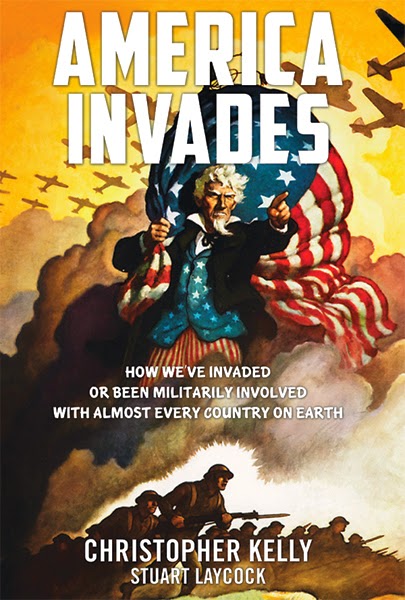
Commander Kelly's first book, America Invades, is now available here...www.americainvades.com
Historians and writers slow down to observe the phenomenon of Custer at Little Big Horn in much the same way that motorists tap the brakes to observe a smoking wreck on the Interstate.
George Armstrong Custer (http://en.wikipedia.org/wiki/George_Armstrong_Custer) was a 'body in motion' that stayed in motion until he finally came to rest at the battle of Little Big Horn in Montana (http://www.nps.gov/libi/index.htm) on June 25th, 1876. After graduating 34th out of a class of 34 at West Point in 1861, he immediately was swept up in the conflagration of the US Civil war. The slow moving infantry was not Custer's style; he was a horseman and a natural cavalryman. He fought for his country as a dashing Union cavalry officer who served at the First battle of Bull Run, the battle of Gettysburg and was present at Lee's surrender at Appamatox.
His long blond hair and swagger attracted the attention of Elizabeth Bacon ("Libbie") whom he married. In 1867, military discipline could not prevent the uxorious Custer from going AWOL to reunite with Libbie -- for which he was court-martialled on eight counts the most egregious charge being abandonment of his command.
Prior to Little Big Horn, Custer was advised to equip his unit with the latest in killing technology -- Gatling guns; he refused as their transportation might slow down this 'body in motion'.
After Custer's death at Little Big Horn along with that of all 263 of his men, many tried to adapt the Custer legend to their own purposes. His widow Libbie wrote three books which unconvincingly attempt to exonerate her husband by blaming Major Marcus Reno for the debacle. Buffalo Bill Cody exploited the Custer legend by staging re-enactments of the battle which sometimes used Indians who had participated in the actual battle. Anheuser Busch transformed Custer's apotheosis at Little Big Horn into a poster that adorned thousands of saloons across America (see below).
Custer sells suds for Budweiser
The myth of Custer has been interpreted and re-interpreted by each succeeding generation in popular culture. The film They Died with their Boots on presented aversion of Custer, played by Errol Flynn*, as a noble and heroic warrior for an America that was on the verge of war in 1941. The movie is wildly inaccurate although Custer really did love the song Garry Owen (see video below).
The film Little Big Man (1970), based on Thomas Berger's 1964 novel, presented Custer as a simpleton and a demented psychopath. This film was released at the same time that a group of native Americans were occupying Alcatraz island (1969 to 1971).
Now in 2012, we have McMurtry's version of Custer (see photo above). Larry McMurtry, the author of Lonesome Dove, has a new coffee table book called simply Custer (www.amzn.com/1451626207). This book is packed with over one hundred full-color photographs and illustrations about the short but eventful life of George Armstrong Custer. McMurtry was a rare book dealer who at one time owned a collection of 'Custerology' numbering more than one thousand items.
McMurtry describes Custer as a "rash" man-child who suffered from a "perpetual restlessness" and a "need for glory".
Custer had led the 7th Cavalry to victory against the Cheyenne in the battle of Washita on November 27, 1868. Custer did not overly trouble himself that when he attacked Black Kettle's encampment, he was attacking one of the "peace" Indians who had scrupulously stayed on their assigned reservation. Many women and children were slaughtered and Black Kettle himself was killed.
McMurtry details the troubled historical relationship between America and its native American population. He cites the journalist Alex Shoumatoff who "reckoned that the United States had made 354 treaties and broken them all. It is possible to see the whole continent from Point Barrow to the golden Gate, as one big land grab." The Black Hills of the Dakotas held gold and the Indians stood in the way of the white man's lust for gold. McMurtry regards Custer as a foolish figure whose sad fate represented a comeuppance for the greedy white man.
McMurtry notes that after news of the battle emerged "the foreign press was not very sympathetic. The Times of London led the way, pointing out that our long history of relations with the Indians had never been either wise or kind. No journalist in America dared to be that blunt."
Custer's disastrous defeat at Little Big Horn was attributable to horrendously poor intelligence and a gross underestimation of the fighting spirit of the Indians. He had divided his force and stood with 250 men of the US 7th Cavalry facing an Indian force whose upper number might be ten thousand. "No one in living memory of Indians had seen a fighting force that large."
Custer's poor intelligence was combined with an arrogant sense of invulnerability -- the Indians always ran in the face of a steady line of disciplined US regular soldiers. Backed into a corner, they stopped running at Little Big Horn.
COMMANDER KELLY's CONCLUSION
Over and over again, we Americans are "surprised" by events. Lincoln and the Northern states were caught off guard by the Confederate attack on Fort Sumter and hopelessly unprepared at the start of the US Civil war. In 1876, Americans were astonished to learn that Custer and all his men had been slaughtered in Montana by a group of 'savage' Indians. On February 15, 1898 the USS Maine was blown up in Havana harbor killing over 250 crewmen, probably due to Spanish action, (see earlier post, Remember the Maine, but Forget the War Lovers, 2/20/12) providing the spark that would ignite the Spanish-American War. We were unprepared for war in 1917 when Wilson led the nation into the First World War. On December 7, 1941 the Japanese achieved operational and strategic surprise in their attack on Pearl Harbor (see earlier post, FDR in London and Pearl Harbor, 12/10/12). The Honolulu Star-Bulletin had faithfully reported US naval fleet movements and intelligence operatives in the Japanese consulate in Honolulu duly passed the information along to Tokyo (source: At Dawn We Slept, Gordon W. Prange, 1981, www.amzn.com/0140157344). On 9/11 2001, Al Qaeda managed to bring down the twin towers in New York City and to attack the Pentagon in Washington DC. On December 14, 2012 we were all "surprised" to learn about the horrific events of Newtown, CT.
Over and over again, we Americans disdain the vital importance of military intelligence and preparedness and underestimate the dangers which confront us. Remember Little Big Horn!
* The 'Curse' of Custer apparently affected this movie when an aspiring actor, Bill Meade, appearing in a scene galloping on horseback alongside Errol Flynn through the San Fernando valley, fell off an impaled himself fatally on a sword. (Source: My Wicked, Wicked Ways, Errrol Flynn, 1959, www.amzn.com/0815412509).
The American Conservative tour of London continues with a requisite stop at St. Paul's Cathedral to pay our respects to T.E. Lawrence, known to most of the world as Lawrence of Arabia. But you don't need to visit London or the desert or Arabia to get a sense of T.E. Lawrence -- all you really need is a DVD player or, better still, movie theatre!
50th Anniversary, 1962 - 2012
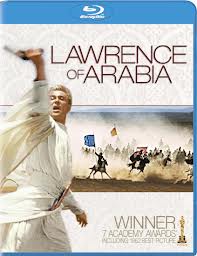
David Lean's Lawrence of Arabia is simply one of the most extraordinary films ever made on the topic of human armed conflict. This film was released in 1962 and was awarded seven Oscar awards including best Director and Best Picture.
The picture begins with Lawrence's senseless and premature death on a motorbike and then moves to his burial at St. Paul's in London (see above). Here a visitor to London will find a bust (he was buried in Moreton Cemetery, Dorset) along with those of other champions of human liberty -- The Duke of Wellington and Lord Horatio Nelson (see earlier post, Horatio Nelson -- Champion of Liberty, http://americanconservativeinlondon.blogspot.co.uk/2012/01/horatio-nelson-champion-of-liberty.html) to name but two.
T.E. Lawrence was an Oxford-educated archaeologist (an assistant at the British Museum's excavation of Carchemish on the Euphrates) who was living in the Middle East at the outbreak of the First World War. He joined British intelligence and served in the Arab division. The Allies were frustrated by the appalling slaughter that was taking place in the trenches of the Western front. Millions of lives were lost for the sake of mere yards of territory. The Allies longed to come up with some kind a flanking strategy that could lead to victory.
The decrepit Ottoman Empire ("the sick man of Europe") had allied itself with the Central Powers (Austria and Germany). Winston Churchill, who was the head of the Admiralty at the start of the Great War, won support for the Dardanelles campaign which attempted to knock the Turks out of the war. The French and British landings at Gallipoli proved to be a disaster and Churchill was forced to resign.
The allies next strategic idea was to help stir up an Arab revolt against the Turks. They needed someone who was fluent in Arabic, who could cultivate and influence the Arabs in aid of Allied strategic objectives. They needed someone who could 'go native'. They found their man...T.E. Lawrence.
Lawrence was a not merely a soldier, a master of espionage and a statesman -- he was a gifted poet. He starts his famous Seven Pillars of Wisdom (www.amzn.com/1617201839) thus...
"Some of the evil of my tale may have been inherent in our circumstances, For years we lived anyhow with one another in the naked desert, under the indifferent heaven. By day the hot sun fermented us; and we were dizzied by the beating wind. At night we were stained by dew, and shamed into pettiness by the innumerable silences of stars. We were a self-centered army without parade or gesture, devoted to freedom, the second of man's creeds, a purpose so ravenous that it devoured all out strength, a hope so transcendent that our earlier ambitions faded in its glare."
The Classic poster
The film Lawrence of Arabia simply could not be made by today's filmmakers. Steven Spielberg has estimated that his favorite film of all time would cost in the region of $285 million to produce today while the original production cost was $12 million. This film is too well-written, it has no digital special effects, the pacing is sluggish by contemporary standards and it has no love interest (nor a single spoken female line). It does feature a brilliantly costumed cast of thousands which included soldiers from the Royal Jordanian and Royal Moroccan armies. The clean but brutal desert itself is a major character in the film along with Peter O'Toole, Omar Sharif, Anthony Quinn, Claude Rains, Jack Hawkins and Alec Guinness.
Lawrence of Arabia was, in a sense, the First World War prequel to David Lean's Bridge on the River Kwai (see earlier post Bridge on the River Kwai, http://americanconservativeinlondon.blogspot.co.uk/2012/09/bridge-over-river-kwai.html). It portrays the sacrifice of youth and innocence in the ravenous maw of institutionalized industrial warfare. It chronicles the outward ascent of Lawrence leading the Arabs to glorious victory over the Turks and his inner descent into near-madness and barbarism. The boyish scholarly Lawrence of the film's opening scenes will be corrupted by war and sadistic torture into becoming a bloody-minded warrior who screams out, "No Prisoners!" in his final attack. The tale of Lawrence mirrors one of the Great War's other warrior/writers -- Manfred Von Richthofen (see earlier post The Red Baron, http://americanconservativeinlondon.blogspot.co.uk/2012/09/the-red-baron.html). In his book Der Rote Kampflieger, Von Richthofen starts out taking his dog up for joy rides in his plane and ends as a cold-blooded killer of allied pilots before meeting his own untimely end.
The film's plot is a coming of age tale set in the Arabian desert. The film is simply a meditation on the transforming power of warfare. The purity of desert sand is mixed with the blood of hot youth. Consider the eloquence and profound truth of Prince Feisal's (Alec Guinness) speech uttered to a retreating Lawrence from the film's conclusion:
"We drive bargains. Old men's work.
Young men make wars, and the virtues
of war are the virtues of young men.
Courage and hope for the future.
Then old men make the peace.
And the vices of peace
are the vices of old men.
Mistrust and caution.
It must be so.
What I owe you is beyond evaluation."
Commander Kelly says, "With so many films out there today that are a pure waste of time, why not take the time to see or revisit Lawrence of Arabia --a timeless classic film made by a master craftsman with a stellar cast which continues to be reverberate to this day."
Dedicated to a great "American Invader" Stormin' Norman Schwarzkopf, 1934 - 2012
A "Veritas" about Harvard
You will not find in their Admissions brochure
Commander Kelly presents a Crimson Christmas cracker -- a World War II trivia question to stump your friends...
Question: Which Harvard graduate authorized the assassination of another Harvard man, which was duly executed in the course of World War II?
Answer: President Roosevelt (Harvard class of 1903) authorized the assassination of Admiral Yamamoto (graduate studies Harvard 1919-1921). A Navy squadron of P-38 Lightnings made up the firing squad on April 18, 1943. His corpse was later found in the jungle at the crash site with two 50 calibre wounds.
I) Assassination of Julius Caesar. March 15 (Ides of March), 44 BC
Pretty well documented to be a plot by the Roman Senate. Caesar was stabbed 23 times times by perhaps up to 60 individuals. Brutus, Cassius and others implicated. "I came, I saw, I bled to death on the Senate's cold marble floor." This conspiracy started a civil war. Will Shakespeare later purchases the stage and movie rights. Highly unlikely for there to have been any direct CIA involvement, still a possible mafia connection though...?
"Hold my horse, Peanut!"
II) Lincoln assassination. April 14, 1865 (Good Friday)
There was a well-documented conspiracy, not only to kill Lincoln, but to decapitate the Union government (see Manhunt: The 12 day Chase for Lincoln's Killer by James Swanson, 2007 www.amzn.com/0060518502). Lincoln was killed with a single shot pistol to the back of the head by the actor John Wilkes Booth while watching the play Our American Cousin at Ford's Theater. Secretary of State Seward was stabbed by co-conspirator Lewis Powell and nearly killed in his bed. There was a plot to kill Vice President Andrew Johnson in his hotel room which miscarried. Peanut, a young black man whose only crime was to have held John Wilkes Booth's horse in the alley near Ford's theatre, was convicted as an accomplice and went to jail. The unfortunate Dr. Samuel Mudd of Maryland ("Your name is Mudd!") who mended Booth's broken leg was convicted and sent to Devil's island. This conspiracy ended a civil war.
Let's not forget the amazing series of dissimilarities between the Lincoln and Kennedy assassinations. Lincoln was a Republican, while JFK was a Democrat. Lincoln wore a beard, while JFK was clean-shaven. Lincoln was Protestant, while JFK was Catholic. Lincoln led the Union during the Civil War, while JFK was a peacetime President, etc. Mind-blowing stuff!
12/7/41 "A Day that will live in infamy."
III) Did FDR know about Pearl Harbor December 7, 1941?
This just in! A top secret recently released Freedom of Information Act cable reads as follows....
"November 20, 1941 My Dearest Eleanor, It would really help my re-election chances if you would pay a visit to the island of Oahu this December. I hear that the weather is lovely this time of year--much nicer than DC. Regretfully, my darling, pressing affairs of state will prevent me from accompanying you... Love, Franklin"
"Mr. President, you can't say Dallas doesn't love you."
Nellie Connally
IV) JFK assassination. November 22, 1963
The assassination of President Kennedy by a deranged communist fellow traveller and US Marine marksman who had spent time in the Soviet Union (Lee Harvey Oswald) has been a sore point for the left for many years. Ruby's subsequent murder of Oswald deepened the mystery, but was wholly understandable on a human level. In spite of all the books, movies and TV specials, the original Warren Commission report conclusion was very likely correct that Oswald was the lone killer of JFK. He certainly had motive, means and opportunity. Oswald did, however, visit the Cuban consulate in Mexico city prior to the assassination so perhaps we can look forward to a deathbed confession from Fidel before he reaches room temperature--though this would provide cold comfort for liberals...?
Oliver Stone on the Grassy Knoll with an editing machine...?
Both JFK and Lee Harvey Oswald were each reading an Ian Fleming James Bond novel the week before the assassination--just a coincidence? James Bond...another suspect?
V) 9/11/01
Cooked up by Bush / Cheney in order to circumscribe our civil rights and increase the power of the federal government. See Loose Change. (Ok, Just kidding!)
You can find signed copies of our books at these web sites...